Museo Bulawan (Daet, Camarines Norte)

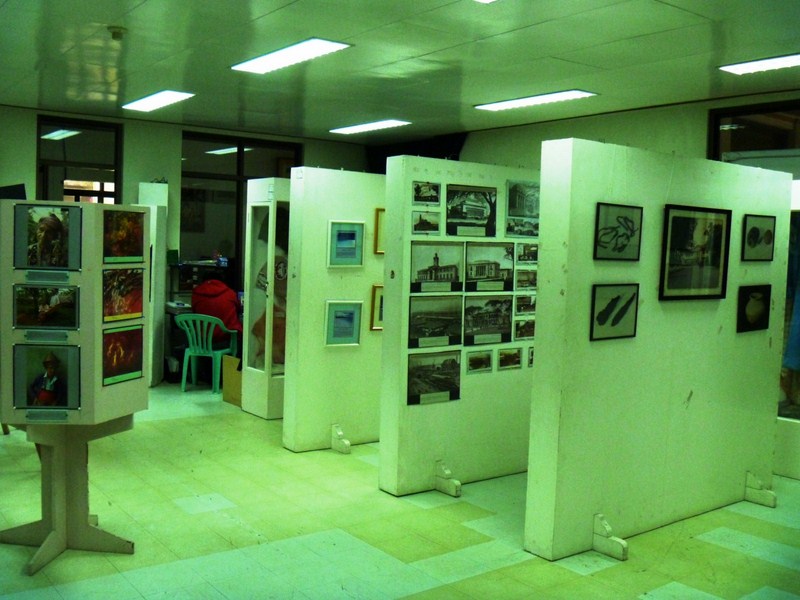
Bulawan Museum

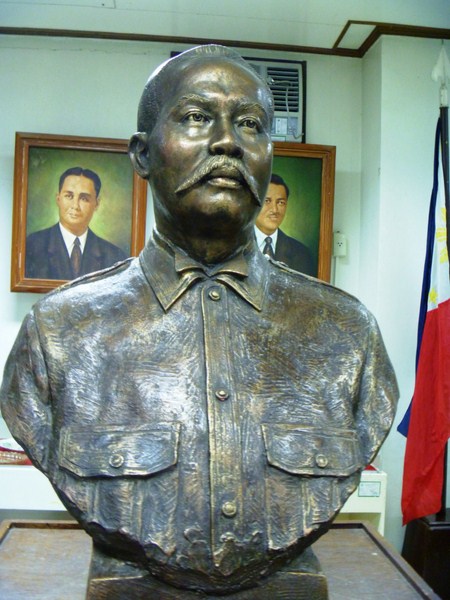
Gen. Vicente R. Lukban Bust

The Bulawan Museum, known as the “Golden Museum,” is located within the sprawling Provincial Capitol.  

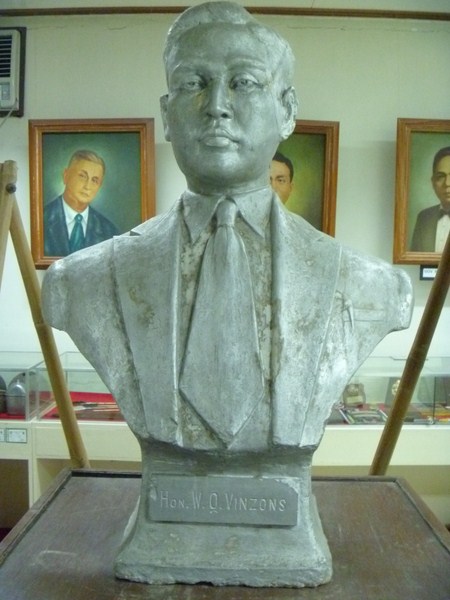
A window into the province’s rich history and culture, it has a collection of old photos; World War II memorabilia (weapons); portraits of past governors; and busts of local heroes (Gen. Vicente Lukban, Wenceslao Q. Vinzons, Sr., Capt. Tomas M. Zaldua and Lt.-Col. Francisco D. Boayes).

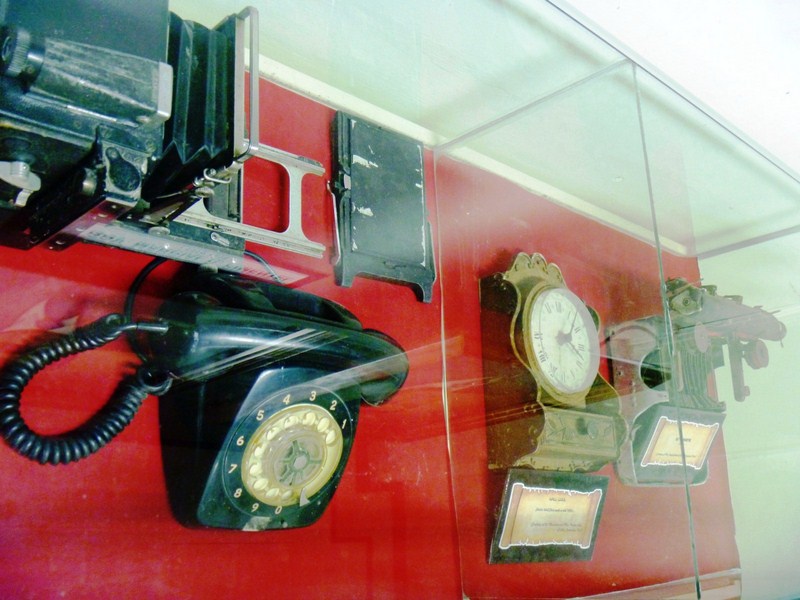
Old camera, telephone, wall clock and typewriter

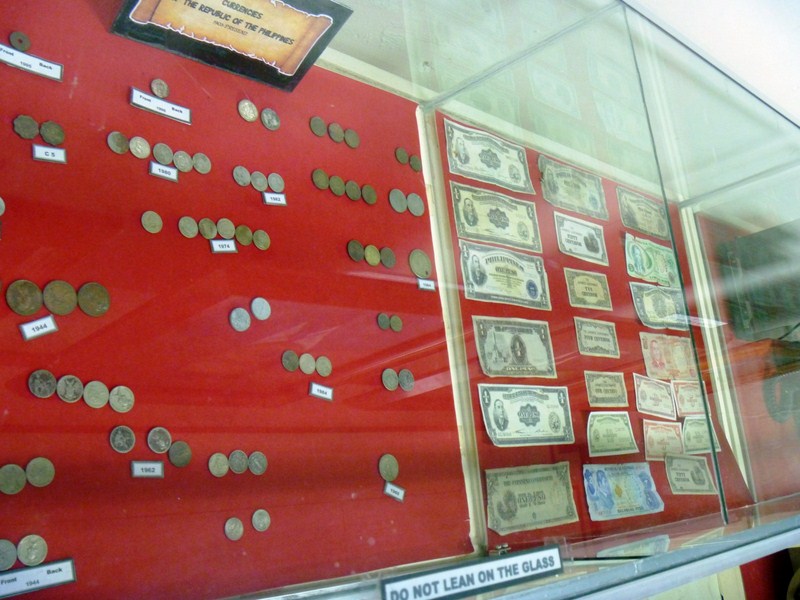
Numismatic Collection of ol coins and paper currency

Wenceslao Q. Vinzons Sr. Bust

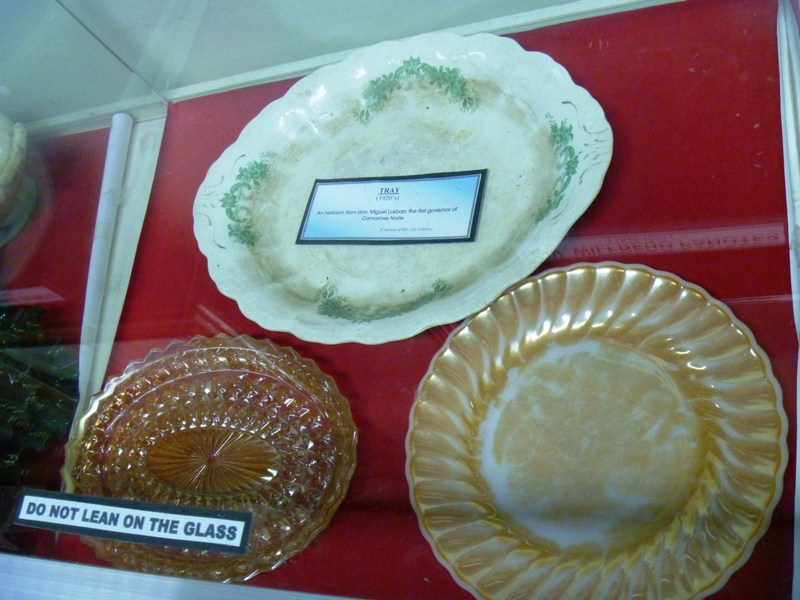
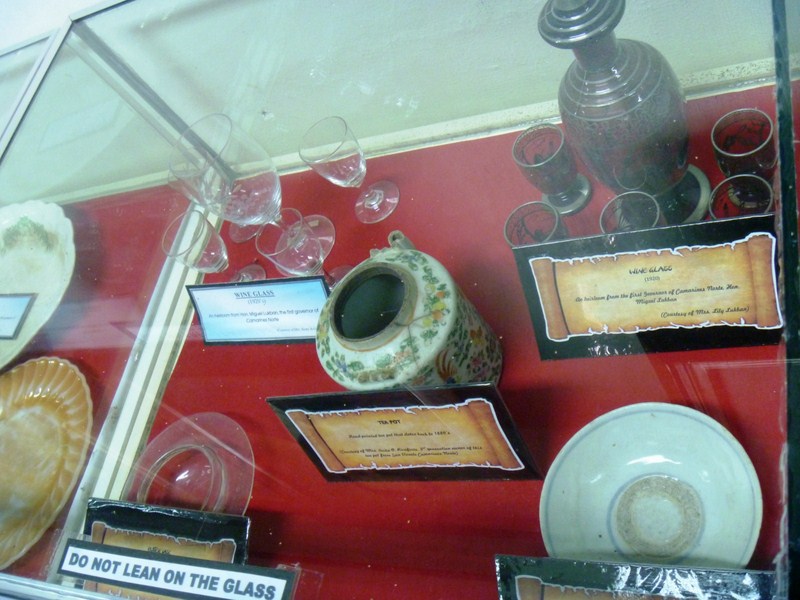
It also displays family heirloom pieces (including a collection of kitchen utensils such as silver spoons, fork and butter knife of the late Gov. Miguel Lukban), traditional clothing; a numismatic collection of old coins and paper currency; a collection of shells; gold jewelry; antique household appliances, paintings and a boya (a round floater attached to a net to keep it afloat). 

Antique wine glasses and teapot

Museo Bulawan: Provincial Capitol Complex, Daet, Camarines Norte.  

Celebrating Four Centuries of Christianity in Camarines Norte

Courtesy call on Gov. Edgardo A. Tallado

The year 2011 marks the quadricentennial of the University of Sto. Tomas, the oldest university in Asia. In Camarines Norte, it marks a different milestone – the 400th year foundation anniversary of the three parishes of Daet, Paracale and Vinzons.  Although all these towns were founded by Franciscan missionaries in 1581, it was only in 1611 when permanent parish priests were assigned. Yours truly, together with events organizer Bernard Supetran, travel blogger Mark Vincent Nunez (L.E.N.S.) and mediamen Mr. Joselito “Lito” Cinco and Ms. Kara Santos (Sunday Inquirer), were invited to cover the quadricentennial activities in these towns. All five of us met up at Starbucks in Magallanes Village in Makati City where our transportation and our hosts, Mr. Amable Miranda and Roufel “Raffy” de Vera of the Provincial Tourism Office awaited us.  We left the place by 5:30 PM and the 350-km. long-haul drive took all of 8 hrs., including stopovers for toilet breaks and dinner at a Chowking outlet in Quezon, snatching sleep in between.

Bulawan Museum

We arrived at Bagasbas Lighthouse Resort in Daet, our home during our 3-day stay in Camarines Norte, by 2 AM and were soon checked in and back on the sack.

Check out “Resort Review: Bagasbas Lighthouse Hotel Resort

Come morning, right after breakfast, we were picked up by Amable and Raffy to visit Bagasbas Park and the First Rizal Monument (unveiled on December 30, 1898) then meet up with Atty. Debbee G. Francisco, the Provincial Tourism Officer designate, at the Provincial Capitol as well as visit the Bulawan Museum with its collection of old photos, portraits of past governors, busts of local heroes, family heirloom pieces, numismatic collection and paintings.

Church of St. Peter the Apostle in Vinzons

From Daet, we moved on to Paracale where we were to attend its Pabirik Festival which showcases the rich mining industry of the town. We next left for Labo where we checked out the Museo de Labo, the Church of St. John the Apostle and Evangelist and a showcase of the town’s handicrafts.  After a few hours rest bit back at the resort, we proceeded to the town of Vinzons where we interviewed Fr. Francisco P. Regala, Jr., the parish priest of the town’s Church of St. Peter the Apostle, the oldest in the province (first built in 1611 by Fr. Juan de Losar and rebuilt at its present site in 1624).  Fr. Regala, narrated in detail, the town’s town’s quadricentennial plans on June 29, the town’s fiesta.  We capped this evening with dinner at the residence of Atty. Francisco where I stuffed myself full with angko, a glutinous, rice-based and thumb-size native delicacy with a filling of sweet, grounded peanuts.  We left right after this as we were scheduled to leave early in the morning for overnight camping at the Calaguas Islands.  That night it started to rain heavily.

Daet Heritage Center

That same heavy rain welcomed us early in the morning and a phone call confirmed our worst fears – the trip to the Calaguas Islands was cancelled.  Regretfully, we switched to Plan B – hiking to Nakali Falls in San Lorenzo Ruiz town, rain or shine.  The physically draining hike took all day. It was raining less the next day and all had lunch with Daet Mayor Tito S. Sarion at Golden Palace Restaurant followed by an ocular tour of the newly-established museum at the Daet Heritage Center (formerly the old municipal hall), a courtesy call to Gov. Edgardo Tallado at the Provincial Capitol and a farewell visit to Atty. Francisco who gifted us with daing, dried dilis (anchovies) and my favorite angko.  Amable and Raffy accompanied us on our return trip to Manila, with a delicious dinner stopover at Lita’s Carinderia along the way.  We made it back by midnight. Check out my Business Mirror article “Camarines Norte: 400 Years of Keeping the Faith.”

Provincial Tourism Office: Provincial Capitol Complex, Daet, Camarines Norte.  Tel: (054) 721-3087.  E-mail: come2camnorte@yahoo.com.

Reminiscing in San Miguel de Mayumo (Bulacan)

Church of St. Michael the Archangel

We were now on the final leg on our Lakbay Norte 2 tour and our final destination was the marble quarrying, first-class municipality of San Miguel de Mayumo, a town rich in history within the equally historic province of Bulacan.   Our special Victory Liner bus first dropped us off at the Church of St. Michael the Archangel where we were welcomed by Mr. Jose G. Clemente and Ms. Amelia Aquino, both of the Bulacan Tourism Convention and Visitors Bureau (BTCVB); Mr. Jimmy Corpuz, head of the National Historic Conservation Society; and municipal tourism officer Ms. Divina Quetua.  This Baroque-style church, with its statue of St. Michael the Archangel slaying the dragon at the center panel of the pediment, was built (or rebuilt) in 1848 by Fr. Juan M. Tombo and was completed in 1869 by Fr. Francisco Arriola.  Maximo Viola, the financier of the printing of Rizal’s Noli me Tangere, is buried in a vault within the church.  After the church tour, we all cross the street to pay a courtesy call on Mayor Roderick Tiongson at the municipal hall (built in 1874). 

Simon Tecson Mansion

Being an hour behind schedule, we had no time to tour, on foot, San Miguel’s 25-30 ancestral houses (the town is called the “Vigan of Bulacan”) scattered around the town proper as we had to drop by Biak-na-Bato National Park, site of the Biak-na-Bato Republic.  These bahay na bato were built with different styles of architecture and colors during the Spanish and American eras, all existing testimonies to the abundance and prosperity of the past. Instead, we did a slow tour via our bus, along the town’s narrow streets, with Mr. Clemente commenting on each house we passed. In the past, landed barons running haciendas in Central Luzon built their grand residences or vacation houses in San Miguel de Mayumo where they hosted lavished parties or soirees.

Bahay Paniki Cave

We arrived at the 2,117-hectare Biak-na-Bato National Park by 5 PM.  Our 1-hr. tour took us past Gen. Aguinaldo Cave (Emilio Aguinaldo‘s headquarters in 1897 and site of the Biak-na-Bato Republic) all the way up to Bahay Paniki Cave, located upstream from the Balaong River.  Probably the largest cave in the area, the cave has a rather deep natural indoor swimming pool fed by an underground stream.  Thousands of fruit bats fly in and out from dawn and dusk but we were not to witness this as approaching darkness would make our return trek difficult.

Lakbay Norte media group with BTCVB

It was already dark when we returned to the park’s new pavilion for a snack of ensaymada (a brioche made with butter and topped with grated cheese and sugar) and arroz caldo (a rice porridge flavored with chicken)  After a short press briefing and photo ops, we all returned to bus for our 2-hr. return trip to Manila.  However, the grateful town and its people wouldn’t let us go without bringing home some pasalubong of the town’s famous delicacies.  Waiting for us at the bus were pastillas de leche (delicious, mouth-watering candy made from sugar and pure carabao’s milk), tableya (old fashion Philippine chocolate), minasa (cassava cookies), yema balls (a sweet custard candy made with condensed milk and egg yolks) and chicharon (fried pork crackling). 

Bulacan Tourism Convention and Visitors Bureau (BTCVB): c/o Ciudad Clemente Resort, Paombong Bulacan.  Mobile number: (0927) 669-5655. E-mail: joclemente01@yahoo.com.

Church of St. James the Apostle (Guagua, Pampanga)

Guagua’s Church of St. James the Apostle

From Bacolor, we next proceeded to Brgy. Betis in the woodworking (furniture, guitars, pool sticks, etc.) town of Guagua, my late father’s hometown, where we were welcomed by Sangguniang Bayan member Anthony Joseph “Tonton” Torres and Guagua councilor Roy Sunglao at the 17th-century Church of St. James the Apostle. The church, now honored as one of 26 National Cultural Treasures by the National Museum, has a profusely ornamented, two-level, German Baroque façade with decorative, coupled columns and skillfully arranged flora,  spirals and intricate curvilinear carvings decorating the projecting portico. The church’s wooden entrance doors are intricately carved with the “Dreams of Jacob” from the Old Testament.

The breathtaking trompe l’oeil dome

Its awe-inspiring interiors are something else. The huge, elaborate retablo is furnished with authentic icons, while spectacular murals of 19th century artist Simon Flores, as well as the father-and-son team of Macario and Jose Ligon (finished before World War II), fill the walls. The interpretation of the Bible is painted on the entire wooden ceiling and the breathtaking trompe l’oeil dome, truly the Philippine’s version of the Sistine Chapel of the Vatican. At the center of the plaza, fronting the church, is the first artesian well in the Philippines, built by Fr. Manuel Camanes in the late 19th century. Before leaving Guagua, I bought some yema and pastillas as pasalubong.  Check out my Business Mirror article “Tripping on History and Culture in Pampanga.”

Pampanga Convention and Visitor’s Bureau (PCVB): c/o Everybody’s Café, Nepo Mall, Brgy. Del Pilar, City of San Fernando, Pampanga.  Mobile number: (0917) 245-4834.  E-mail: poch168@gmail.com.

Church of St. William of Aquitania (Bacolor, Pampanga)

Church of St. William of Aquitania

We were now on our fifth and last day of our Lakbay Norte 2 media tour and come morning, after a hearty breakfast at Sands Resto Grille in Lighthouse Marina Resort, we were on the road again in our special Victory Liner media bus, this time to return to Pampanga and  visit two of the province’s famous churches—one noted for its resiliency in the face of calamity, and the other for its artistic beauty. In Bacolor, we were met at the town’s Church of St. William the Hermit by Mr. Poch Jorolan of the Pampanga Convention and Visitor’s Bureau (PCVB). This church, one of the oldest and largest churches in the province, is a survivor. Probably built in the early 17th century, it has survived damage from the 1645 and 1880 earthquakes, a fire in 1672, as well as heavy damage during the British occupation, being restored each time. However, the Mt. Pinatubo eruption produced lahar flows on September 3, 1995,  forcing its more than 50,000 residents to evacuate to safer ground and burying the church  up to one-half its 12-m. height. Its 4.9-m.-high main entry disappeared. However, this bastion of faith refused to follow the footsteps of the half-buried Cagsawa Church (Albay) and Guiob Church (Camiguin), all victims of the violent eruptions of Mt. Mayon and Mt. Vulcan Daan, respectively. Bacolonians painstakingly dug up the ornately-carved main and side altars, century-old statues and  the retablo (altar backdrop) of the Lady of La Naval from the mud and relocated the retablo under the dome in order for it to fit.  They also built a new concrete floor almost at the level of the windows.  The profusely and intricately ornamented window of the choir loft now serves as the new main entrance.

Pampanga.Convention and Visitor’s Bureau (PCVB): c/o Everybody’s Café, Nepo Mall, Brgy. Del Pilar, City of San Fernando, Pampanga.  Mobile number: (0917) 245-4834.  E-mail: poch168@gmail.com.

Metropolitan Cathedral of San Fernando (San Fernando City, Pampanga)

The Metropolitan Cathedral of San Fernando

The town’s present church was probably built at the end of the 18th century by Fr. Sebastian Moreno and finished by Fr. Mariano Alafont in 1781.

Bell tower on the left

It was restored in 1853 (by Fr. Pedro Medina) and 1866 (by Fr.  Antonio Redondo who added the majestic dome and finished painting the interior).

Both church and convent were burned on May 5, 1899 by Gen. Antonio Luna, reconstructed, burned by a big fire in 1939 and rebuilt in 1950 by Arch. Fernando Ocampo. In 1948, the church was elevated to a cathedral when it became the seat of the Diocese of San Fernando.

The cathedral interior

The cathedral measures 70 m. long, 13 m. wide, and 11 m. high and has a Tuscan interior.

The main altar

The Neo-Classical facade has a huge balustered portico, a profusion of columns and a triangular pediment.  Along the sides are dentils and tooth-like decorations.

Pulpit

A round and majestic, Baroque-style dome rises from the rotunda of the transept.   Its four-storey, hexagonal bell tower tapers up in uneven levels with alternating arched and segmented blind and open recesses.

The Baroque-style dome

Metropolitan Cathedral of San Fernando: City of San Fernando, Pampanga. Feast of St. Ferdinand: May 30.

How to Get There: The City of San Fernando is located 68.9 kilometers (a 1.5-hour drive) from Manila.

Heritage Walk in the City of San Fernando (Pampanga)

The turn-of-the-century, Victorian-style Augusto P. Hizon house

On the last day of our 5-day Lakbay Norte 2 media tour, we were to attend a cooking demonstration by local culinary expert and historian Lilian “Atching” M.L. Borromeo in Mexico, Pampanga, but we were early for once so our special Victory Liner media bus made a brief stopover at the provincial capital city of San Fernando, parking along A. Consunji St.  in Brgy. Sto. Rosario.  A number of,Spanish and American-era ancestral houses were located here so much so that a number of us, me included, alighted and made a walking tour for some photo ops while the others stayed in the airconditioned comfort of the bus.

The Lazatin House

The Hizon-Singian House, built in 1870, was occupied during the 1896 revolution by Spanish Gen. Antonio Ruiz Serralde. During World War II, it was used by the Japanese Imperial Army as a military hospital and barracks (1943-44) and, during the liberation period until the end of 1945, served as headquarters of 6th Army of American Gen. Walter Krueger.  The Lazatin residence, built in 1925, exemplifies the architecture prevalent during the American colonial period. During World War II, it served as a residence of Japanese Gen. Masaharu Homma. On January 27, 2003, both houses were declared as Heritage Houses by the National Historical Institute. Other ancestral houses along this street include the Consunji house, the turn-of-the-century, Victorian-style Augusto P. Hizon house and the Pampanga Lodge and Restaurant (the first site of the Pampanga High School when it first opened and, later, of the Harvardian College).

Finally, on my own, I visited the Metropolitan Cathedral of San Fernando, located in front of the City Hall.

Check out “Metropolitan Cathedral of San Fernando

City Tourism Office: A. Consunji St., Brgy. Sto. Rosario, City of San Fernando, Pampanga.  Tel: (045) 961-5684

Water Fun in Subic (Subic Freeport Zone, Zambales)

The popular and entertaining banana boat ride. 
That’s me up front


Aside from our relaxing overnight stay at Lighthouse Marina Resort at the Subic Bay Freeport Zone, members of our Lakbay Norte 2 media group were treated to a round of watersports activities courtesy of Networx Jetsports along the Subic beachfront.  While the others opted to just watch or swim, a number of us, me included, dabbed on a lot of sunblock lotion and donned  life vests to try out what was on offer.  While others eagerly jumped into the jetskis, a number of us (Nina Fuentes, Melissa Dizon, Karlo de Leon, Ivan Mandy and yours truly) hopped on the popular and entertaining banana boat ride.  The boats, pulled by a powerful jetski, could accommodate a maximum of 10 persons.

Returning to shore after our dunking


Once on board, we all held on to the bar in front of us and tried to balance ourselves as the jetski  slowly pulled the banana boat. We all bent down to maintain our balance and when the boat turned left, we leaned to the left, when it turned to the right, we leaned to the right.  The jetski tried to catch the us off guard (and off the boat) by going fast and slow and succeeded on two occasions. It was fun for me but distressing for Karlo and Mel as they both irretrievably lost their expensive shades to the sea (luckily mine was hooked to my ears).  Getting back on board the boat was also difficult for some (including me).  I’ve tried banana boating before in Boracay but that ride was tame and uneventful compared to this one.  Rates for the banana boat ride are PhP250 er person, minimum of 4 and maximum of 10.


Jetskiing is addicting


Next on my itinerary was the addicting jetskiing, a first for me.  It is said by many that by riding the waves, it quenches the need for speed and gives one a feeling of power.  Upon climbing the jetski, a safety strap was attached to my wrist to ensure an automatic stop in case I should fall off, thus avoiding possible injury.  After basic instruction on how to operate the jetski, I was off and on my way, riding the waves standing up but making sure to get back on my seat as I made a slow turn.  I avoided places where people were swimming. Jetskiing was truly what it is hyped up to be.  Too bad there was no one to record my moment, either on film or video.  Jetski (Yamaha VX 110, 4-stroke engine) are  rented for PhP1,900 for 30 mins. and PhP3,000 for 1 hour. 

A Hobie Kayak Tandem

Karlo and I also tried out the Hobie Kayak Tandem.  The clear, calm waters surrounding Subic make it an ideal kayaking site for novice and experienced paddlers.  Our kayak was different from the kayaks I’ve tried before as this one had a kick-up rudder system and a hand-controlled steering system at the rear (where I was seated).  The Hobie Kayak Tandem rents for PhP500 for 30 mins. and PhP800 for 1 hour while the single rents for PhP300 for 30 mins. and PhP500 for 1 hour.. Networx Jetsports also offers parasailing (PhP1,500 per person, 10 mins. airtime), speedboat cruises (XR 1800-2001 models, maximum of 5 riders, PhP10,000 for 1 hour) and Pelican pedal boats (PhP400 for 30 mins. and PhP700 for 1 hour).  Networx Jetsports was established in 1997 by Emmanuel “Dong” B. Arcilla, an avid jet ski racer.  

Networx Jetsports: Waterfront Road, Subic Freeport Zone, Zambales (beside Gerry’s Grill).  Tel.: (047) 252-3469 .  Mobile number: (0922) 812-9832.  Email: jetsportssubic@yahoo.com.  Website: www.networxjetsports.com.ph

The Lighthouse by the Bay (Subic, Zambales)

Our special Victory Liner media bus approaching 
Lighthouse Marina Resort
After our very filling, 2-restaurant food tour in Clark, it was now time for some R&R for our Lakbay Norte 2 media group at Subic Freeport Zone.  We left Clark for Subic around 12:30 PM and we arrived at Lighthouse Marina Resort just before 2 PM where we were welcomed by members of the Greater Subic Bay Tourism Bureau. Considered as the number 1 hotel among 17 in Subic, the 3-storey Lighthouse Marina Resort, owned by the Avecilla shipping clan, is a sleek and ultra-modern 34-room boutique hotel capped by a 20-m. high lighthouse. Designed by the architectural firm Palafox Associates in almost austere Italian architecture, it has an elegantly simple facade.

Our assigned suite

We checked into a warmly appointed airconditioned suite with king-size bed, a 42-inch, wall-mounted LCD cable TV, minibar, fridge, coffee/tea facility, IDD phone, writing desk, DVD/MP-3 player, in-room safe and electronic door lock.  The bathroom, similar to the one I’ve seen at the Marriot Hotel in Manila, has glass walls (with electronically raised or lowered curtains for privacy).  A novelty, though, is its free-standing tub reminiscent of Old World baths.

The resort’s icon

The white and maroon lighthouse, the resort’s icon and the most photographed landmark in the port, was done in surprisingly detail very faithful to naval architecture specifications.   Fronting the swimming pool, the tower is home to the 720 London Music Bar, its counter, which accommodates 15, is shaped like a ship’s bow. Lighthouse Resort sales representative, Ms. Jozen Curva toured us up the lighthouse to admire the stunning, panoramic view of Subic’s harbor.The grand, high-ceiling lobby has huge floor-to-ceiling clear glass windows, an ensemble of Citterio-inspired lounge furniture and a grand piano, all done in beige colors. Sands Al fresco, where we had breakfast the next day, offers sumptuous grilled food, seafood, Mediterranean and international cuisine.  Wi-fi service was great here. 

Lakbay Norte 2 Media Group

Lighthouse Marina Resort: Subic Bay Moonbay Marina Complex, Waterfront Road, CBD, Subic Bay Freeport Zone, Zambales, Philippines.  Tel/Fax: (047) 252-5000 and (047) 252-7545.  Toll Free Manila Number: (632) 711-0019.  Manila Sales Office Tel:(632) 892-3534 Fax: (632)815-8296.  E-mail: marketing@lighthousesubic.com. Website: www.lighthousesubic.com.

An Evening of Kapampangan Dance and Cuisine (Angeles City, Pampanga)

The third day of our Manila North Tollways Corp. (MNTC)/North Philippines Visitors Bureau (NPVB)-sponsored Lakbay Norte 2 media tour did not end with our tiring but rewarding Pinatubo trek and our P.D.C. Spa Town pampering as our media group was invited for dinner at Angeles City in Pampanga, a major provincial destination as almost 3 days of our 6-day tour were to be spent in this history and culture-rich province with its many Spanish and American-era architecture. It was already night time when our special Victory Liner tour bus finally made its way to bustling Angeles City, arriving at its 2-storey Museo Ning Angeles.  As dinner guests of the Kuliat Foundation, we were all warmly welcomed at the entrance by Ms. Herminia Pamintuan, wife of City Mayor Edgardo Pamintuan; Ms. Joy Cruz and Ms. Prisca Cantor, special projects head and treasurer, respectively, of the Greater Clark Visitors Bureau (GCVB); and museum curator Ms. Jiji Paras.

An array of Kapampangan dishes

The menu was truly impressive with a choice of vegetable salad,  paellachorizo pizza (courtesy of Armando’s Pizza, the Kapampangan pizza), kare-karebatute (stuffed frog), crabs and kakanin for dessert. We were also regaled with a cultural dance performance by a dance troupe.

A night of dance

Our food caravan didn’t end here as we were still invited to late-evening cocktails sponsored by Mr. Abel Villavicencio of Flying V (a Lakbay Norte 2 tour sponsor) plus an acoustic night-out at Island Grill in Clark with Mr. Gabriel “Bing” Sangil and tourism officer Mr. Angel Maniti.  Visibly tired after a full day of hiking, spa treatments and dining, we all thankfully retired to our rooms at the Clark Star Hotel looking forward to the next day.  At this juncture, media colleague Gabby Malvar unceremoniously left the tour as he had to bring his ailing daughter Isabel (she had stomach problems) home to Manila for treatment.  Check out my Business Mirror article “Tripping on History and Culture in Pampanga.”

Museo Ning Angeles: Old Municipio Bldg., Sto. Rosario St., Angeles City, Pampanga.  Tel: (045) 887-4703.  E-mail: angelesmuseo_kfi@yahoo.com.  Website: www.angelesmuseum.com.

Greater Clark Visitors Bureau (GCVB): The Boardroom Business Center Bldg., 7160 Claro M. Recto Highway, Clark Freeport Zone, Pampanga.  Tel: (045) 499-1146.  E-mail: gcvb08@yahoo.com.