Pangatian War Memorial (Cabanatuan City, Nueva Ecija)

Pangatian War Memorial

Pangatian War Memorial

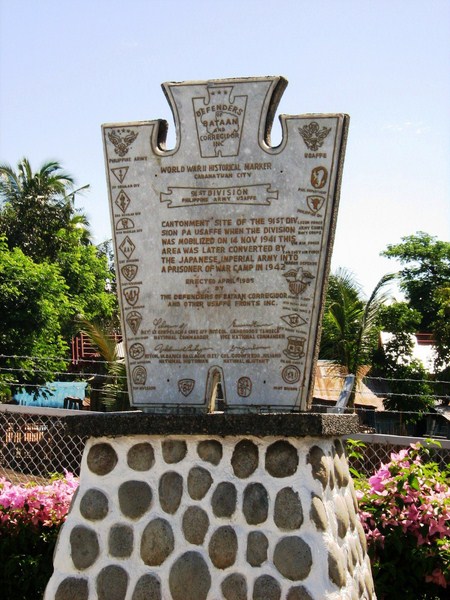
Used as a military training camp for twenty years before World War II, the camp was converted into a concentration camp for U.S. and Filipino prisoners-of-war (POWs) captured at Bataan and Corregidor by the Japanese imperial forces. Nearly 2,000 Americans died of hunger and disease during the first two months of captivity.

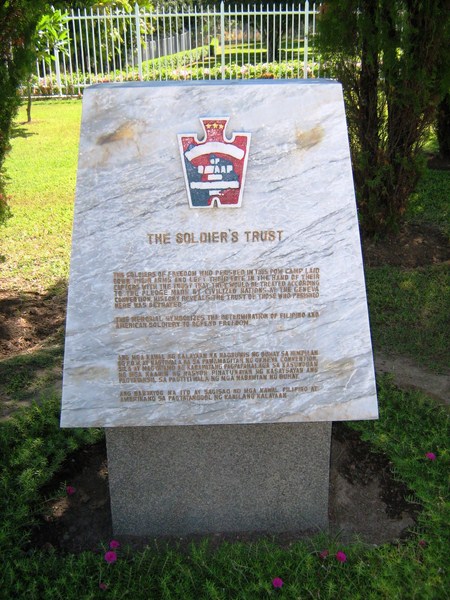
The Soldier's Trust

The Soldier’s Trust

On January 30, 1945, the camp and its 516 inmates were bravely rescued and liberated, without much bloodshed, by Alamo Scouts and the US 6th Ranger Battalion under Lt.-Col. Henry Mucci, with the assistance of Filipino guerillas led by Captains Eduardo I. Joson (Squadron 213) and Juan Pajota (Squadron 201) who effectively prevented the Japanese reinforcements from proceeding to the camp. This rescue was described as one of the most daring and successful missions of its type in the annals of US military history.

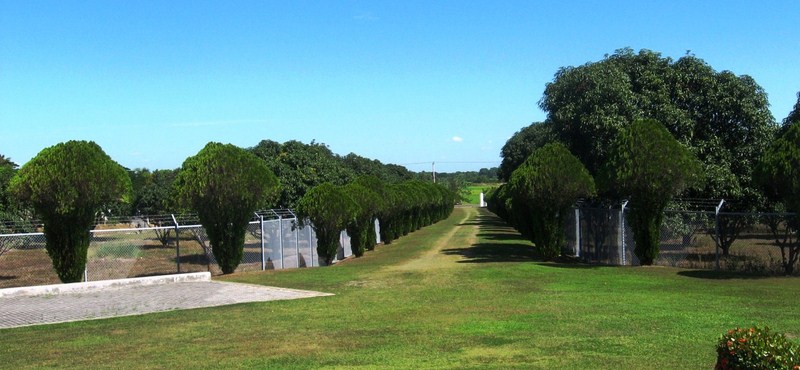
Dirt road lined with cypress trees

Dirt road lined with cypress trees

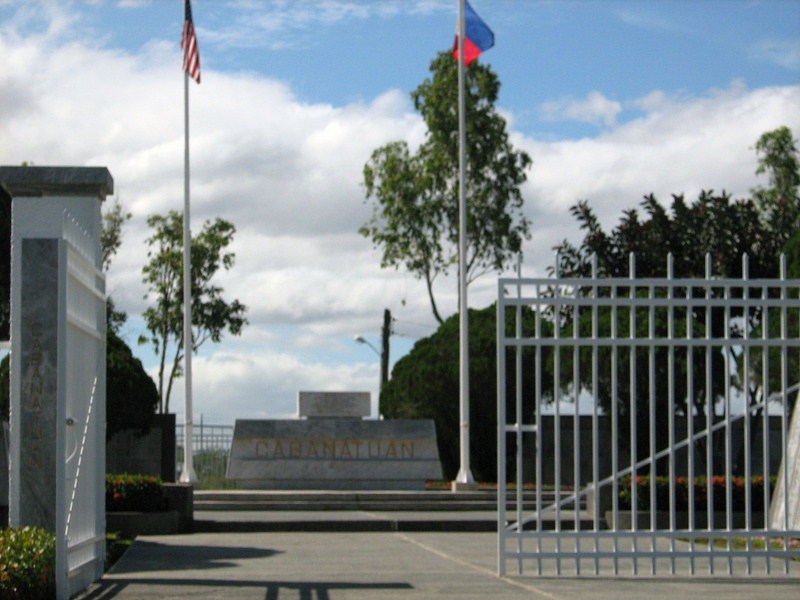
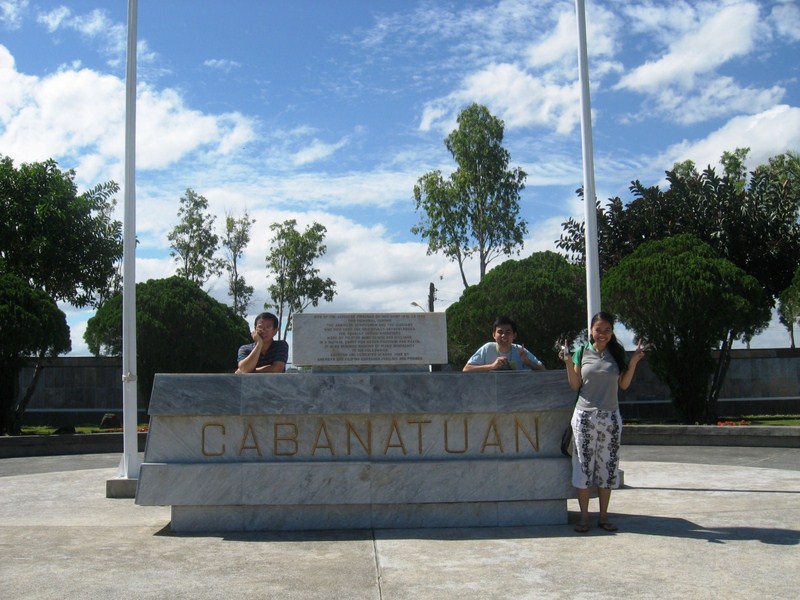
That event, now immortalized in marble in the elevated, circular Pangatian War Memorial (started in 1982 and inaugurated on May 4, 1985), also contains monuments and memorabilia of the events that transpired during the occupation. A long dirt road, between rows of cypress trees, leads to the memorial. The focal point is a huge marble niche with
simply the name “Cabanatuan” engraved on it.

Marble niche with Cabanatuan engraved on it

Marble niche with the word “Cabanatuan” engraved on it

The roof deck has a large mural of Filipino and American soldiers carrying each other, arm-in-arm,  in battle. The concrete foundations of a water tank, at the back of the memorial, is the only structure that remains of the original Pangatian Concentration Camp.

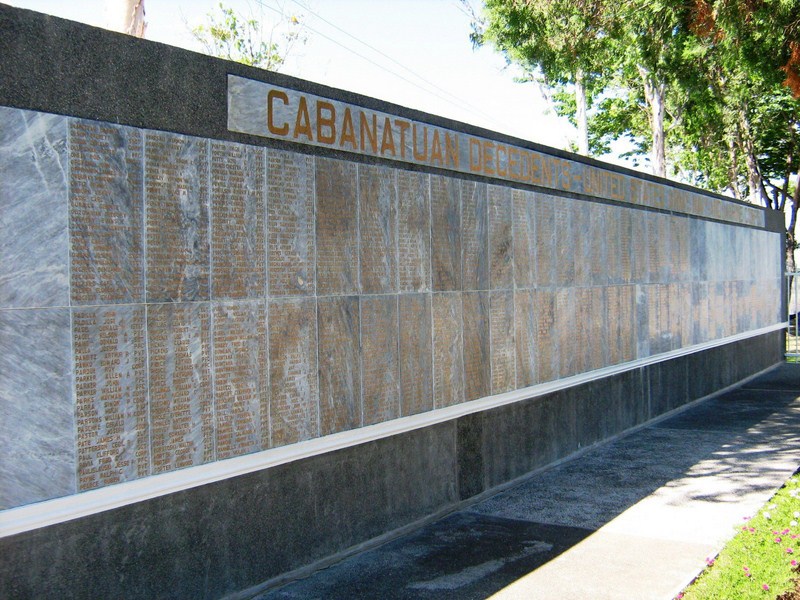
Memorial wall on the left

Memorial wall on the left

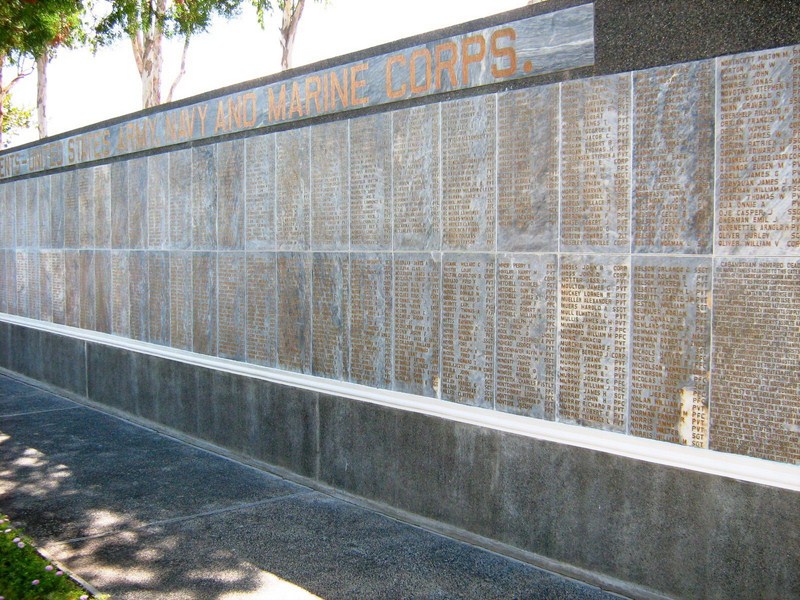
Two long memorial walls, at the far end of the compound, are inscribed with the names and ranks of the American servicemen imprisoned in the camp (some of them West Pointers). Atop a circular platform are two identical markers, one in English and  the other in Filipino, from the National Historical Institute.

Memorial wall on the right

Memorial wall on the right

The shrine, one of the few places in the country where the American flag flies side-by-side with the Filipino flag, is maintained and managed by the American Battle Sites and Monument Commission.  The Pangatian Heroes Hall, a second memorial inaugurated on April 6, 2003 on a piece of land adjacent to the U.S.-maintained memorial, is owned and maintained by the Nueva Ecija provincial government. Sitting in the middle of a lush mango orchard, it pays tribute to the Filipino guerrillas who participated in that momentous rescueCamp Pangatian (11)

The rescue was made into a movie in 2005 called The Great Raid starring Benjamin Bratt, Joseph Fiennes, James Franco and local actor Cesar Montano as guerilla Capt. Juan Pajota.  However, unlike the film Baler, this was filmed, not in the actual site (nor in the country for that matter), but in Queensland, Australia.

Camp Pangatian: Cabanatuan-Palayan Rd., Brgy. Pangatian, Cabanatuan City, Nueva Ecija.

How to Get There: Camp Pangatian is located 8 kms. from Cabanatuan City.

On the Road to Baler

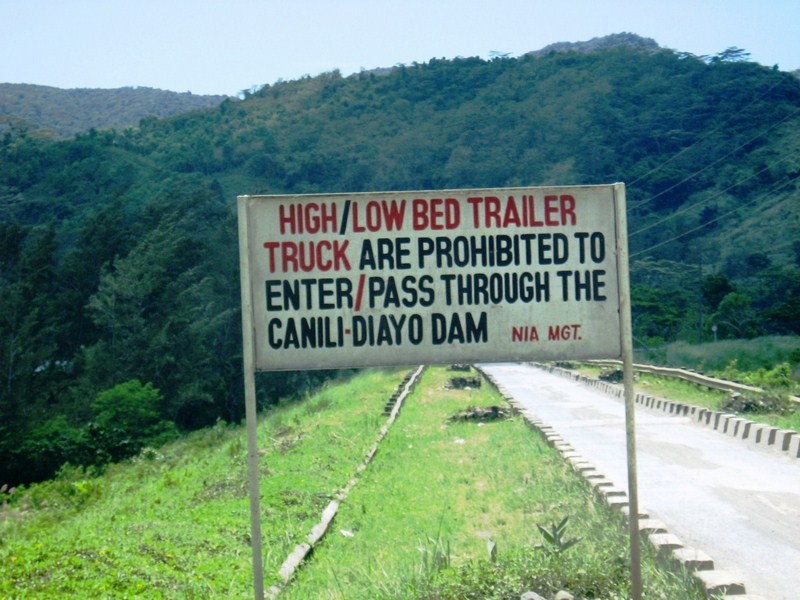
Canili-Diayo Dam (Alfonso Castaneda)

Baler, the provincial capital and center for trade and industry of Aurora province, recently hit it big when its namesake movie Baler won Best Picture and a host of other awards in last year’s Metro Manila Filmfest, its plot based on the 337-day (June 27, 1898-June 2, 1899) siege of its Spanish garrison by Filipino rebels.  When it finally surrendered (the last to do so in the country), Gen. Emilio Aguinaldo, in admiration, declared, on June 30 (now Philippine-Spanish Friendship Day), that the remaining 33 Spanish soldiers were not be imprisoned but honored as friends.  Me and my family watched it and, being actually filmed on location, I was also impressed by its rugged scenery and decided to visit it, doing so on Holy Week.  Joining me were my two kids, Jandy and Cheska, plus lady friends Ms. Lourdes “Lulu” Siguenza and Ms. Rosevie “Vi” Sevilla, an avid photographer.

As we left Manila late afternoon of April 8, Wednesday.  Traffic was relatively light considering it was the eve of the Holy Week break but, once out at the North Luzon Expressway (NLEX), I took the wrong exit and was, instead, on our way to Zambales before I realized my mistake and backtracked, losing valuable time (not to mention the gasoline) in the process.  Dinner was at a Chowking outlet at a rest station along NLEX.  Late evening caught us in San Leonardo, Nueva Ecija, and tired from all these misadventures, decided to call it a night, pulling into a roadside drive-in motel.  I was speechless when Cheska inquired as to the strange furniture as well as the bathroom with the see-through glass in our room.

Camp Pangatian

Come morning, we continued on our way and made a short stopover, along the Cabanatuan-Palayan Rd., at Camp Pangatian, 8 kms. from Cabanatuan City.

Check out “Pangatian War Memorial

Provincial Capitol (Palayan City)

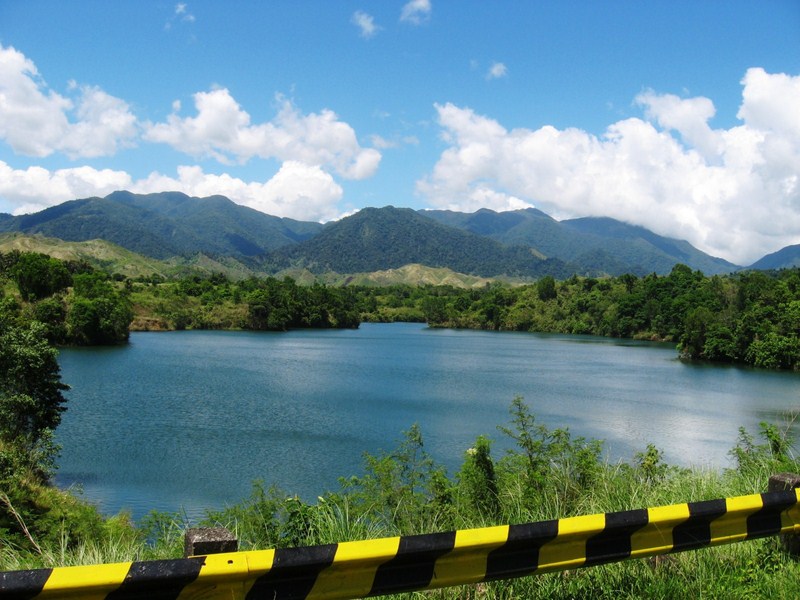
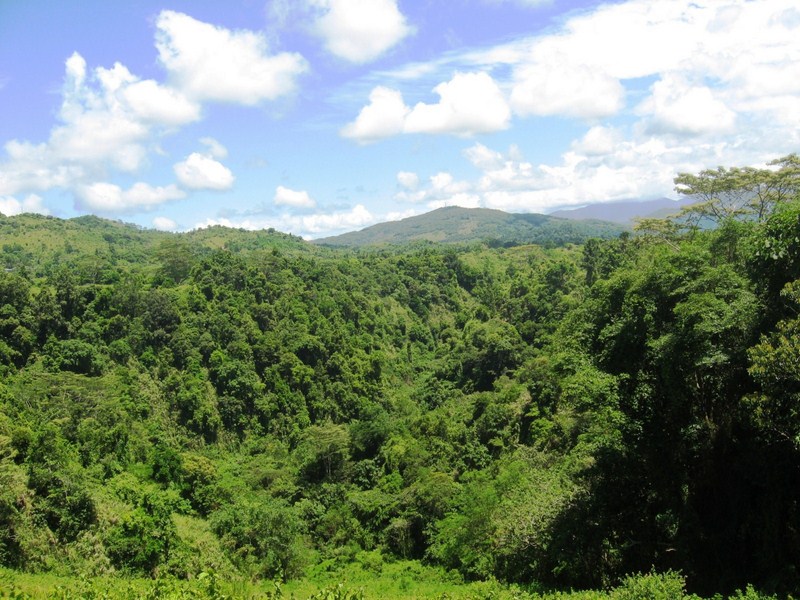
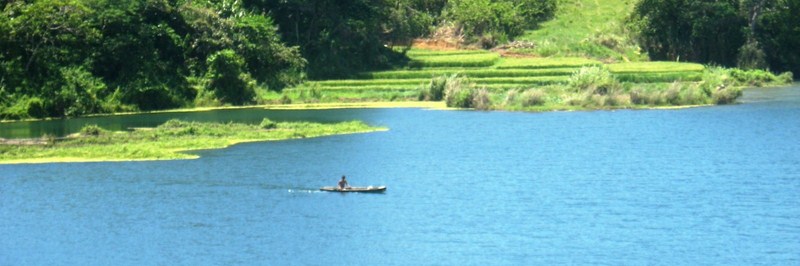
There are 2 routes to Baler – the Baler-Bongabon (Nueva Ecija) Road and the longer Pantabangan-Canili Road. As the former was impassable during the rainy season, we opted for the latter.  Just the same, at least 20 kms. of the trip was along gravel roads at Alfonso Castaneda (Nueva Vizcaya), the last town before entering Aurora province.  Here, we made photo op stopovers at Pantabangan Lake (a man-made lake resulting from the construction of the Pantabangan Dam) and its tributary, the Canili-Diayo Dam and Reservoir, probably the most picturesque irrigation dam in the country.

Check out “Canili-Diayo Dam and Reservoir


Millennium Tree

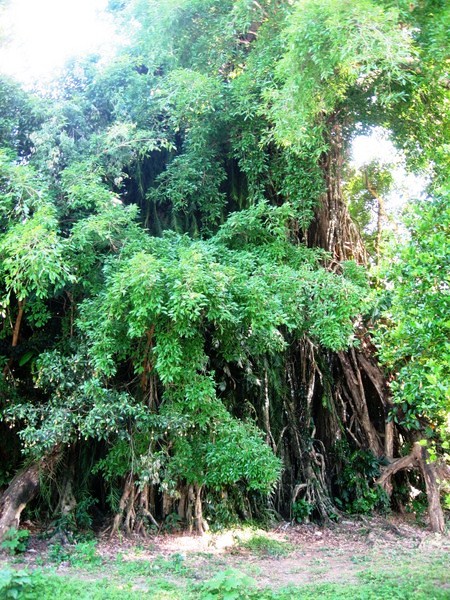
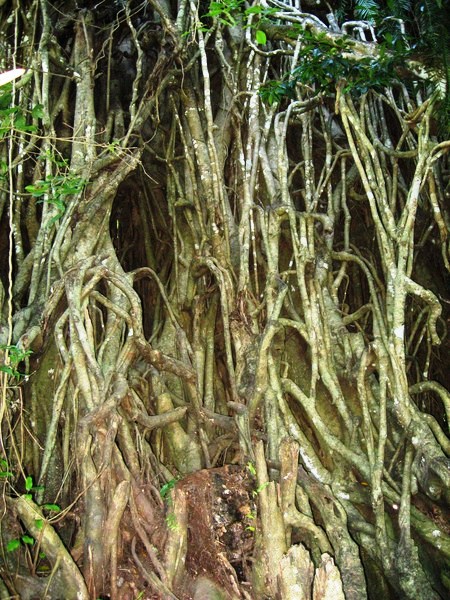
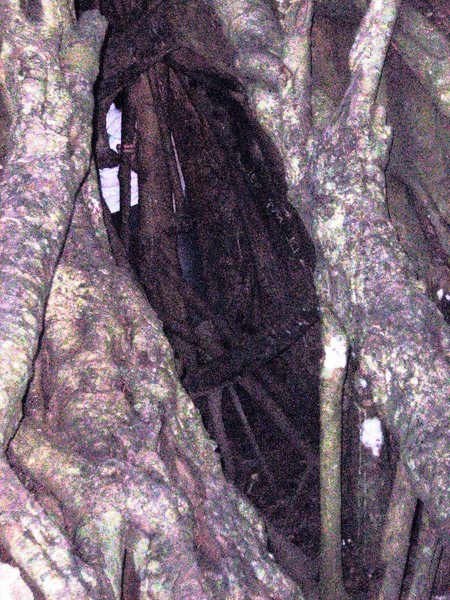
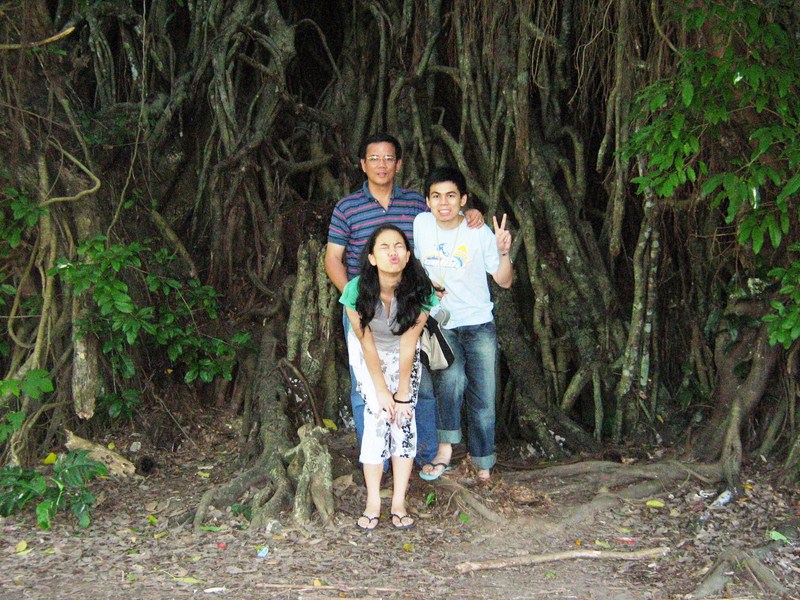
We entered Aurora province at Maria Aurora town (the province’s biggest).  Here, we made another stopover at  Balete Park and its star attraction – the Millennium Tree, a  massive, 49-m. high, 10-15 m. wide balete tree.

Check out “Millennium Tree

A Rainy Arrival in Daet (Camarines Norte)

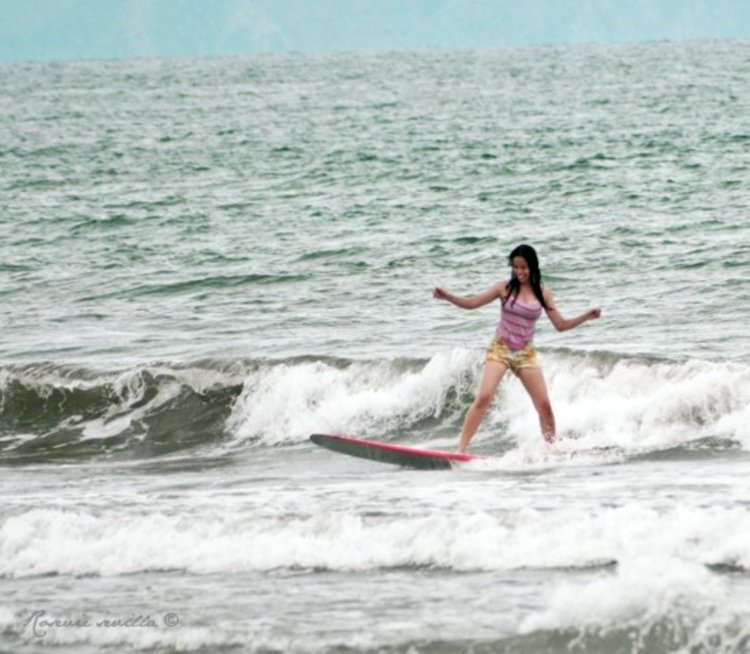
After my short tour of the Camsur Watersports Complex, Mariefe brought me back to Pili Airport where my driver Mr. Melvic Brinas was already waiting for me.  It was already raining when I arrived at the airport.  The drive to Daet took all of 2 hours and, upon arrival, I was billeted at the resthouse of Gov. Jesus Typoco Jr., alongside Bagasbas Beach  Here, I was all by my lonesome inside a big bedroom but it had, in the succeeding days, a ringside view to all the surf festival’s proceedings along Bagasbas Beach.

A rainy morning outside Pili Airport Terminal

It was still raining when I arrived at Daet and it would continue to do so throughout the rest of the day.  DOT-OPRD project officer Ms. Val A. Congzon and Provincial Tourism Officer designate Mr. Edgardo Reyes were already on hand to welcome me.  Val, with her son Loven, just arrived earlier via a Superlines bus.  Her trip, normally just 8 hours, took much longer because of traffic.  As I had nothing else to do, I joined them for lunch at the  Golden Palace Restaurant located at the town proper.

It’s still raining in Daet town proper

After a filling lunch, I was toured around the town, visiting the First Rizal Monument.  Later, back at Bagasbas Beach, I met up with surf festival organizer Mr. Joey Cuerdo.  To him, I voiced out my concern about the rains continuing on to the next day, putting a damper on the festival activities which, aside from surfing, included wall climbing, beach volleyball and ultimate frisbee.  He assured me that it won’t, having checked the weather forecast for tomorrow via the internet.  I hope he’s right.

Come morning, the rains had stop and the sun was shining bright in the sky, just as Joey had said last night.  I again had breakfast at the Golden Palace Restaurant with Val, Ed, Loven and guests Jason and Michelle Carpio.  After breakfast, we returned to Bagasbas Beach where the surf festival was already in full swing. Other invited members of the media, accompanied by DOT media coordinator Mr. Boyet Escueta (whom I also met during the 2002 Kaogma Festival in naga City), were already there, brought in from Legaspi City (where their plane landed from Manila).  They were also billeted in the Municipal Guest House.

Camsur Watersports Complex (Pili, Camarines Sur)

I was invited to cover the 2nd Bagasbas Summer Surf Festival (April 4-5) to be held in Daet, Camarines Norte, and I was to get there via an Air Philippines flight to Pili Airport in Camarines Sur.   At the NAIA terminal,  there was a long queue for this as well as other flights to Pili as the surf festival also coincided with  April 2-5 Terry Larrazabal Bike Festival to be held in Camsur.  Many participants brought along their packed bikes.  I was lucky to get on board my flight.  Flights were overbooked and other members of the media who were joining me had to move their flight for next day and would have to land in Legaspi City (Albay) instead of Pili. 

Camsur Watersports Complex
The flight to Pili took just 45 mins. and I arrived at the airport by 8 AM.  It seems no one was at the airport to pick me up as they must have thought that my flight was cancelled.  Luckily for me, I met up with Ms. Marife Nolasco-Maralit, the Camarines Sur Provincial Officer who I met previously at the 2002 Kaogma Festival of Naga City.  She contacted the Mr. Melvic Brinas, the driver who was supposed to pick me up.  Melvic was already on his way back to Daet when he received the call and he promptly turned back.  As I still had time to kill before his arrival, Mariefe offered to tour me around the nearby Camsur Watersports Complex (CWC).
 
The clubhouse restaurant
This unique, 6-hectare watersports park, opened in May 2006 (during the term of Gov. Luis Raymond Villafuerte, president of the Philippine Waterski and Wakeboard Federation), is the top tourist attraction in the Bicol Region.  It offers a 6-point cable ski system designed for wakeboarding, wakeskating, kneeboarding and waterskiing.  These are done in 2 large man-made lakes.  It is open even at night as the park is equipped with spotlights.  CWC also has a clubhouse restaurant by the lagoon, a swimming pool, sand bars, spa, pro-shops and a grandstand for guests.
One of the man-made lakes
On October 2006, the 1st Cable Wakeboarding Nationals were held here and, on July 2008, the complex hosted the 2008 World Wakeboarding Competition.  Accommodations in and near this provincial government-run complex include first-class hotel rooms, Tiki huts, airconditioned individual cabanas and refurbished container vans just meters apart from each other.
 
Camsur Watersports Complex: Provincial Capitol Complex, Brgy. Cadlan, Pili, Camarines Sur.  Tel: (054) 477-3344, 475-0689 and 477-3349.  Fax: (054) 477-3347.  Website: www.camsurwatersportscomplex.com.


Light and Sound Museum (Manila)

Light and Sound Museum
One of my son Jandy’s subjects in Asia Pacific College was “Rizal Life and Works” and one of the subject’s requirements was a scheduled visit, with his classmates, to the Light and Sound Museum in Intramuros.  I decide to accompany him there. This 2-storey, 1,800-sq. m. museum used to be the Beateria de San Ignacio, the first nunnery established in the Philippines.
Execution of Gomburza
Inaugurated last 30 November 2002, this museum, a tourism project of Sen. Richard Gordon, chronicles the Filipino’s pursuit for freedom under the leadership of National Hero Dr. JoseRizal, and other revolutionary leaders such as Cebuano warrior Lapu-Lapu, RajahSoliman and Andres Bonifacio. It features, in dramatic, historical tableaux, up to 140 moving mannequins dressed in life-like costumes, its overall presentation showing the Filipinos’ resiliency, intelligence and self-worth throughout its history.  
Rizal in Europe
Characters in Rizal’s novels
The sets and other effects took us through a 45-min. tour, with voice-over script, of Philippine history: from prehistoric times, the arrival of the Spaniards and Christianity, the shaping of Filipino culture under the friars and the brewing revolutionary movement, up to Rizal’s execution in 1896.
Jandy at Printing Press of La Solidaridad
Rizal writing his novel Noli me Tangere
Rizal in Dapitan
The entire ground floor focuses to the Spanish annexation of the Philippines as a province. The second floor recounts Dr Jose Rizal’s saga and describes his prolific days as a student at the Ateneo Municipal de Manila as well as his trip to Europe where his burning desire for Filipinos to be treated fairly by the colonizers was ignited. It also features his two books Noli Me Tangere and El Filibusterismo which exposed the ills of the Spanish society.
Trial of Rizal
Rizal visited by his mother
Rizal walking to his execution
There was also a huge room tracing Rizal’s martyrdom. The room replicates the scenario at Bagumbayan where Rizal tried to face the executioners to prove his innocence.  Another area shows details of Filipino uprisings steered by Andres Bonifacio. Bonifacio and his followers tear up their cedulas or residence certificates, a symbol of Spanish dominance during that time. 
Execution of Rizal
In addition, there is the Bagumbayan exhibit with its symbolically collapsed walls depicting a prelude to something new for Filipinos.  Towards the end of our tour, we all walked along a dim corridor leading through the exit made of heavy wooden doors facing the set up of the new Intramuros overlooking the well-lighted city golf course in the perimeter of the walls. 
Death of Rizal
Light and Sound Museum: Sta. Lucia cor. Victoria St. (near Baluartillo de San Diego), Intramuros, Manila.  Admission: PhP100 per person for a group of ten. First show starts at 10 AM and last show starts at 6 PM.  Tel: (632) 524-2827.  Fax: (632) 524-0823.

Central United Methodist Church (Manila)

The beautiful Central United Methodist Church (CUMC), the first Protestant church in the Philippines, was founded on March 5, 1899 during the American Occupation and originally named the Central Methodist Episcopal Church.  The church’s history is closely intertwined with that of Knox United Methodist Church.  Both churches were the result of Filipino-American ties during the surrender of Manila in 1898.

Central United Methodist Church (CUMC)

On August 28, 1898, the first Protestant worship service in the Philippines, officiated by Rev. George C. Stull, was attended by both American soldiers and Filipino civilians.  During the Philippine–American War, the congregation separated itself from Knox United Methodist Church, the American component, who transferred its services to the YMCA and was organized in 1899.

The massive pointed, Gothic-style arch of the facade

On December 23, 1901, its first chapel of the CUMC was completed but, in November 1906, it was replaced by a structure, designed by C.B. Ripley, made of stone. In 1916, the church was renamed as the Central Student Church and, in 1932, the present structure, the third church on site, was designed by Juan Marcos Arellano using Gothic Revival architecture,  was completed and inaugurated on June 19, 1932.  That same year, it was elevated to a cathedral.  Among Methodists the church is known as  the “cathedral.”

National Historical Institute (NHI) plaque installed in 1985 (Tagalog)

During the Liberation of Manila in 1945, fighting between the combined Filipino and American troops and the Japanese Imperial forces severely damaged the CUMC and rendered it unusable. Its congregation was again reunited with Knox United Methodist Church until 1949, when the CUMC was rebuilt, following its original Arellano design, in its original site along San Luis Street (now T.M. Kalaw Street). The rebuilt church was inaugurated on December 25, 1949.  In 1985, a historical marker was installed by the National Historical Institute.

Since then, membership of CUMC has shifted rapidly, from predominantly American to a mixed Filipino and American demographic. Former Chief JusticeJosé Abad Santos and Dr. Jorge Bocobo (former Justice of the Supreme Court of the Philippines, 1942-44) used to congregate here.

Central United Methodist Church: 694 Kalaw Ave.cor. Taft Ave., Brgy. 666, ErmitaManila, 1000 Metro Manila. Tel:  (02) 8525 7329.  Fax: (02) 8525-7590. E-mail: info@cumc-manila.org.  Website: www.cumc-manila.org.   Sunday church services here are held in Tagalog (8 AM), Ilocano (9:20 AM) and English (10:40 AM). Vesper at 5:30 PM. Coordinates: 14.582662°N 120.983586°E.

How to Get There: Take the LRT to United Nations Avenue Station.  The church is across from Plaza Olivia Salamanca.

A Historical Tour of Clark (Pampanga)

After watching the early morning flight of Clark’s famous hot air balloons, Jandy and I returned to our Toyota Revo and made our way out of Clark as we still wanted to explore nearby Angeles City.  Along the way we made brief stopovers at some of Clark’s historical sights.  Our first stopover was at the old parade grounds.

Fort Stotsenberg Gate Posts

The Fort Stotsenberg Gate Posts once stood at the Dau Gate, the first gateway to Fort Stotsenberg , from the early 1900s until the Japanese Occupation in 1942 when they were removed and buried as landfill.  Unearthed intact in 1965,  these posts were moved to the American Legion Post (near the Personnel Office and not far from the Clark Gym) and finally relocated to the south side of the entrance of the parade grounds in 1984.

Clark Museum

Near the old parade grounds, on the original site of the 217-bed base hospital (dating to September 1903) and the Base Commander’s office, is the Clark Museum, also called the Kapampangan Museum.


Check out “Clark Museum

Death March Marker

At the entrance of the Clark Veterans Cemetery, along the main entrance road, just past the main gate, is the Death March Marker.  This memorial marker was erected by the Manila BPO Elks lodge in honor of fellow Elks, American and Filipino POWs, who passed this spot during the infamous Bataan Death March in 1942.

Clark Veterans Cemetery

Just inside the Main Gate, along the Mitchell Highway, is the 20.365-acre, 12,000 plot Calrk Veterans Cemetery, formed between 1947 and 1950 to house 7,559 military and civilian remains.  There are headstones/markers and remains from at least 4 other U.S. military cemeteries (Fort Stotsenberg 1 and 2, Fort McKinley and Sangley Point Naval Cemetery).  These include 2,030 fallen American soldiers, including at least 638 Philippine Scouts (PS) from the pre-World War II era.  Some, but not all, were veterans of the Spanish-American war and the Philippine-American War.

Graves of the unknown dead

Others are graves of U.S. veterans from the U.S. Army, U.S. Navy, U.S. Marine Corps, U.S. Coast Guard and U.S. Air Force who died after World War II (all World War II dead were moved to the American Cemetery in Manila) and during the Korean and Vietnam War.  The largest category interred is civilian, mostly U.S. and Filipino, all of whom worked for the U.S. government, and their dependents.  In addition, nationals from France, Spain, Canada, Japan, China, Vietnam and India are also buried there.  A little over 1,600 remains are still unidentified.  The cemetery is also the only place in the former U.S. 13th Air Force base where the U.S. flag flutters alongside the Philippine flag.

Salakot Arch

Finally, at the main gate entrance to the Clark Freeport Zone, at Bayanihan Park, is the Salakot Arch, a cavernous welcome landmark fashioned after a farmer’s hat built in 1979.  It stands as a sign of Philippine-American friendship over the years and was originally built to symbolize the historical March 14, 1947 signing of the RP-US Military Bases Agreement.  Beyond the arch is Angeles City.

The City of "Angels" (Angeles City, Pampanga)

Angeles City

After the culmination of Clark’s Hot Air Balloon Festival, Jandy and I drove on to Angeles City for a walking tour of the City of Angels.  Many know Angeles City only as a rest and recreation area frequently visited by the U.S. servicemen from nearby Clark Air Base.  Even with the base’s closure, Angeles is still home to a large colony of expatriates as many Americans chose to permanently settle in city, particularly in the Balibago District.  They were just about everywhere I looked in the city.  However,  not many people know that, on March 17, 1899, Angeles was briefly made the capital of the First Philippine Republic by Gen. Emilio Aguinaldo.  In fact, the first and only anniversary of the Declaration of Philippine Independence (June 12, 1899) was celebrated here.  Upon its capture by the Americans on November 5, it was made the headquarters of Maj.-Gen. Arthur MacArthur (father of Douglas).  Angeles, once just a jungle clearing and a northernmost barrio of San Fernando called Kuliat (after an indigenous vine that grew abundantly in the area), soon grew rapidly around the former Clark Air Base and was made into a chartered city on June 22, 1963 by virtue of Republic Act No. 3700.

Holy Rosary Cathedral

Many relics of the city’s Spanish and American era past still exist, all within the Sto. Rosario Historic District and all within walking distance from each other. My walking tour started at the Holy Rosary Cathedral (where I parked my car), along Sto. Entierro corner Sto. Rosario St.

Check out Cathedral of the Holy Rosary

The Holy Family Bldg., the former convent, was used by the U.S. Army from August 1899 to December 1900 as a military hospital and by the Japanese Army as a troop barracks, officers’ quarters and arsenal in early 1942.

Angeles Physical Therapy Rehabilitation Center

Adjacent to the cathedral is the 2-storey Museo Ning Angeles, the former City Hall built in 1922.    This museum, opened on December 8, 1999, now showcases Kapampangan lifestyle and culture.

Check out Museo Ning Angeles

The Angeles Physical Therapy Rehabilitation Center, now a center for polio and stroke patients, was first built in 1899 as the deposito for religious statues and carriages used in religious processions.   From 1899 to 1901, it was utilized by the U.S. Army as a jail  for recalcitrant U.S. troops and, from 1946 to 1947, as headquarters of U.S. Army 11th Film Exchange.  From February 6, 1967 to 1986, it was  the City Post Office.

Bale Matua

The oldest building in the city is Bale Matua, also known as the Founder’s House.  It was built in 1824 by Don Angel Pantaleon de Miranda, the former gobernadorcillo of San Fernando, and his wife Doña Rosalia de Jesus.  Together, they founded Angeles in 1796.  On December 8, 1829, the barrio was separated from San Fernando and was renamed Angeles in honor of Don Angel and the town’s patron saints, the Holy Guardian Angels (Los Santos Angeles de los Custodios).  To build Bale Matua, Angel used materials salvaged from their older house built around 1811. The house was later inherited by their only daughter, Doña Juana de Miranda de Henson.  It has high stone walls and an ornate gate and was declared as a Historical Site by the National Historical Institute.

Nepomuceno Ancestral House

The Nepomuceno Ancestral House, along Sto. Rosario St., was the home of Don Ciriaco de Miranda, the first gobernadorcillo of Angeles. Built in 1840, it was inherited in 1868 by Don Ciriaco’s niece, Doña Agustina Henson de Nepomuceno.  A restored grain storehouse (kamalig), along Sto. Rosario St., between these two old houses, was also built in 1840 by Don Ciriaco. In 1980, it was restored by Armando L. Nepomuceno and is now home to Armando’s Pizza and the Camalig Restaurant.   Bale Herencia, at the corner of Lakandula and Sto. Rosario Sts., was built in 1860 by carpenters from Vigan (Ilocos Sur). Said to have been built for the mistress of a parish priest, the current owners now use it as a banquet hall.

Bale Herencia

Clark Museum (Clark Special Economic Zone, Pampanga)

Clark Museum

Located near the old parade grounds, on the original site of the 217-bed base hospital (dating to September 1903), headquarters of the 3rd Combat Group in 1979 and the 3CSG Headquarters, this museum, also called the Kapampangan Museum, was inaugurated on July 5, 1997.

Military Uniforms

Aeta Hunting Equipment

The museum showcases Clark’s rich history and transformation, from the time it was used as a U.S. military base (the largest outside mainland USA) in 1902 up to its dramatic development as a Special Economic Zone. It is also a tribute to the resilient Filipinos who strive to reshape their future despite ravages of war and the wrath of nature

Biography of Maj. Harold M. Clark

Pres. Manuel A. Roxas Exhibit

The museum is divided into different sections – “Aetas,” “US Early Years,” “Aviation Era,” “World War II,” “Reconstruction,” “US-Philippines Turnover,” “Alumni of Wurthsmith and Wagner High School,” “People Power Revolution,” “Mt. Pinatubo Eruption,” “Former Base Employees,” “The Transformation,” and the “Jack and Ariella Art Collection.”

Copy of Instrument of Surrender signed at USS Missouri

Model aircraft

A large mural depicting the vision of Clark Development Corporation (CDC) and five scenic dioramas portraying the transformation of Clark into its present state are among the exhibits at the museum. A special section, featuring vivid photographs, is dedicated to the Thomasites, the first American teachers in the Philippines. 

Terrain Model of Mt. Pinatubo

Topographical Model of Clark Field

Also on display are photos, models of U.S. aircraft, Philippine currency during the Japanese Occupation, weapons and a Mount Pinatubo exhibit.  In front of the museum is a Spanish-era cannon (cast in Peru in 1778, it made its way to the Philippines on board the Spanish warship Seville) and a Japanese World War II anti-aircraft gun. Spanish-era cannon..

The American Contribution to Philippine Education

Spanish-era cannon

Clark Museum: Building 2425, Tourism Promotions Office, Clark Development Corporation, E. Quirino St., Clark Freeport Zone, Pampanga.  Tel: (045) 599-2832, (045) 599-3221 and (045) 599-6235. Open Monday-Fridays, 8 AM to 5 PM.  Weekends by special arrangement. Admission: PhP30 per person.  Tour guide, teachers and children below 3 years of age are free of charge.

How to Get There: The Clark Special Economic Zone is located 80 kms. north of Manila.

Cathedral of the Holy Rosary (Angeles City, Pampanga)

Cathedral of the Holy Rosary

The Cathedral of the Holy Rosary was first built of light materials (nipa) and of wood in 1855 by Fr. Guillermo Masnou.  The present stone and brick edifice was started in 1860 by Fr. Ramon Sarrionandia through the forced labor system (Pols y Servicios), continued by Fr. Juan Merino in 1880 and completed by Fr. Pedro Ibeas in 1891.

Historical plaque

It was restored by Fr. Rufino Santos from 1893 to 1897.  The backyard of the church was an execution ground for Filipino rebels from1896 to 1898.  Later, it was used by the U.S. Army as a military hospital from August 1899 to December 1900.

The cathedral’s Renaissance-style facade

The cathedral, measuring 70 m. long, 20 m. wide, and 12 m. high, has a beautiful transept and a Renaissance style of Corinthian pilasters and recessed arch and segmented windows topped by triangular canopies.

One of two bell towers

There is a projecting portico with elliptical arches at the main entrance.  Spandrel and pier dados are ornamented with relief carvings.  Flanking the facade are twin bell towers moving upward in a slow sweep and in uneven levels.  The window casements have Renaissance-influenced latticework.

The cathedral’s interior

The main altar and retablo

Cathedral of the Holy Rosary: Sto. Entierro cor. Sto. Rosario St., Angeles City, Pampanga. Feast of the Holy Rosary: Second Sunday of October.

How to Get There: Angeles City is located 82.8 kms. (a 2-hour drive) from Manila and 13 kms. (a 30-min. drive) west of the City of San Fernando.