Clark’s Hot Air Balloon Festival (Pampanga)

Hot air balloons being inflated …..

Normally, Valentine’s Day is a day reserved just for lovers.  At the Clark Special Economic Zone (CSEZ) in Pampanga, it is also this, plus more, as the Philippine International Hot Air Balloon Fiesta (PIHABF), the most colorful event of the year (held last February 12 to 15), also fell on the day of the hearts. Dubbed as the “Weekend of Everything that Flies,” it is the Philippines largest aviation sports event. Until lately, this was also included in my “Must Attend” list of festivals or events.  I was again about to miss out on this until an invitation to cover the event, from Ms. Grace Aquino, Marketing Communication Manager of the Fuego Hotel-managed Hotel Vida, came along, an offer too good to refuse.  

Hotel Vida Clark
I brought along my son Jandy and left on the morning of the day of hearts itself, arriving at the hotel by 11 AM.  On hand to welcome us was Grace and Korean hotel owner Mr. Daesik Han.  The hotel was then fully booked, not just by Valentine couples, but also by about 35 balloonists from all over the world.  They seem to be everywhere around the hotel; waiting at the lobby, cruising the hallway, dining at Salt Coffee Shop, lounging by the swimming pool and, later at night, reminiscing about the day’s events at the hotel’s new Malt Bar.  

Choreographed kite flying

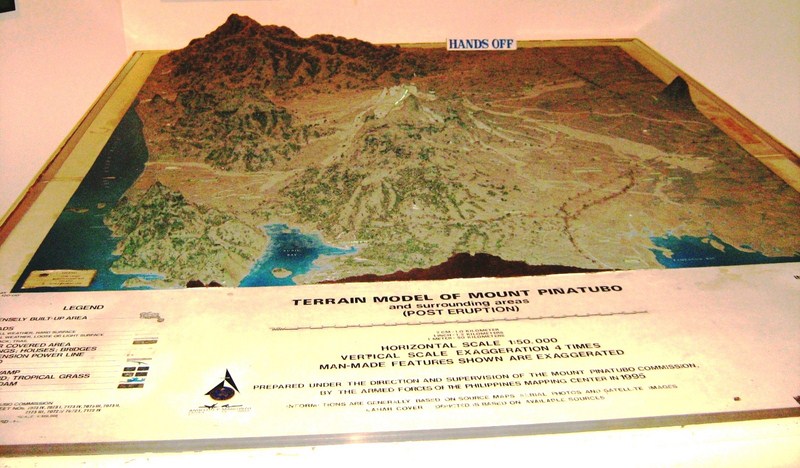
We were again assigned a lavish Junior Suite and, after a short rest, we decided to check out the event’s afternoon activities.  To enter, Grace supplied us with two PhP100 one-day passes. Now in its 14th year, the Hot Air Fiesta was first held in 1994 when then DOT Secretary Mina Gabor commissioned Korean businessman and hot air balloonist, Mr. Sung Kee Paik, and Mr. John Emery, British Airways General Manager, to initiate a major balloon event in the county in the hope of uplifting the spirits of the Kapampangan people, following the devastating eruption of Mt. Pinatubo three years ago. Since then, it has been officially recorded as one of the scheduled ballooning events in the world, competing in media exposure and attention with the World Hot Air Balloon Championship (Japan) and Albuquerque International Balloon Fiesta (New Mexico, U.S.A.).

A paraglider in flight

Held at the 33,000-hectare Clark Civil Aviation Complex, this four-day ballooning and aero- sporting event, hosted by Clark Development Corp. (CDC), the Clark International Airport Corp., the Philippine Air Force, the Hot-Air Balloon Club of the Philippines and a host of private sponsors (including United Parcel Services, Cirrus and ABS-CBN, among others) drew more than 100,000 spectators, lining it up to be the greatest ever. More than 25 large multi-colored, hot-air balloons (topping the 19 balloons flown from 13 countries in 2008), manned by teams from Hungary, Germany, Switzerland, France, the United States, the United Kingdom, Japan, New Zealand, Thailand, the Netherlands and Malaysia, colored the skies including at least seven especially shaped balloons (one had the likeness of the cartoon character Tigger).  Caltex, Yellow Cab and Kellogg’s also sponsored balloons.

Aermacchi S-211 Jet Trainer

Around the large hangar, we had a field day taking shots of the balloon inflation in the afternoon session (up to the Night Glow) and, the next day, at 6:30 in the morning where they actually lifted off. Balloon inflation is very much dependent on wind conditions with calm winds of less than 10 mph and the clouds at least 2,000 feet above the ground guaranteeing great flights.  Apart from the hot-air balloon competition, the event also featured diverse flying activities such as ultra-light aircraft formation flying, Thai, Malaysian and Filipino paragliding exhibition, AFP flag jump; and a hair-raising, dangerous and thoroughly exciting and world-class stunt flying demonstration performed by the team of Captain Meynard Halili (owner of a stunt pilot school) and Bill Wright.

F-5 Freedom Fighter

There were also light plane rally and balloon bursting competition; PHILSCA and Ateneo de Manila model rocketry demonstration; search and rescue flying exhibitions; helicopter exhibitions and fly-by; choreographed kite-flying exhibition (courtesy of the Kite Association of the Philippines); skydiving exhibition (AFP, PNP, Thai and Philippine Team); remote control aircraft and kite flying demo; flour bomb drop (Angeles City Flying Club and Land Rover); PAF mass parachute jump (from a C-130 aircraft); and swarm flights of elite aircraft such as Citation Mustang, a single-pilot operated light jet (built by Cessna Aircraft Co.) and Cirrus SR22, a single-engine, four-seat aircraft designed with a fixed landing gear. 

Balloons in flight

In addition, small private planes from Japan, Thailand, Singapore and Indonesia all flew in, participating in an air rally which has become a regular component of the festivities. In short, just about everything that flies in the skies in and about Clark Freeport. On-site ground activities included a mini-trade fair, food plaza, daily live concerts (including a Rivermaya concert which we watched), wall-climbing and other special events. Philippines Army personnel also allowed visitors to hold and pose with automatic weapons (without ammo of course).

The Philippine Air Force supplied an Italian-made Aermacchi S-211 jet trainer and a mothballed Northrop F-5A Freedom Fighter, allowing spectators to pose inside the cockpits complete with flight helmets. As the waiting line was long, Jandy and I satisfied ourselves by just sitting on the F-5 airframe with two PAF personnel. Also on display was a Robinson, the world’s smallest helicopter.  Other spectaculars prepared for tourists included a photo exhibit, giant lanterns from Pampanga, Higantes from Angono, mini-trade fair, car show and exhibits, and fireworks display. Visitors were also allowed to fly their personal kites on the grounds. The food plaza area served good home-cooked Filipino culinary delights as well as McDonalds and Jollibee fare.  

Hike to Tappiya Falls (Banaue, Ifugao)

Tappiya Falls

Come morning it was decision time for the group.  There were two options left for us before leaving Batad in the afternoon.  For the still adventurous, me included, there was the 30-min. (according to the locals) hike to Tappiya Falls, something I haven’t done during my first visit (which was just a day tour way back April 1998).  The other was an easier hike down to Batad Village proper to photograph village life.  I chose the former but half opted for the latter. Joining me to the falls were AACC members Jun, Steve and Rosevie plus Pearl, Phoebe, Ivy, Arvic and our local guide Mang Vicente.

Batad Village

After a hearty but very early breakfast, we all left Simon Inn by 7 AM, taking the same route to the Central Viewpoint.  Beyond the rice terraces, it was a slow, lung busting and steep (with slopes reaching 45 degrees) hike.  A meandering river soon came into view, indicating how near we were to our destination. Across this river and upstream along the far bank was the beautiful and impressive, 25-m. high waterfall with its enormous swimming natural pool.  We were in luck as running across the falls was a rainbow, making for another beautiful and rare photo op. While the others went bathing, Jun, Vi, Steve and yours truly started clicking.

Apo Ben

After 30 mins.of this bather’s and photographer’s heaven, it was time to go as we had another long hard climb ahead.  A rest stop at the Central Viewpoint provided an opportunity to pose (for a fee) with Apo Ben, an Igorot dressed up in full tribal attire (complete with g-string, native spear and feathered headdress).  We arrived at Simon Inn by 11 AM in time for a well-deserved lunch we had no more time for a power nap as we had to pack our stuff and leave. Bebet and Bryan had left by then to allow themselves longer rest stops.  We left the inn with our porters by 1 PM.  The hard part was the hike, now uphill, to the Saddle but from here it was downhill all the way to our pick up point, arriving by 4:30 PM.  The debris from the landslide had been cleared by then.

Dinner at Hillside Inn

Our AUV brought us to Banaue town proper in time for an early pansit dinner at Hillside Inn.  We left Banaue by 6 PM on board a similar airconditioned GV Florida bus and arrived in Manila by 4:30 AM the next day. Again, this rewarding experience helped me gain a healthier respect for the hardworking Ifugao’s ingenuity, the wonders of God’s creation and, in spite of the long hikes, an additional 3 pounds (thanks to the pizza and nutritious highland rice!)

Simon Viewpoint Inn and Restaurant (Banaue, Ifugao)

We reached our destination and home for the night, Simon Viewpoint Inn and Restaurant, by 3 PM. At its concrete, railing-less view deck was the breathtaking amphitheater vista of the Batad Rice Terraces.  Our AACC photographer friends soon set up their tripods and their cameras started clicking away.

Simon Viewpoint Inn and Restaurant

The inn also had a pair of seemingly authentic rectangular and nailless one-room bale huts at the back which I enjoyed exploring. Used for cooking and sleeping, the huts are built on four sturdy amugawan tree trunk posts, 2-3 m. from the ground, to keep the vermin out.  My access to the hut was through a steep, removable bamboo or wooden ladder.  The hut also has outward slanting waist or chest-high walls, two doors, a wooden plank floor and no windows.  The steep, pyramidal, reed and grass-thatched roof conceals the walls.

A pair of Ifugao huts at the back of the inn

After a late lunch and a short power nap to recharge, I joined the others as they left to explore the Batad Rice Terraces up to the Central Viewpoint.  However, to get there, I had to conquer my acrophobia (fear of heights) as I had to traverse a lot of very narrow and high pilapil (terrace walls) along the terrace’s edges to get there.  Once back in Simon’s Inn, we again rested our tired bodies, some having their aching muscles and joints massaged by a local masseuse.  That night, it was all camaraderie, good food (pizza, pita bread, highland rice, veggies, fries, etc.), wine (native rice wine called tappuy) and song (provided by the guitar-playing and crooning Jules).  Lights out at the inn was 10 PM and gladly so as we were all dead tired.  Sleep came easy to the weary.

Food at Simon’s Inn

The Trail to Batad Rice Terraces (Banaue, Ifugao)

The Batad Rice Terraces

This stupendous amphitheater of stone and earth terraces was sculpted out of twin coalescing spurs of a steep, wooded mountain from riverbed to summit. Considered as the “Eighth Wonder of the World” by many, belo it is the relatively unspoiled Batad Village.

These masterpieces of agricultural engineering are said to be the highest of its kind in the world and the largest single agricultural project in the history of mankind.  The terraces are estimated to be more than 100-sq. miles in area, reaching heights of 1,500 m. and its length, if put end to end, would extend 48,280.40 kms., encircling half the globe or extending 10 times the length of the Great Wall of China.

Our hired AUV was soon on our way, along the often dusty but now muddy Mayoyao Rd.,  to the Km. 12 Junction (called the “Saddle”), take-off point for the  hike to Batad Rice Terraces.  However, we only made it halfway as a fresh landslide, brought about by heavy rain the night before, blocked our way, adding another 6 kms. to our already arduous 4-km. hike.  Luckily, there were local porters to carry our backpacks (at PhP200/pack, 2 packs per porter, placed front and back).  Still, this wasn’t going to be a walk in the park as our group had to hurdle, aside from the landslides, tired and aching muscles, sore feet, rough mountain trails (sometimes narrowed to footpaths where only one person at a time could pass) and deep, treacherous ravines. Even in the cold, refreshing mountain air, most were sweating profusely due to the hot sun.

At Km. 12 Junction

Would-be backpackers soon gave up their backpacks to the porters, one had a bout of gout (nice rhyme), another, a diabetic, collapsed from insulin shock and another was on the watch list (having had a quadruple bypass).  Just the same, the photo opportunities were great, with lots of rice terraces, forest-cladded mountains and rivers to shoot, plus there were about six rest stations offering relief and refreshments (as well as souvenir items) to hikers.  From the Saddle, it was an easy downhill hike most of the way.

Return to Banaue (Ifugao)

The narrow streets of Banaue

My first trip to Banaue, Ifugao and its showpiece, the stupendous Batad Rice Terraces (the “Eighth Wonder of the World”), was way back in April of 1998 (http://firingyourimagination.blogspot.com/2011/08/ifugao-day-tour-of-batad-rice-terraces.html) with my then 11-year old son Jandy. Back then there were no celphone signals (making my celphone useless) and the camera I brought with me was an instamatic Canon Sureshot Joy using now rarely-used roll film.  Since then, I have been pining for a return. Well, wishes do come true and I have returned. Though now without Jandy (he had a cold) or my daughter Cheska (she had commitments), I was traveling with seasoned professional photographers –  Mr. Steve Albano, Mr. Jun Bagaindoc, Mr. Jules Capucion, Mr. Nonie Castillo, Ms. Mel Dimapilis, Mr. Rene Enriquez, Mr. Bebet Gaudinez, Mr. Lawrence Bryan Lee and my good friend and frequent travel companion Ms. Rosevie Sevilla; all members of the Ayala Alabang Camera Club.  Our group also included master guide Mr. Lester Susi plus sisters Pearl Giselle and Phoebe Uno, Ms. Ivy Belimac and Mr. Arvic Camua.  To put on some professional air, I brought with me my daughter’s Canon EOS 500D digital SLR which I recently bought in Singapore. However, this was mostly for show as it was set in automatic.

View of the town from People’s Lodge

We left Manila on January 26, 9:30 PM via an airconditioned GV Florida bus at its terminal along Lacson St, near Espana Ave. (near U.S.T.).  One thing nice about this bus was it had its own toilet, convenient for this long-haul  341-km./10-hour trip which including stopovers.  As soon as the bus left the terminal, we all tried to grab some shuteye.  Our trip was uneventful and our bus arrived in Banaue 7 AM the next day.  Our group was picked up by a hired AUV which brought us to People’s Lodge and Restaurant for breakfast. Nostalgically, this inn was the same place me and my son Jandy stayed in during our first visit.  While waiting for our food, we tried out its balcony.  Here, we had a panoramic view of the town, its backdrop of rice terraces and the winding Ibulao River which was traversed by a hanging steel bridge (which, in the past, I tried to cross but chickened out half way).

Ifugao woodcarving

Once done with breakfast, Mel, Rosevie and I explored the nearby handicraft stores for some souvenir shopping.  The shopping options include different kinds of traditional fabric like the woven bark cloth and dyed ikat cloth, wooden objets d’art  such as bowls, trays, oversized spoons and forks, antiques, entirely alien statues of American Indian chiefs and smiling, pot-bellied Chinese gods, and the traditional bul-ols (statues of rice gods).  Curio souvenirs include handwoven wall hangings, crocheted bedroom slippers and pfu-ong (traditional jewelry) representing good luck in hunting or prosperity of children.   Once done, we returned to our group and the AUV for our trip to the jump-off point for our hike to Batad Rice Terraces.

Rizal Shrine (Fort Santiago, Manila)

Rizal Shrine

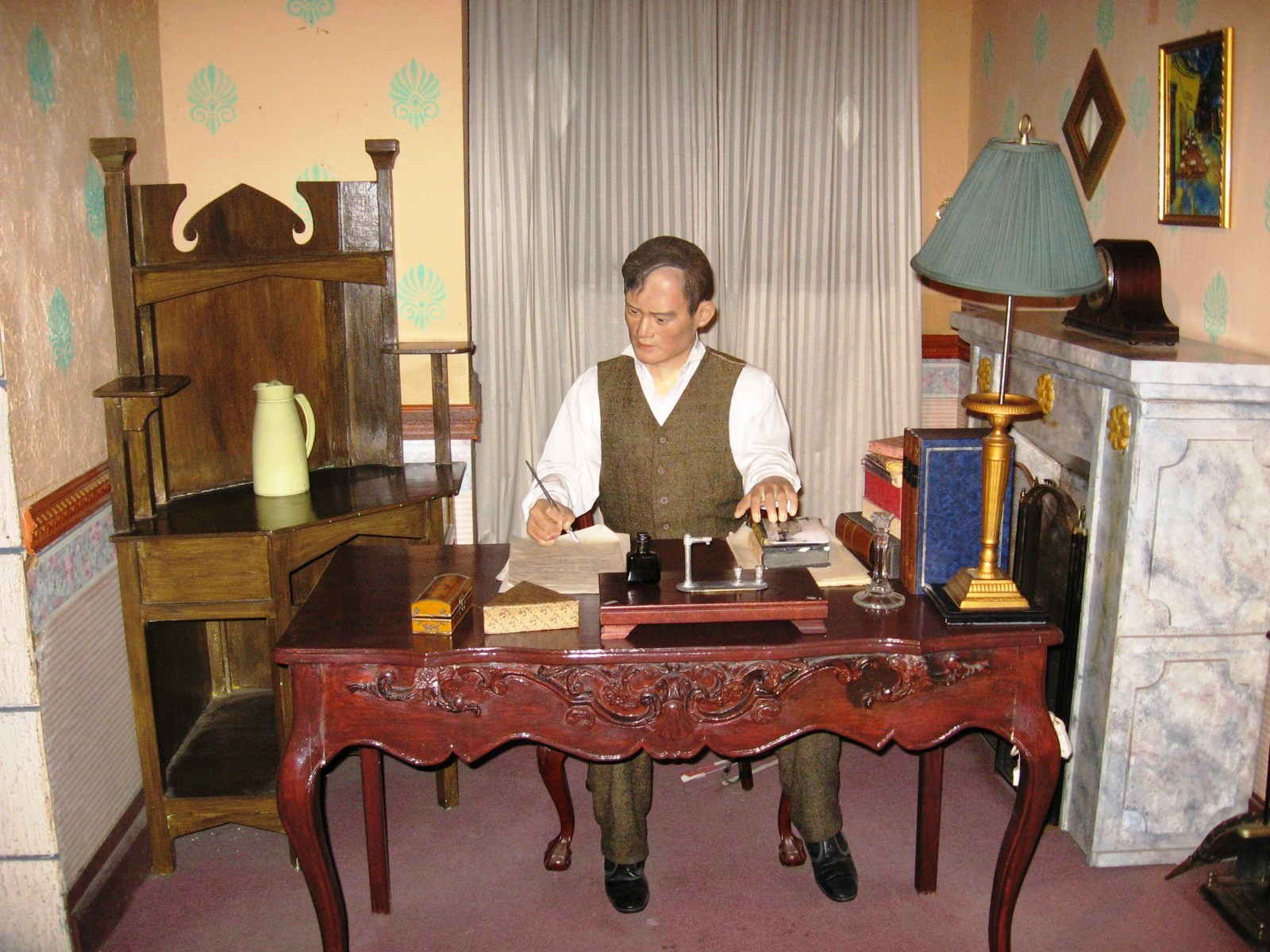
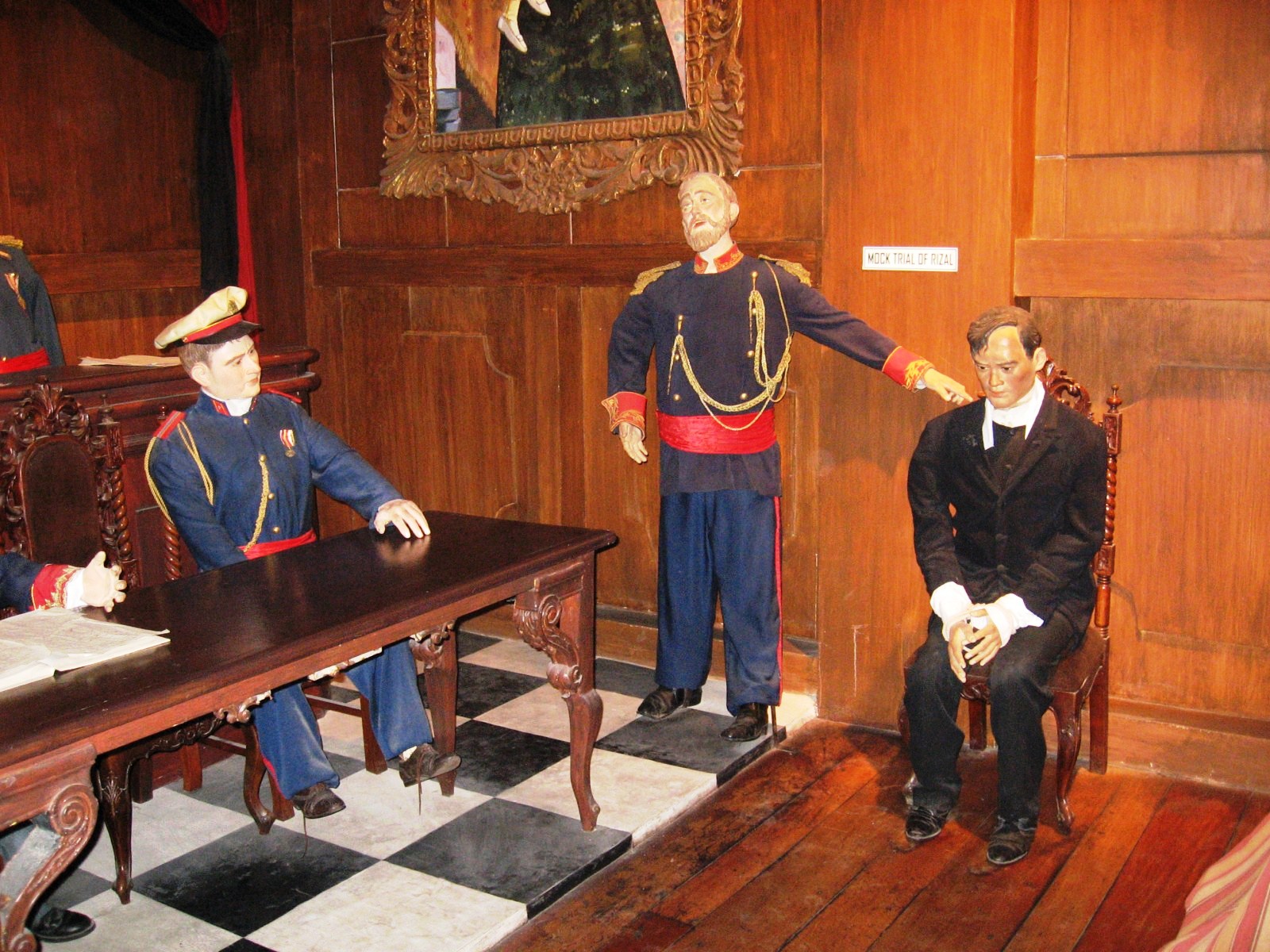
The Rizal Shrine, Fort Santiago’s most prominent attraction, was the highlight of our tour.  The shrine, housed in a restored (in 1953) 2-storey building formerly used as barracks for two Spanish artillery companies, remains under the supervision of the National Historical Institute (NHI).


National Hero Jose Rizal was imprisoned in an improvised “chapel cell” on one corner of its ground floor at the fort’s eastern side.  Here, he was held for two months prior to his execution (November 3 to December 29, 1896) when his sentence was read at 6 A.M..   He also wrote his “Mi Ultimo Adios” (“My Last Farewell”) in this cell.  As a prisoner condemned to death, he was moved into this church-like setting for spiritual contemplation.  He was never confined in a dungeon unlike captured Katipunan members.

Rizal’s Execution (Carlos Botong Francisco, 1961)

Upon entering the first room (Pagbukas ng Alaala), we were greeted by the late National Artist Carlos “Botong” V.Francisco’s commissioned mural (1961) of Rizal’s execution.   Immediately to the right is the door leading to the airconditioned Bulwagan ng Panunulat(Chamber of Texts).  Here are displayed old photos of Rizal’s parents, his sweetheart Leonor Rivera and of Rizal as a child and adult.

Triumph of Science Over Death

Reproductions of original sculptures done by Rizal, “Triumph of Science Over Death” (a torch-bearing Muse of Science standing over a skull) and “Prometheus Bound”, are also prominently displayed. On mounted steel plates are Rizal’s own opinions and analyses as well as those on Rizal done by various scholars.

Rizal’s Opthalmological Instruments

Also on display here are faithful reproductions of Rizal’s handwritten manuscripts Noli Me Tangere(published  in Berlin, 1887) and El Filibusterismo (published in Ghent, Belgium, 1891),  his ophthalmological instruments (Rizal was an ophthalmic surgeon), his shell collection, his Hongkong calling cards, his chess and damaset and  skeletons of frog (Rhacophorus rizali) and lizard (Draco rizali), both named after him.

PHC Plaque

Outside the room is the Galeriya ng Halamanan (Garden Gallery).  On its right is the Silid ng Paninilay(Contemplation Room) which is interconnected to Rizal’s cell (Ang Piitan).  The former was a pantry of food rations for Spanish troops (Cuarto de Menestra) before it was made into a receiving room for Rizal.  The latter, a narrow, dark and nearly airless room, was formerly a storage for military supplies (Cuarto de Repuesto) before being converted to Rizal’s cell.  Rizal’s untitled farewell poem was believed to have been written here. Inside is the familiar sitting wax statue of Rizal done by the late National Artist Guillermo E. Tolentino.  Both rooms are closed to the public.  Two of its doors are original.

Portrait of Rizal at Stairwell Gallery

To the left of the Garden Gallery is the Galeriya sa Hagdanan (Stairwell Gallery).  Here on display, from the foot of the stairs all the way to the top, are oil paintings depicting key moments of Rizal’s life as visualized by painters (Romeo Enriquez, E. Gonzales, Rudy Herrera, etc.) who won in a painting competition during the centenary of Rizal’s birth (June 16, 1961).

A Glass Urn With a Piece of Rizal’s Vertebra With Bullet Wound

Upon reaching the top of the stairs, we entered the Silid ng Nalalabi (Reliquary Room).  Enshrined in a glass urn is the fort’s secular relic: a piece of Rizal’s vertebra with a bullet wound.

Rizal’s Cerrada Coat

Other Rizal personal effects and relics on display in glass cases are two vests made by Rizal’s sisters (1878-81), a cerrada coat, a winter overcoat, fencing sword, dumbbell and walking cane.

Rizal’s Dumbbell and Fencing Sword

2 Vests Made By Rizal’s Sisters

The adjoining airconditioned, 18 meter by 8.5-m. room, Ang Tulang Walang-Hanggan (The Valedictory Poem) is nearly empty except for a glass case with Rizal’s original poem (written on both sides of a tiny piece of paper) and the alcohol burner where the poem was hidden.  Rizal gave this stove to his sister Trinidad with word of its hidden content.  The end of the wall facing the door is inscribed with the words of the “Mi Ultimo Adios” written in Spanish.

Rizal’s Original Mi Ultimo Adios

The last leg of the tour was the Galeriya sa Beranda (Veranda Gallery) where guests sign the guestbook.  Its Museum Shop sells reproductions of old photos, old promotional posters of movies and VHS tapes on the life of Rizal as well as paper bills, medals, stamps, books, key chains, T-shirts and even a cross stitch, all emblazoned with Rizal’s likeness.

Museum Shop

On the walls are plaques with Rizal’s “Mi Ultimo Adios” translated by individuals or groups into different languages : English (Nick Joaquin), Tagalog (Jose Gatmaytan), Korean (Korean Embassy), French (Jean-Claude Masson), Serbo-Croatian (“Povelja” Magazine) and Chinese (Shen Kwang Literary Association of the Philippines).

Czech and Spanish version of Rizal’s “Mi Ultimo Adios”

Translations in Romanian and Indonesian are found in the Garden Gallery. 

Stotsenberg Parade Grounds (Clark Field, Pampanga)

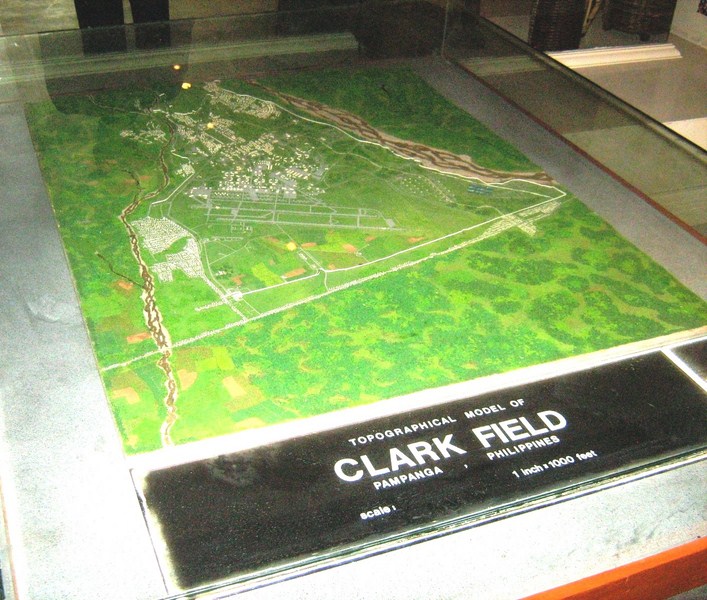
When one mentions Clark Field in Pampanga, the first thing that comes in most peoples’ minds is duty-free shopping.  Having booked ourselves for an overnight stay at Hotel Vida, we also did that, doing some shopping at Puregold.  However, there’s more to Clark than just duty-free shopping.  For one, there’s history.

Stotsenberg Parade Grounds

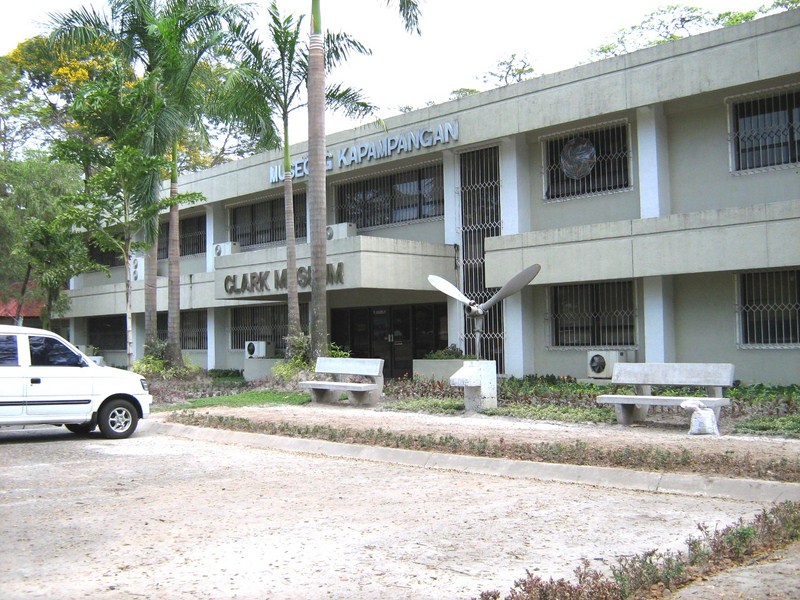
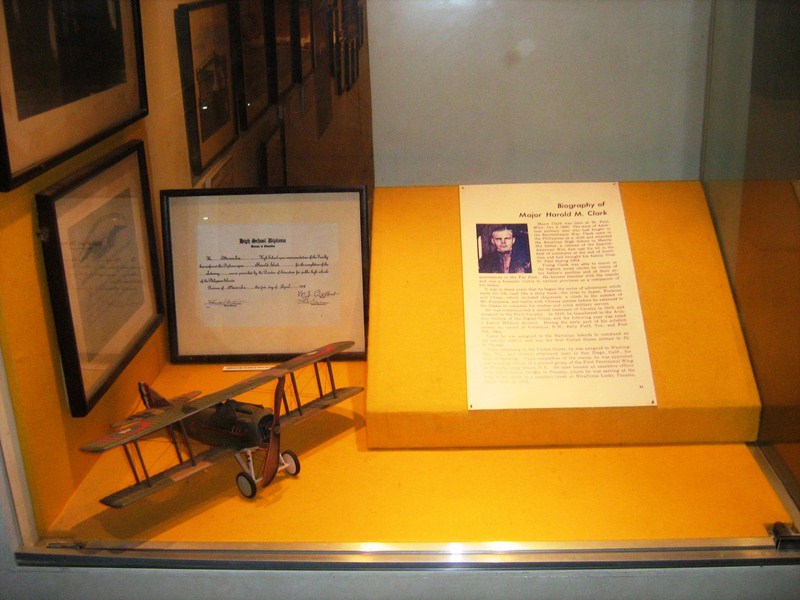
Lots of history exists around the Stotsenberg Parade Grounds.  Large houses called “barns,” built with Oregon pine shipped from the U.S. and used as officers’ quarters, are arranged in a row along the grounds.  Built from 1910-1913 at a cost of US$1,309.9 each by Filipino, Chinese and Japanese laborers, they were the first permanent structures in Fort Stotsenberg (named after Col. John W. Stotsenberg, killed in the Battle of Quingua, Bulacan on April 23, 1899), the forerunner of Clark Field (renamed as such in 1919 after Army aviator Maj. Harold M. Clark who was killed in an air crash in the Panama Canal).  

CDC Exhibition of Kapampangan Crafts

Over the years, until 1922, hundreds of these barns were built but, by the mid 1980s, most of these barn houses were demolished.  Those along Cardinal Santos Ave., now called the Centennial Block, are all that remain.  The huge, shady and century-old acacia (monkey pod) trees in the area were planted in 1903.  

Centennial House: Lifestyle in Stotsenberg Museum

Many of theses barn houses have undergone adaptive reuse. One barn house, Bldg. 2081, houses the Mabalacat Municipal Tourism Office.  Another houses the Clark Development Corp. (CDC) Exhibition of Kapampangan Crafts.  A number also house restaurants such as Cafe Mesa Coffee Shop and Bar (Bldg. 2078) and Red Crab Alimango House (Bldg. 2078).  Another houses a museum (Centennial House Lifestyle in Stotsenberg Museum).

Cafe Mesa Coffee Shop and Bar

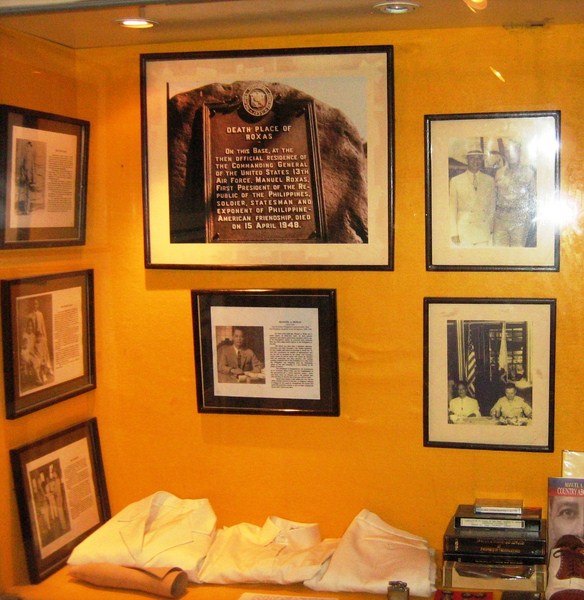
The Death Place of  Roxas Marker, directly across the street from the CDC office, close to the Philippine flag, was built in memory of the Philippine president Manuel A. Roxas who, upon the invitation by the U.S. 13th Air Force commander, came to see for himself the massive reconstruction and rehabilitation work in war-damaged Clark on  April 15, 1948.  That same, while delivering a speech at Kelly Theater, he suffered a heart attack and died. 

Death Place of Roxas Marker

At the western edge of Stotsenberg Parade Grounds is the 26th Cavalry Memorial which commemorates the men of the 26th Cavalry Philippine Scounts, U.S. Army, who died during their heroic action at Lingayen (Pangasinan) in 1941.  Next to it is the U.S. Army Air Corps and Philippine Air Force Monument which details the joint participation of the Philippine and American military forces

26th Cavalry Monument
US and Philippine Air Corps Monument

Cafe Mesa Coffee Shop and Bar: Cardinal Santos Ave., Clark Special Economic Zone, Pampanga.  Tel: (045) 499-0694.

Red Crab Alimango House: Cardinal Santos Ave., Clark Special Economic Zone, Pampanga.  Tel: (045) 599-5345.


Livin’ La Vida at Hotel Vida Clark (Pampanga)

The day after our 23rd wedding anniversary, Grace and I decided to further celebrate, this time with our kids and my in-laws, at Clark in Pampanga.  We arrived there after lunch and checked in at Hotel Vida.  This would be my second stay (the first was during the November 2007 Flavors of Spain) and the first for the rest.  We booked ourselves in 2 interconnected junior suites; Grace, the kids and I in one suite and my in-laws at the other.

The junior suite

Our junior suites were each equipped with state-of the-art amenities such as electronic entry lock; IDD/NDD phone; in-room safety box; a king size bed; a spacious living room area with trundle bed, a kitchen and bar with 6 cu. ft. refrigerator, coffee-making facility and a microwave oven; a balcony, toilet & bath with bathtub and 8” ceiling-mounted shower head; and a 32” LCD cable TV.

Salt Coffee Shop
Rooms here either offer a view of the adjacent golf course, the beautiful, free-form swimming pool and, much better, a verdant and well-manicured landscape crowned with palms and a plethora of majestic, century-old acacia trees. Water elements, in the form of artistically-designed fountains, compliment the existing landscape and soften, together with indoor plants, the hardness of stone and concrete within the lobby and coffee shop. 

Swimming pool area

The hotel was planned and laid out in such a way that natural ventilation, access to visually-stunning and picture-perfect views and use of space is optimized, thus providing a light and airy environment that exudes total relaxation and comfort, qualities which every guest will always look forward to.

Posing at the hotel lobby

The lobby is naturally lit by a skylight and huge fixed glass windows.  Similar windows provide an open and light feeling to the 110-pax restaurant and the 45-pax, open-air veranda pool view area, with its expansive views of the hotel pool and the lush, green surroundings.

Hotel Vida facade

The hotel’s modern but Southeast Asian-inspired façade, conveying both comfort and luxury, is a contrast of structure and nature.  Contrast is achieved through the combination of smooth walls against rough wood slate cladding. Aside from its abundant water features and lush vegetation, the unique, modern tropical theme is further emphasized by the exterior’s use of earth tone colors such as beige, brown and gray. Indigenous materials are used to enhance the tropical theme, through modern and innovative means. The interiors also mirror the same tropical and Asian influences of the façade, with its contrast of wall texture (smooth walls complimented by the roughness and hardness of natural stone).  

Hotel Vida Clark: 5414 M.A. Roxas Highway, Clark Freeport Zone, Pampanga 2023.  Tel: (045) 499-1000.  Fax: (045) 499-0979.  Manila Office: UG-9 Cityland Herrera Tower, 98 V.A. Rufino corner Valero St., Salcedo Village, Makati City. Tel: (632) 840-1430.  Fax: (632) 840-3589.  Website: www.hotelvidaclark.com.

Kennon Road (Tuba, Benguet)

Bernard, Rodel, Jandy and i all woke up very early in the morning as we had to make it back to Manila by lunch time as Jandy had an afternoon class at Asia Pacific College.  Previously, I entered Baguio City via the longer Palispis-Aspiras Highway (formerly Marcos Highway).  This time, to cut travel time and distance (43 kms.), I plan to return via the traditional Kennon Road route.  Besides, it is also the most exciting and scenic route.  Starting from Rosario, Pangasinan, this winding 38-km. zigzag road, though narrower than the Marcos Highway, is used by light vehicles only, leaving out the wider buses and slower cargo trucks.  

Jandy and Rodel at the Lion’s Head

Started in 1903 by American Col. Leighton W.V. Kennon with 125 imported Japanese laborers, its labor force was increased to 2,000 by the time of its opening on January 29, 1905. Built at a cost of US$2,051,562.80, it was the most expensive road in the world at that time.  Points of interest along the way are named after spots in California’s Yosemite Valley in the American West.  The upward climb reveals picturesque heights, lush greenery and two roughly-hewn, pre-World War II mountainside tunnels (one of which has a stream running through it) meant to accommodate a locomotive and pave the way for those narrow-gauge railroad runs from Baguio City to Damortis but never used.  Best viewed near the Kennon Police Checkpoint, this road is frequently hit by landslides during the heavy monsoon rains. 

Bridal Veil Natural Falls

On a hairpin bend above the steep-sided Bued Rier gorge, at Camp 6, a few kms. from the Kennon Rd. view deck, we made a stopover at the 40-ft. high Lion Head.   Built from 1971 to 1972, it was carved from a limestone boulder by a Cordillera artist hired by the Lions Club to create a symbol that would proclaim the presence of the group in Baguio City. Beside it are a few small stalls selling woodcarving and other native handicraft. It was during the term of Baguio Mayor Luis Lardizabal, who was also Lions Club governor in 1969 to 1970, when the club conceptualized the creation of the lion head.  Actual work started in 1971 and took a year before it was unveiled to the public by Lions Club International in 1972. The club tapped donations from Lion members and businessmen in the city and pooled proceeds from a state convention to fund the construction of the lion head.

Further down the Kennon Road, past Camp 3,  about 36 kms. from Baguio City, we espied Bridal Veil Natural Falls.  So called because of its silvery braids of water, it cascades down its steep, rocky slope to a 10-ft. deep natural pool.  

Bridal Veil Natural Falls: Brgy. Tabaan Sur, Tuba, Benguet

Bell Church (La Trinidad, Benguet)

From the strawberry farms, Bernard, Rodel, Jandy and I proceeded to the Bell Church.  Right before the Welcome Arch of La Trinidad, we espied, on a hillside, a cluster of ornate Chinese-style temples and pagodas.  On the right, we entered a large arch with 2 dragons facing each other, then traversed a narrow alley leading up to the temple.  Once inside, we parked the Revo at a spacious parking lot alongside a terraced wall filled with Chinese prints.

Bell Church
The terraced wall filled with Chinese prints

Built by the early Chinese settlers in Baguio and Benguet, this temple is run by the Bell Church Inc. that believes in a amalgam of Buddhist, Taoist, Confusian and Christian doctrines.  The church, guarded by fu dogs, has ornate gateways topped by ephemeral dragons, a towering pagoda with curliqued roofing, windows guarded by stone Buddhas and bells.

Rodel and Jandy posing beside a Chinese deity

Posing beside a fu dog

Bell Church: Km. 3, Brgy. Balili, La Trinidad, Benguet. Open 6 AM-5 PM.

How to Get There: Take a jeepney at the corner of Magsaysay Ave. and Bonifacio St. in Baguio City.