Pindangan Church Ruins (City of San Fernando, La Union)

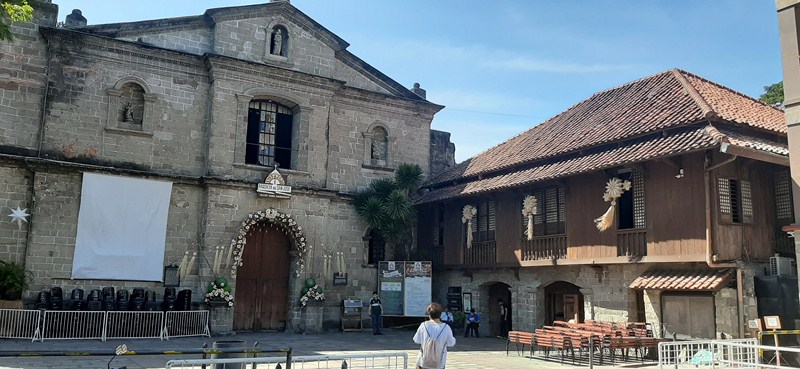
Off the National Highway, near Camp Oscar Florendo, I drove for about 500 m. to the Carmelite Monastery of the Holy Family in Brgy. San Vicente, about 1 km. south of the city.  Beside it are the Pindangan Church Ruins,  the picturesque, roofless remains of a small vine-covered brick and coral church, the first in San Fernando. The monastery’s nuns are the caretakers of these church ruins.

The Pindangan Church Ruins

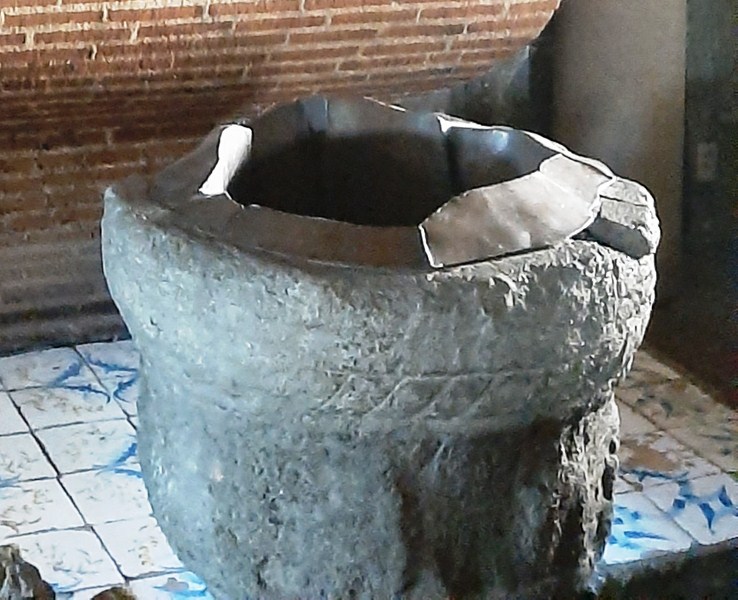
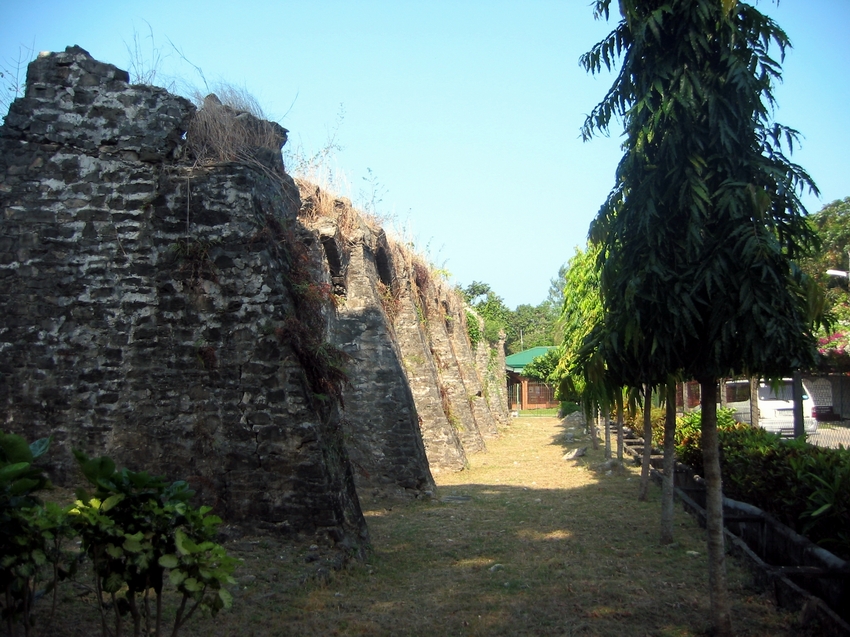
The church was built on May 6, 1786 to celebrate the union of sitios San Vicente de Balanac and San Guillermo de Dalangdang into the new village of Pindangan (derived from the Ilocano word pindang, a traditional method of drying fish).  It was damaged during the 1892 earthquake and left in ruins.  Today, only the solid stone walls and buttresses remain and a new chapel was built at its former altar where a mass is regularly celebrated. A belfry and a deep well are located at its south end. 

Remains of the church’s buttresses

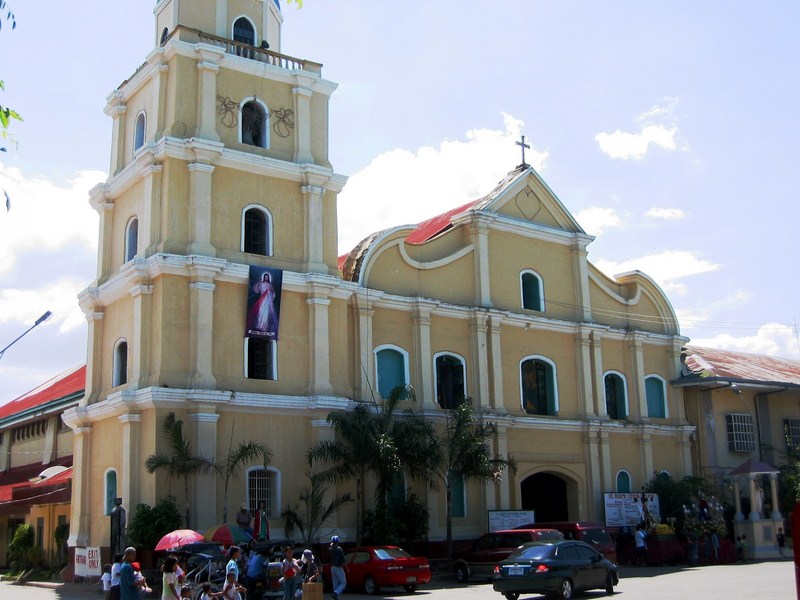
Cathedral of St. William the Hermit (City of San Fernando, La Union)

The kids were still asleep when I awoke the next day and, after informing Grace of my plans, decided to drive the short 5-km. distance, along the National Highway, from the resort to the City of San Fernando to do some sightseeing before we leave for Manila.  I arrived at the  Cathedral of St. William the Hermit, located across the plaza and along Gomez St., just when the mass was about to end.

Church of St. William the Hermit

The seat of the Diocese of San Fernando and a suffragan of the Archdiocese of Nueva Segovia, this church was first built of stone and brick from 1773 to 1786.  The present church was built in 1817 by Fr. Simon Torrado, damaged during the 1860 earthquake and rebuilt in 1873 by Fr. Luis Perez.  Fr. Jose Rodriguez Cabezas made some modifications and laid the foundation for the two bell towers and choir loft.  The church was severely damaged during the 1892 earthquake, occupied by rebels in 1898, destroyed again during the liberation (February 26, 1945) and was rebuilt from 1947 to 1949.   The convent, also built in 1817 by Fr. Torrado, was restored by Fr. Jose Rodriguez Cabezas.

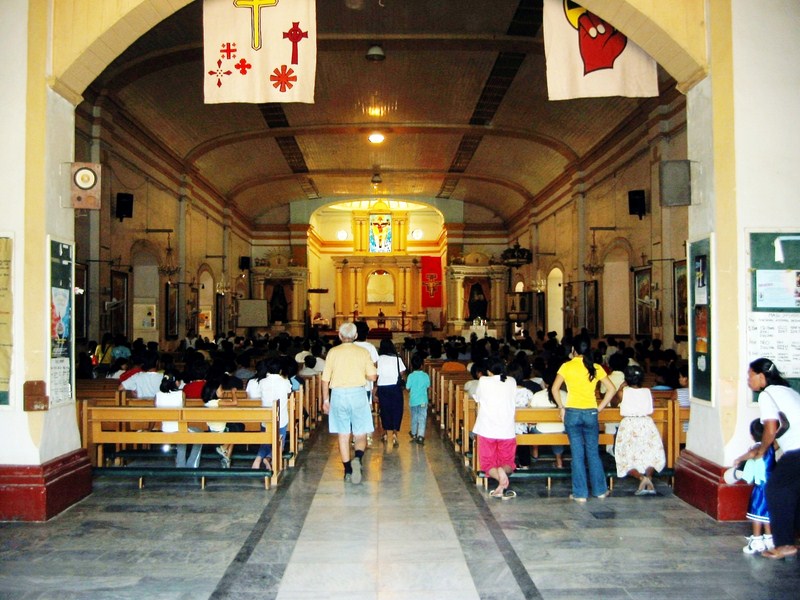
The cathedral’s interior
The colonial Baroque facade, profusely decorated in the Art Nouveau style by ornate scrolls and rosetted and foliaged ornaments in plaster reliefs, is supported on each side by four tiers of Tuscan columns, paired columns on the first and second level and single columns on the triangular pediment and its crown.  Single columns are at the far end of the side walls.  The church’s semicircular arched main entrance, heavily moulded with floral patterns, is topped by a depressed three-centered arched window flanked by pointed arched windows.  The bell tower on the right is a later addition.

Basilica of Our Lady of Charity (Agoo, La Union)

This town’s church was first built in 1578 with bamboo and nipa by Fr. Juan Bautista Pizarro, replaced with brick and stone, destroyed during the 1592 earthquake, restored in 1873, heavily damaged during the 1892 earthquake and repaired in 1893 by Fr. Aquilino Garcia.  The present church was designed by Arch. Ignacio Palma Bautista, its cornerstone laid on September 8, 1975 and was consecrated on December 8, 1978, the fourth centennial of the Christianization of Agoo.  The church was declared as a minor basilica in 1982, badly damaged during the 1990 earthquake and was again repaired and renovated.

Basilica of Our Lady of Charity

Basilica of Our Lady of Charity

The basilica, located along the National Highway, houses the image of Our Lady of Charity.  The image was first venerated and enthroned in Bantay (Ilocos Sur) and brought to Agoo by its Augustinian parish priest.  It survived, intact, the 1892 earthquake and was canonically crowned on May 1, 1971 by Carmine Rocco, papal nuncio to the Philippines. The massive Mexican-Baroque basilica contains some stone blocks excavated from the old church and has a charming garden, a wishing well and an interesting mural called The Second Coming of Christ by Rey Gimeno.  It is a popular pilgrimage site during Holy Week.

How to Get There: Agoo is located 235.92 kms. from Manila and 33.27 kms.  south of the City of San Fernando.

Church of Sts. Peter & Paul (Bauang, La Union)

The town’s church, already built around 1873 by Fr. Mariano Garcia, was severely damaged during the 1892 earthquake, restored by Fr. Leonardo Collado in 1895, slightly damaged in 1944 and its interior was painted in 1978 by Fr. Esteban Mosuela.  Its facade was damaged during the July 16, 1990 earthquake and was rebuilt.  The rectangular, 4-storey bell tower on the left, restored with cement and hollow blocks in 1973, has two bells.  The stone convent, built in 1873 by Fr. Mariano Garcia, was destroyed in 1955, was restored and is now the Sacred Heart School.

Church of Sts. Peter & Paul

Church of Sts. Peter & Paul

The plain and sober-looking Neo-Classical facade has a segmented arch main entrance topped by foliage and flanked by four massive Tuscan columns with double capitals and two semicircular arched statued niches.  The undulating, low and broken pediment, separated from the lower level by a heavy architrave, has a semicircular arched niche flanked by two less massive and shorter Tuscan columns.

How to Get There: Bauang is located 259.38 kms. (a 5.5-hour drive) from Manila and 9.81 kms. (a 30-min. drive) south of the City of San Fernando.

Church of St. Andrew and St. Joseph (Bacarra, Ilocos Norte)

From Burgos, we drove a further 45 kms., past Pasuquin, to the town of Bacarra where we made a stopover to visit the town’s compelling landmark, the Church of St. Andrew and St. Joseph.  This church was built by Frs. Antonio Villanueva (1702 to 1705), Diego Mendarrosqueta (1704 to 1705) and Miguel Albiol (1705 to 1710) but was damaged during the 1709 earthquake and restored in 1868 by Fr. Felipe Fernandez (who also built a spacious and magnificent convent).  Again damaged during the July 18, 1880 earthquake, its roof and floor were later replaced.  The church was seized by the Aglipayans in 1901.  Damaged again during the 1931 and 1944 earthquakes, it was repaired by Fr. Celedonio Albano in 1940 and Fr. Fidel Albano in 1947.  Between 1965 and 1976, Fr. Amado Luz completed the interior and exterior painting.  The church was again damaged during the 1980 earthquake.  Fr. Pedro Berger built the 3-storey bell tower.

Church of St. Andrew and St. Joseph

This church, with its stark interior, used to have a Baroque-style facade which was destroyed during the 1983 earthquake.  The façade then had 4 sets of columns with double capitals sporting rosettes and acanthus leaves, all rising vertically from rectangular pedestals.  It was topped by a horizontal architrave and moving frieze, filled with geometric forms and stylized foliage motifs, and crowned by a pediment framed by huge wavy scrolls. The facade now has scant decorative elements and neat lines.  The Classic columns have been replaced by square ones and the simple straight lines on the pediment suggest where the huge, heavy scrolls used to be. The semicircular arched main entrance is flanked by two smaller, segmented blind windows on the lower section.   The choir loft window is flanked by rectangular openings with triangular canopies.

The church’s retablo is flanked by two small and graceful Ionic columns and broken volutes. Also inside are capiz-paned windows with wrought iron grilles, an old baptistery with domed roof, an upper storey with its original 250-year old narra floor and elegantly painted ceilings.  It also has a collection of ecclesiastical silver and pewter, plus church records dating back to 1702.   The adjacent L-shaped convent is reached by steps from the nave.

The bell tower

The massive 3-storey, 50-m. high square belfry has 4-m. thick brick walls supported by engaged columns (5 on ground level and 2 on the second story).  Its top segment, the campanille, crashed down into the third story during the 1931 earthquake where it remained until the November 22, 1981 earthquake when the dome fell almost in its entirety.  The September 7, 1983 earthquake caused its complete collapse.

After our church visit, we returned to our car and drove the remaining 8 kms. to Laoag City where we had lunch at a Max’s Restaurant outlet.

Stopover: Cape Bojeador Lighhouse (Burgos, Ilocos Norte)

Cape Bojeador Lighthouse

About 25 kms. out of Pagudpud, past Bangui, on our way to Bauang (La Union), we made a short stopover at Cape Bojeador Lighthouse, Burgos town’s famous landmark.   Designed by Magin Pers and Pers in 1887, first lit on March 30, 1892 and still in use, this 19-m. (57-ft.) high lighthouse, also known as the Burgos Lighhouse, is one of the highest in the country.  It is perched on 160-m. high Vigia de Nagpartian Hill, between the low shrub Ilocos Mountains and squat coral cliffs facing the northern portion of the South China Sea.  A 45-km. (1-hr. ) drive from Laoag City, it could be reached by steps from the Maharlika Highway at Km. 536.  The octagonal lighthouse, topped by a bronze cupola, was made of lime, sand and water reinforced by a mixture of molasses and a sticky by-product of the rubber tree known locally as ablut 

The rocky Cape Bojeador coastline

Too bad we couldn’t climb its narrow iron spiral staircase to the lantern room (now a modern electric lamp powered by solar panels) and its viewing gallery surrounded with decorative iron grille work as the lighthouse was then undergoing a much-needed rehabilitation and we could only admire it from outside. Just the same, we still had a breathtaking view, from the hill, of the surrounding expanse of the rough and rocky coastline of Cape Bojeador and the whitecaps of the South China Sea.  

Patapat Viaduct (Pagudpud, Ilocos Norte)

It was already very late in the afternoon when we proceeded, for some photo ops, at the 1.3-km. (0.81 mile) long Patapat Causeway Bridge near the border of Cagayan, a must-see for first time visitors to Pagudpud.  Here, the Cordillera Mountains ends, edging out the coastal plains and plunging into Pasaleng Bay.  

Patapat Viaduct

As there is no narrow coastal plain along this area to build a road, this bridge, instead hugs the mountainside nearest to the cliff and extends toward the sea.  This concrete coastal viaduct, connecting the Maharlika Highway, from Laoag City to the Cagayan Valley Region, is the 4th longest bridge in the country.  It rises 31 m. (102 ft.) above sea level and is located 16 kms. from the town proper.   

The dramatic landscape and seascape

Our drive here gave us a 360-degree view of the most magnificent and dramatic land and seascapes along the Philippine highway system.  Visitors sometimes toss coins into the coves and surf below to ensure safe travel. Along the cliff sides, cascades and mini-falls descend directly to the road side.

Pasaleng Bay

Upon our return to Saud Beach Resort, we went restaurant hopping along the beach, for a change of pace and cuisine, and settled for dinner at the restaurant of Terra Rika Beach & Dive Resort.  Come morning,  our last day at Pagudpud, I decided to burn some of my extra calories with an early morning stroll, prior to breakfast, at the beach to see its true length.  I hiked as far as Jalao Point and its small, modern lighthouse before turning back.  After breakfast, we all checked out of the resort and left Pagudpud by 11 AM.

Jalao Point


Maira-ira Beach (Pagudpud, Ilocos Norte)

After lunch at the resort, we all decided to do some sightseeing and swimming.  From the highway, we turned into a 2-km. long dirt road.  Along the way, we passed by the bell-shaped Timmangtang Rock and made a short stopover at nearby Bantay Abot (meaning “mountain with a hole”) Caves seen along the seacoast of Sitio Gaoa, Balaoi.

According to folklore, Timangtang Rock and Bantay Abot Caves are believed to be lovers, the former being the female and the later the male and are collectively termed as “Lover’s Rock.”

Timangtang Rock
Bantay Abot Cave

Upon arrival at the lovely Maira-ira Beach (also called Blue Lagoon), we stayed at a simple nipa picnic cottage. Hemmed in by hills around its perimeterand largely deserted, except for a few fishermen’s houses, it also has sparklingly white sand  and clear blue waters.  Though its sand was much finer than its better-known neighbor Saud White Beach, this beach has yet to become popular with the mainstream beach-combing crowd.

The crescent-shaped May-raira Beach

Just offshore, in Brgy. Balaoi, are the identical Dos Hermanas (Two Brothers) Islands.

According to folklore, two very close brothers one day went fishing at sea.  Unfortunately, they were met by a typhoon while at sea.  Vowing to be together even in death, they both drowned. To serve as an inspiration to others, the two islands were said to have appeared later.

Dos Hermanas

Saud White Beach (Pagudpud, Ilocos Norte)

We arrived at  the touristy Saud White Beach, along clear, tranquil and palm-lined Bangui Bay by 6 PM.  The beach is home to a number of resorts and we were to stay 2 nights at the upscale Saud Beach Resort and Hotel.  We were the first to arrive at resort, the others arriving much later as they made a stopover at Cape Bojeador Lighthouse in Burgos.  These were anxious moments as I couldn’t contact their Globe mobile phones.  The beach was definitely Smart country.   Upon their arrival, we all checked in at airconditioned rooms with bath, cable TV and fridge.

Saud White Beach

Pagudpud, called the “Paradise of the North,” is reputed to have the longest, continuous white sand beach in the country.  Though not as gently sloping as Boracay’s White Beach, Saud White Beach has offshore coral beds and, unlike Boracay, an occasionally moderate to high surf ideal for water sports activities such as surfing.  Beach volleyball is also a favorite activity here. Most of our stay, however, was spent picnicking, eating, siestas and swimming.

Saud Beach Resort & Hotel

During lunch the next day, we were reminded that we were in Marcos country as joining us at an adjoining table at the restaurant, as guests of town mayor and resort owner Reynolan Sales, were Ms. Irene Marcos-Araneta, her husband Greggy, their kids and their usual bevy of security men.

Saud Beach Resort & Hotel: Saud White Beach, Pagudpud, Ilocos Norte.  Manila booking office: 94 Katipunan Rd., White Plains, Quezon City.  Tel: (632) 921-2856 and (632) 928-9853.  E-mail: inquiries@saudbeachresort.com and reservations@saudbeachresort.com. Website: www.saudbeachresort.com.

Cathedral of St. William the Hermit (Laoag City, Ilocos Norte)

From Sinait, we finally entered the province of Ilocos Norte and drove the remaining 50 kms., without any stopover, to the provincial capital of Laoag City where we met up with the others for merienda at a Greenwich outlet.  While they were still dining, I slipped out and walked a short distance to to visit the city’s Cathedral of St. William the Hermit and its separate and unusual Sinking Bell Tower.

Cathedral of St. William the Hermit

This church was first built in 1580 as a wood and thatched nipa palm chapel.  The present Italian Renaissance and Baroque-style church was built between 1650 and 1700, seriously damaged during the November 14, 1707 earthquake, partially destroyed by fire in 1843 and completely restored by Fr. Vicente Barreiro.  It was again damaged during the July 18, 1880 earthquake and repaired again by Fr. Santiago Muniz and Engr. Antonio de la Camara.   The church was occupied by Pedro Almazan in 1661, by revolutionaries in 1896, American forces in 1899 and by Aglipayans in 1901.  It was the scene of the 1932 diocesan Marian Congress and was slightly damaged during the September 7, 1983 earthquake when statues from the altar and niches fell to the floor.

This stone and brick church has a unique, recently-plastered, 2-storey facade with a main arched entrance flanked by 4 pairs of overscaled, twin-engaged pilasters, without pediments, crowned by a series of coupled urn-motif finials and pseudo-Corinthian capitals with its rosettes and acanthus leaves.  Rising from the architrave and decorating the choir loft level are 5 sets of mini-columns with pseudo-Doric capitals.  Columns in each story follow their own patterns, ending abruptly without reaching the next level.  There are also capiz windows with wrought iron grilles and two exterior stone staircases, one of which is converted to a Lourdes-type grotto.  From its barrel-vaulted ceilings hang chandeliers donated by the late Pres. Ferdinand E. Marcos.  Over the main altar is the Augustinian symbol of a transfixed heart and a tasseled hat.  The deeply recessed niche shows the image of San Guillermo, the patron saint of Laoag.

The Sinking Bell Tower
About 85 m. away from the St. William’s Cathedral is the 45-m. high, 90-m. diameter (at base) Sinking Bell Tower, at the northern end of Don Mariano Marcos Bridge.  One of the most massive and tallest in the country, it was built even before the foundations of the cathedral were laid (around 1660).  Made of bricks (joined by molasses and the juice of sablot leaves mixed with lime and sand), it leans slightly to the north and has sunk half a storey since its construction allegedly due to the 1957 earthquake and its being built on a sandy subsurface.  Now, a man can not pass through its gate without stooping.  Patterned after a famous bell tower in Italy, it is reinforced with four massive columns, crowned by fascias, in each corner and rises, ziggurat-like, with each segment growing smaller as you go higher until you reach its smallest segment, the dome.  Buttresses of the second and third stories end up in Baroque scrolls. A big clock on the tower’s western face has long since gone.  A winding stairway, with two flights on each storey, leads to the belfry where huge bells are installed.
Grace and the kids were already waiting for me when I returned to Greenwich.  We parted ways with Tellie and Frankie and left for the final 75-km. drive to Pagudpud.

Cathedral of St. William the Hermit: A. Bonifacio St.,  Laoag City, Ilocos Norte.