
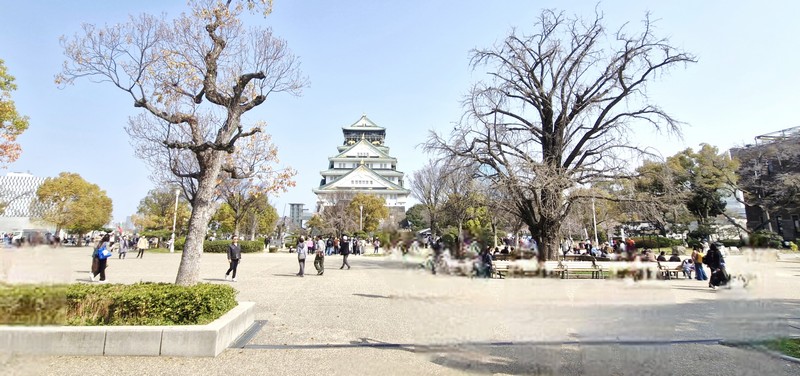
On our second whole day in Japan, we began our Osaka city tour with a stopover at 105.6-hectare (about 260 acres) Osaka Castle Park (known as Osakajo-koen in Japanese), a public urban park and historical site opened to the public in 1931. The second largest park in the city, it lies on the south of the Ōkawa (Kyū-Yodo River) and occupies a large area in the center of the city of Osaka. It was well worth a visit, even if we didn’t intend to enter the castle.
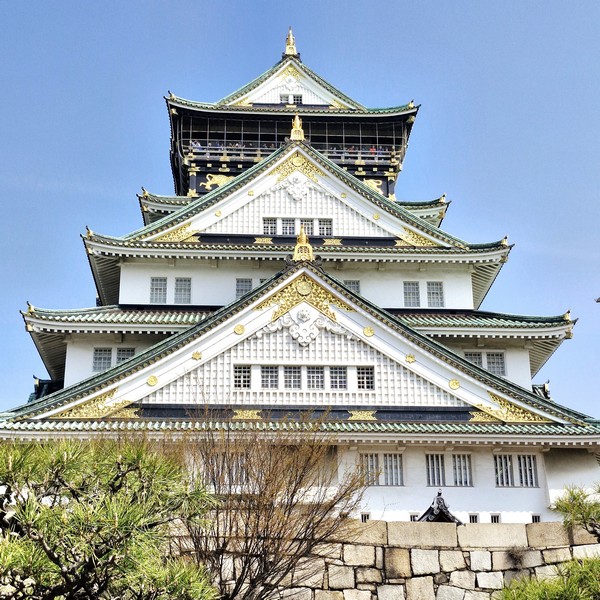
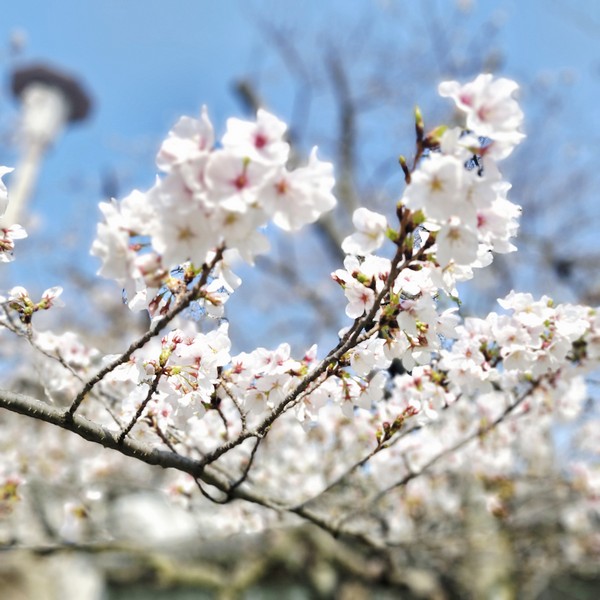
Forming the most attractive part of Osaka, here we can also view and enjoy seasonal flowers such as plum blossoms, 3,000 cherry blossoms (we arrived at the last week of March) and azaleas. This green and spacious expanse, built around the awe-inspiring tower of Osaka Castle (known as Osaka-jo in Japanese, the present castle is a concrete reconstruction that was finished in 1995), provided a pleasant escape from the otherwise crowded and concrete expanses of the rest of the city.
The castle grounds, which cover approximately 61,000 sq. m. (15 acres), contains 13 structures, around the 55 m. high main central tower, that were denoted as “Important Cultural Assets” by the Japanese government. They are Otemon Gate, Sakura-mon Gate, Ichiban-yagura Turret, Inui-yagura Turret, Rokuban-yagura Turret, Sengan Turret, Tamon Turret, Kinmeisui Well, Kinzo Storehouse and the Enshogura Gunpowder Magazine.
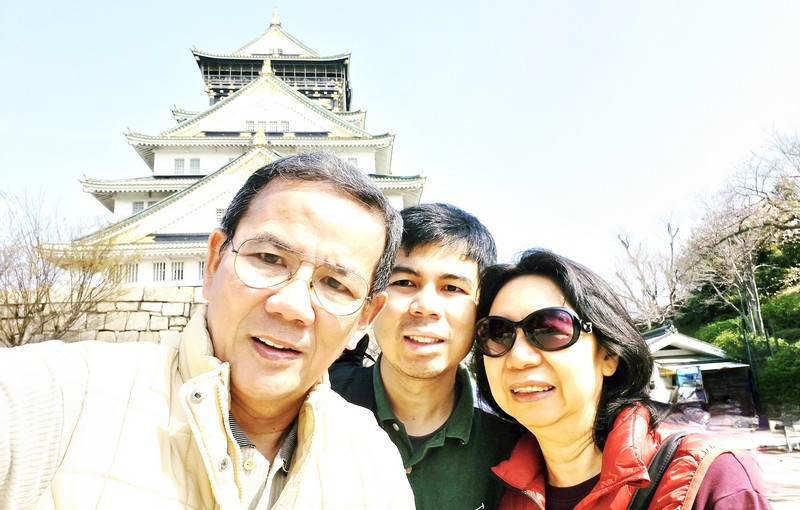
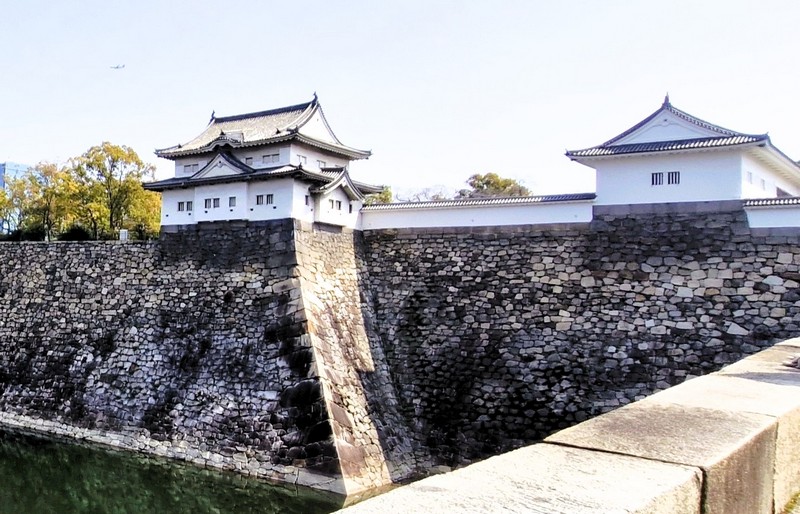
Surrounding the main keep are a series of moats and defensive fortifications. The castle has an inner and an outer moat. The former, lying within the castle grounds, consists of two types: wet (northern-easterly) and dry (south-westerly), while the latter surrounds the entire castle, denoting its outer limits, and consists of four water-filled sections, each representing a cardinal direction (North, East, South, West).
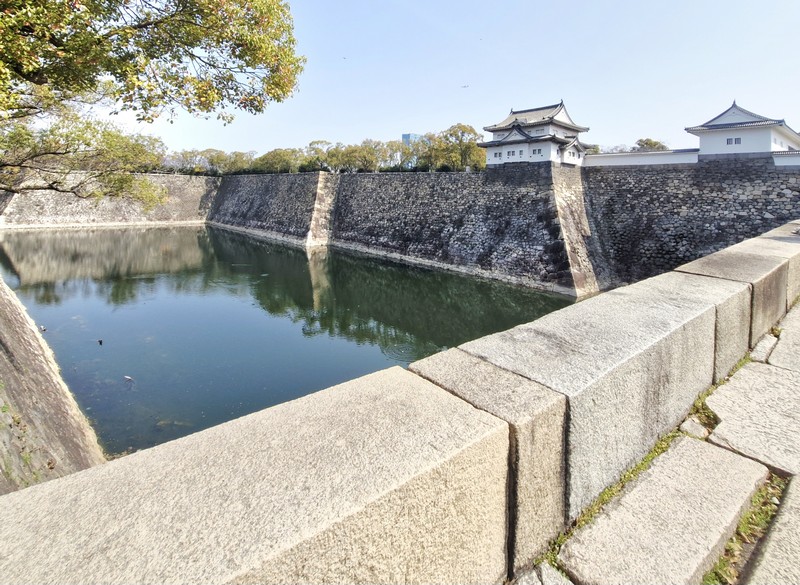
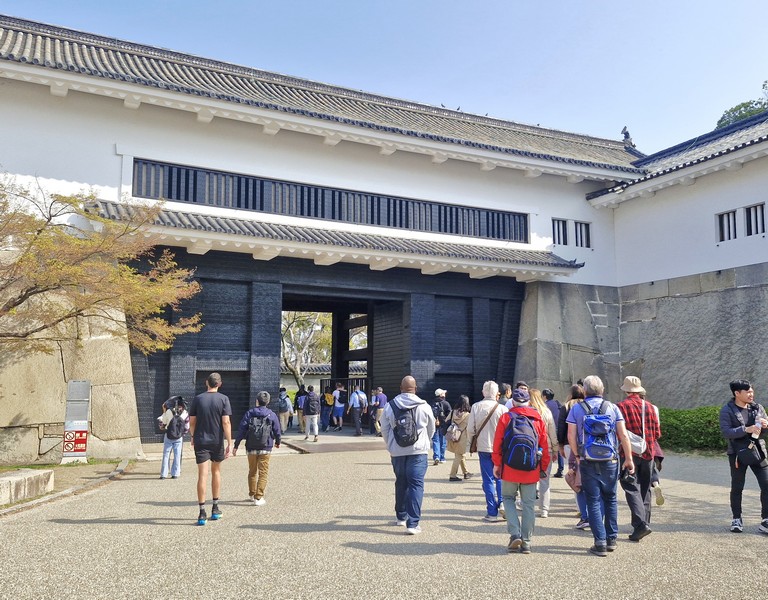
Aoyamon Gate, in the northeast, and Ote-mon Gate, in the opposing southwest, are two main sentry checkpoints at the outer moat. Three sections of ‘dobei’ mud-and-plaster wall, all located around the Otemon Gate, all have their own Important Cultural Property status.
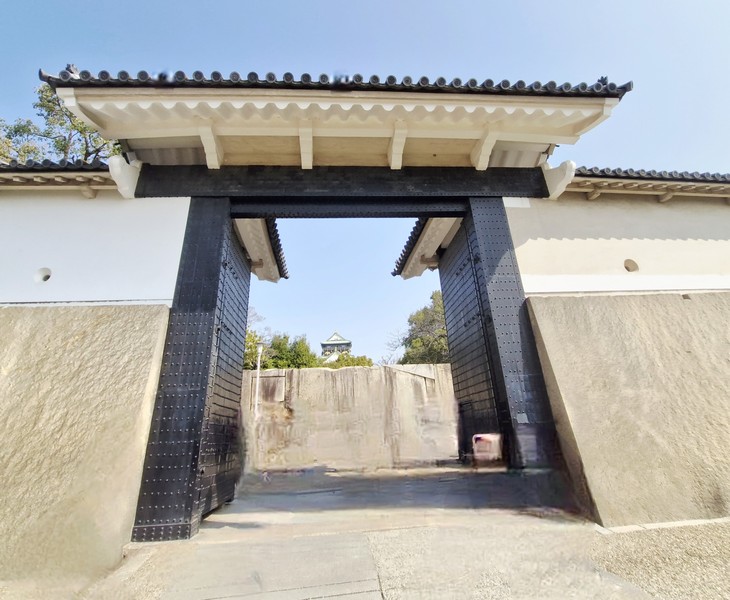
There are also some megaliths, with no cultural property status, at the castle, including the Takoishi (Octopus stone). The Fushimi-yagura Turret Remains, Ensho-gura Gunpowder Storehouse, Osaka Geihinkan, Hoshoan Tea House, Osaka Castle Nishinomaru Garden, Sengan-yagura Turret, Tamon-yagura Turret, Remains of Taiko-yagura Turret, Osaka Shudokan Martial Arts Hall, Hokoku Shrine (Osaka), Ichiban-yagura Turret (the first turret), and Plum Grove are all located between the inner and outer moat.
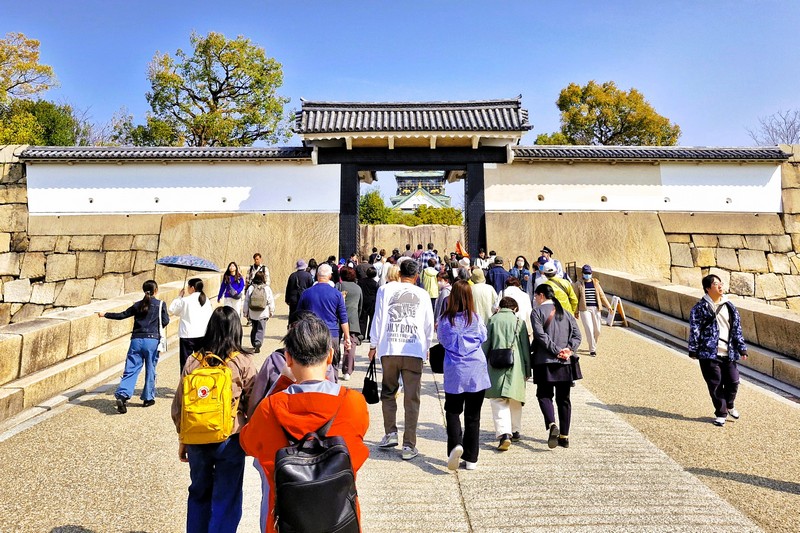
You can cross the inner moat via the Gokuraku-bashi Bridge (or Paradise Bridge), located in the north, and Sakuramon Gate, the main sentry point in the south.
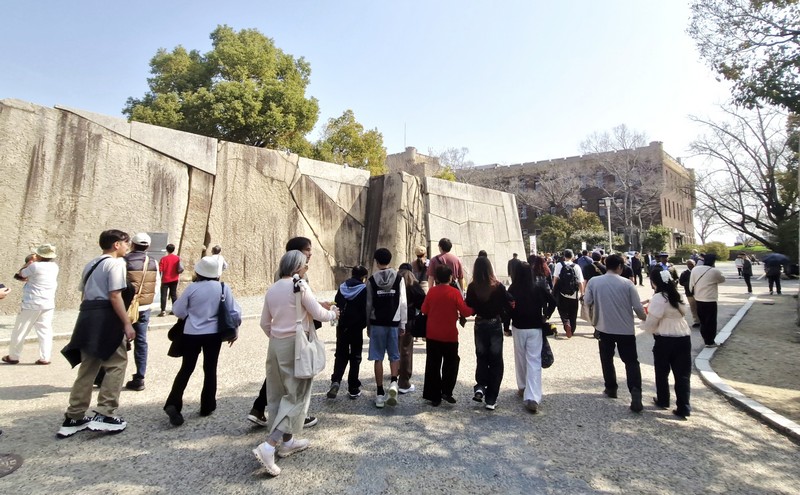
The Hommaru (Inner Bailey) and the Yamazato-Maru Bailey divides the castle into two major areas within the inner moat. The Main Tower, the Kimmeisui Well, the Japanese Garden, the Takoishi (Octopus Stone), the Gimmeisui Well, the Miraiza Osakajo Complex, the Kinzo Treasure House, and the “Time capsule Expo’70” are located within the Hommaru while the Marked-Stones Square, and the Monument commemorating “Hideyori and Yodo-dono committing suicide” are within the Yamazato-Maru, Bailey.
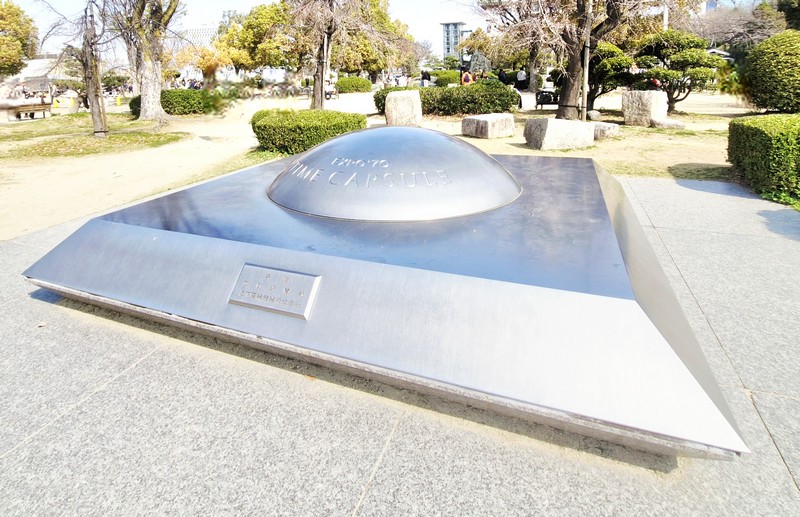
The Time Capsule Expo ’70 is a stainless-steel monument which marks the site of the 1970 Japan World Exposition time capsule buried 15 m., in 1971, by Panasonic and The Mainichi Newspapers. The two identical capsules contain 2,098 everyday items from 1970 Time Capsule Expo ’70.
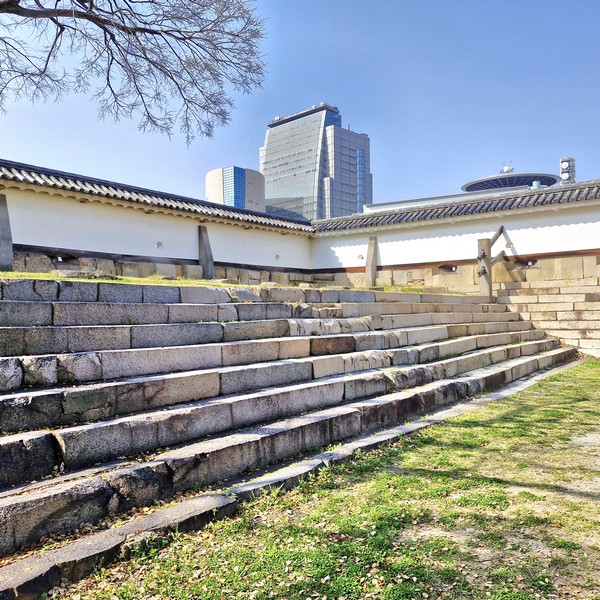
In the park, there is Osaka Castle Hall, a large athletic field, baseball field, football field, open-air music theatre, open-air concert hall, and Osaka Castle Keep Tower where, from its top, the vista includes Osaka Bay to Mount Ikoma, which surround the Osaka Plain. Many busking groups perform in the park.
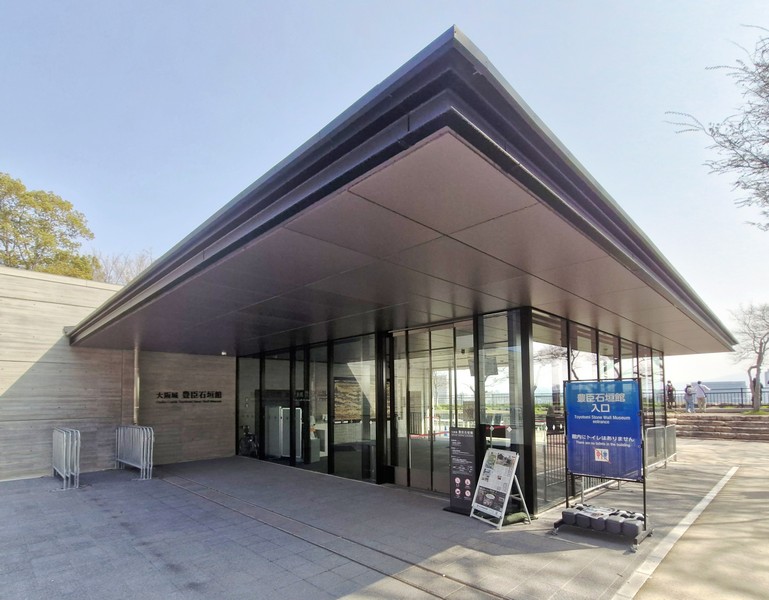
The Toyotomi Stone Wall Museum, opened to the public last April 2025, allows visitors to view, firsthand, the original Toyotomi stone walls that had been hidden, for over 400 years, since the Toyotomi forces were defeated in the Summer Campaign of Osaka in 1615 and the Tokugawa Osaka Castle was built over them.
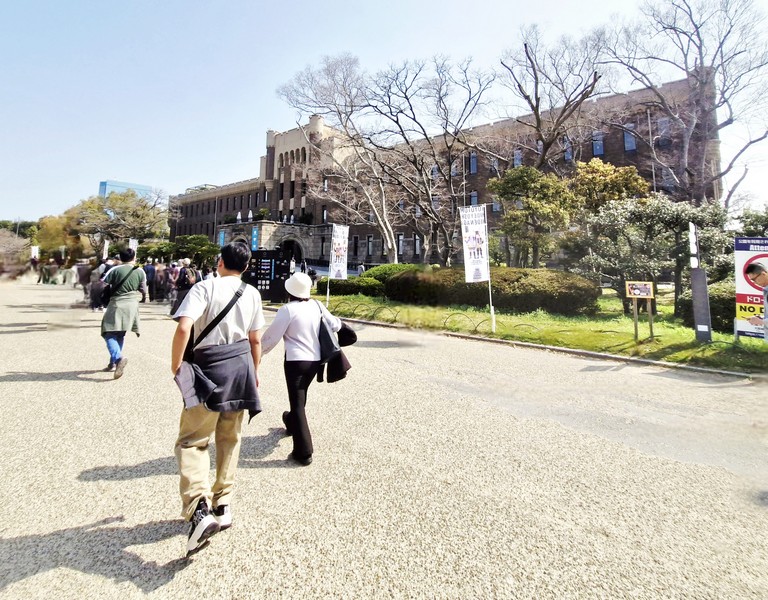
The three-storey Miraiza Osaka-Jo, right beside the iconic Osaka Castle Main Tower, is a historical complex housed in a former military headquarters built in 1931. It offers the Kaiyodo Figure Museum, rooftop cafes with castle views, and samurai and ninja experiences where you can dress up in authentic gear and try stage combat sword-fighting in the basement.
Osaka Castle Park: 1-1 Osakajo, Chūō-ku, Osaka, 540-0002 Japan. Admission is free. Tel: 06-6755-4146. Coordinates: 34°41′14″N 135°31′33″E.
How to Get There: On Osaka Metro Tanimachi Line, get off at Tenmabashi or Tanimachi 4-chome Station. On Osaka Metro Chuo Line, get off at Morinomiya or Tanimachi 4-chome Station. On the JR Loop Line, get off at Morinomiya or Osaka Castle Park Station.
Pingback: Shitennō-ji Temple (Osaka, Japan) – B.L.A.S.T. – Live Life to the Fullest ……… Don't Stay Put