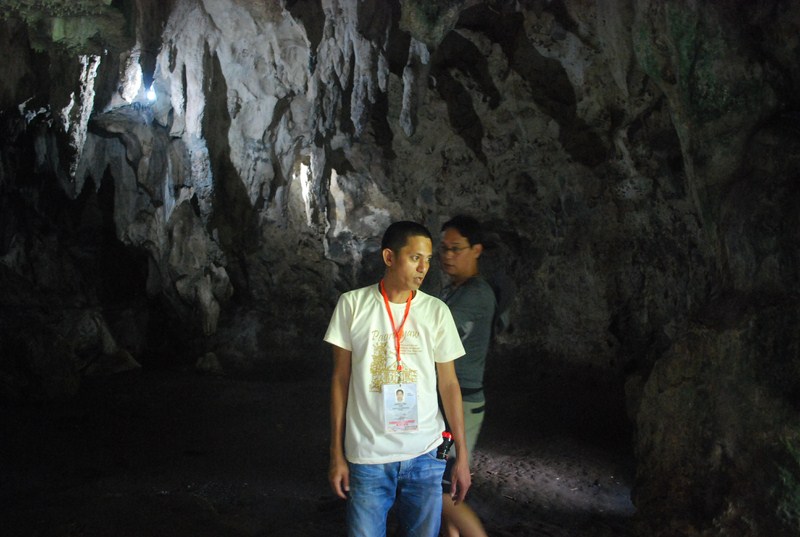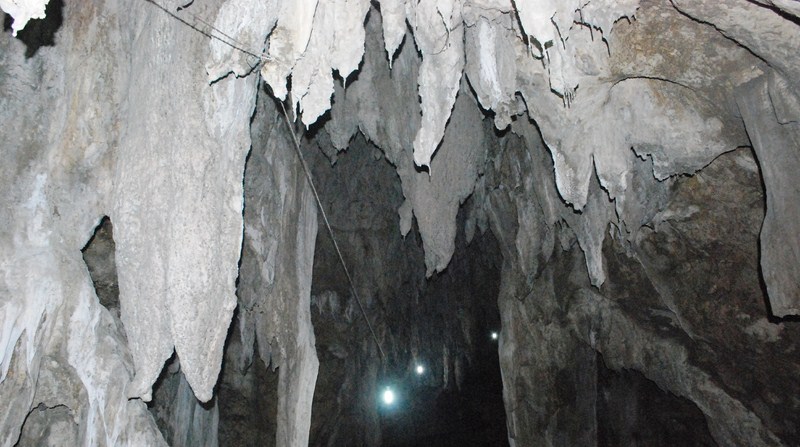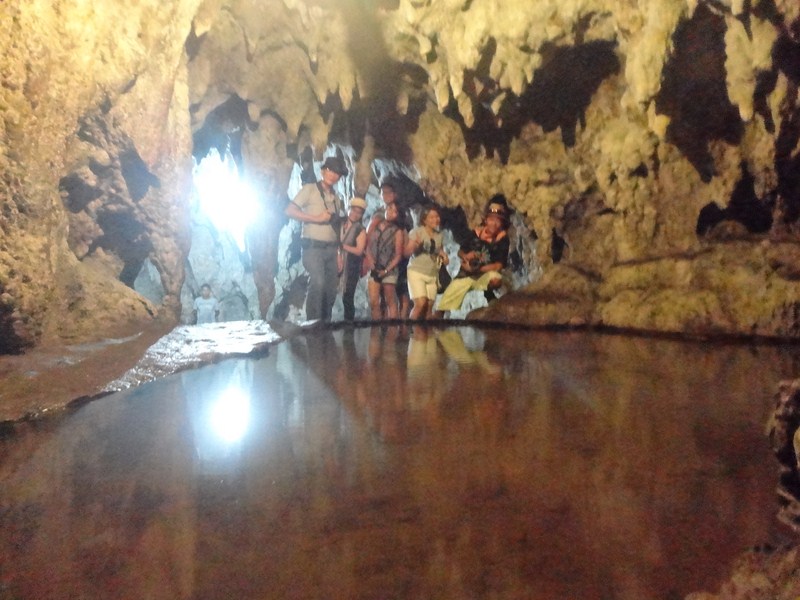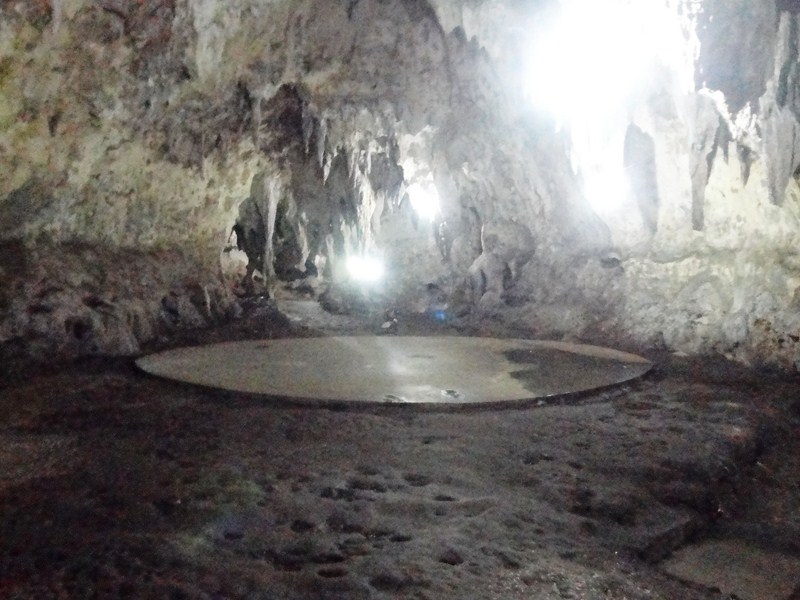
Sta. Fe Forest Park (Sta. Fe, Nueva Vizcaya)

For the second time around, I was asked to cover the Kalanguya Festival (the first time was in March 15, 2003), now on its 20th year, in Sta. Fe, Nueva Vizcaya, joining a media group consisting of two other print media representatives (Roel Hoang Manipon, Asst. Editor of The Daily Tribune, and Alexis B. Romero, reporter of The Philippine Star) and three staff from the Department of Tourism (Rolando “Rollie” Cagasca, Ramon “Mon” Rebulado and Gener Carlos).

San Jose City (Nueva Ecija)

San Jose City (Nueva Ecija)

We all left Manila by 7:15 AM and the 216.85-km. trip took all of 6 hrs., including a stopover for lunch at a Chowking branch in San Jose City (Nueva Ecija). We arrived at the town by 1:30 PM and were warmly welcomed by Mayor Liwayway C. “Liway” Caramat and Municipal Tourism Promotion & Development Officer Ma. Theresa Farrah C. Dugay.

Ms. Ma. Theresa Farrah C. Dugay and Mayor Caramat

Ms. Ma. Theresa Farrah C. Dugay and Mayor Caramat

After our courtesy call on Mayor Caramat, , we were checked in at cottages within the 2,200-hectare Santa Fe Forest Park, a reforestation project with Benguet pine and West Indian mahogany (Swietenia mahagoni). The Grand Parade was to also start here and contingent members were billeted within buildings in the park.

Sta. Fe Forest Park

Sta. Fe Forest Park

Mahogany trees along the driveway

Mahogany trees along the driveway

The Santa Fe Forest Park was an erstwhile reforestation project of the DENR that commenced in the mid-1950s. It covers around 2,200 hectares of areas in Barangays Bacneng, Baliling Villa Flores and Poblacion. On September 22, 1997, the Sta. Fe Forest Park was established for nature-based tourism, covering about 1,000 hectares within the 11,664 ha Consuelo Reforestation Project.

Cottages

Cottages

Multi-Purpose Hall

Multi-Purpose Hall

P1230744

The DENR, through a Memorandum of Agreement, handed over the management of the reforestation project to the LGU of Sta. Fe, which eventually paved towards the development of the erstwhile project into a forest park.

Burnham Park (Baguio City, Benguet)

From Mines View Park, Melissa, Almira, Albert, Jandy and I walked back to EGI Albergo de Ferroca Hotel, where we rested a while, then took a taxi for Burnham Park, the city’s foremost and oldest park that forms the heart of the city.  The ‘mother of all parks’ in the Summer Capital of the Philippines, it is almost as familiar to Filipinos as Luneta Park in Manila.

Burnham Park - green lung of Baguio City

Burnham Park – green lung of Baguio City

This 32.84-hectare urban park, located at the heart of Baguio City, was named after the American architect and urban planner, Daniel Hudson Burnham who simultaneously designed the park and the original plans for the city. Construction began around 1904. During the devastating earthquake on July 16, 1990, the park played an important role when it served as a place of refuge for the people of Baguio.

Daniel  Burnham Bust

The bust of Daniel H Burnham

Burnham Park, overlooking Mt. Kabuyao, covers the only large expanse of level ground within hilly surroundings and was originally intended to serve as a much-needed green lung for the bustling city by providing it with wide open green spaces and a peaceful environment. The modern park, although smaller than the original park due to urban development, still retains much of Daniel Burnham’s original design and layout a century ago.

Author at Burnham Park, April 3, 1986

Author at Burnham Park, April 3, 1986

Under Filipino administration, a number of features were added and now, in true Filipino fashion, Burnham Park is now more of an amusement park with boating, bicycle and skating areas, sports and gaming areas (football field,  tennis courts and basketball courts), plus a few restaurants and eateries that cater to park-goers. In the morning, residents jog around the lake or the children’s playground while groups do healthy exercise routines such as zumba, tae-bo and sometimes tai-chi.

Burnham Park

Baguio Blooms Exhibition And Exposition at Burnham Park

The centrally located and thickly-wooded Burnham Park has a man-made lake; lawns; wooded areas; paved flower-punctuated pathways, with seats and benches throughout;  and numerous flower beds planted with roses, marigolds, daisies and hollyhocks that thrive in the temperate environment of Burnham Park, an unusual sight considering that the Philippines is mostly tropical. During the June to September rainy season, the park is often shrouded in fog and takes on a misty atmosphere. Following the end of the rainy season, flowers bloom in abundance.

Football Field

Football Field

Burnham Park, a scenic venue for walking and photography, has 12 cluster areas: the man-made Burnham Lake, the Children’s Playground (at the western part), the circular Skating Rink (at the southern part), the Rose Garden (with a bust of Daniel Burnham), the Orchidarium (at the western part, with various plants, flowers and orchids on display and for sale), Igorot Garden, Melvin Jones Grand Stand and Football Field (at the eastern part), the Athletic Bowl, a Picnic Grove, Sunshine Park, the Japanese Peace Tower and a section called “Pine Trees of the World.”

Solibao Restaurant

Solibao Restaurant

The Melvin Jones Grandstand is used periodically for several activities such as parades, concerts and political rallies. On certain Sundays, cadets from the Philippine Military Academy practice silent drills and the occasional parade.  The park may be accessed from either Harrison Road, Kisad Road, Governor Pack Road and Magsaysay Road. Several stretch of roads around the park lead to Camp John Hay, a former recreational base of the United States Armed Forces in the Philippines.

Typical fare at Solibao Restaurant

Typical fare at Solibao Restaurant

It being a long Chinese New Year weekend, the park was filled with lots of tourists and residents.  We checked out the Baguio Blooms Exhibition and Exposition, an activity of the 20th Panagbenga Festival along Lake Drive. It was already past noon and, since we had lunch yet, proceeded to nearby Solibao Restaurant where we dined on kare-kare, fried chicken, gising-gising and pinakbet and topping it off with a dessert Solibao Restaurant is famous for – puto bumbong (steamed glutinous rice with freshly grated coconut, brown muscovado sugar and melted butter).

Burnham Lake

Burnham Lake

After lunch, we then proceeded to romantic, photogenic and man-made Burnham Lake, the park’s focal point that is often referred to as Burnham Lagoon.  The lake was formerly a natural spring which drained northward to the foot of Session Rd. to join with the Balili River in La Trinidad. Here, we decided to rent (PhP150 for a 5-pax boat) a swan-themed rowboat for going around the lake and exercising our arm muscles.  They say that any visit to Baguio City wouldn’t be complete without trying this out.

Swan boats at Burnham Lake

Swan boats at Burnham Lake

Albert, Melissa, Almira and Jandy at Burnham Lake

Albert, Melissa, Almira and Jandy at Burnham Lake

Then it was off to the bicycle rink where kids and adults could rent a range of bicycles if they so wish. You can rent either single bikes (PhP40/hour), tandem bikes or even bikes with side cars (PhP50/hour). They even have small children’s’ bikes of both two and three wheel versions. It is pedestrian-friendly and you don’t need to worry about bumping a motorized vehicle. Albert, Almira, Melissa and Jandy alternately tried out single BMX bikes for an hour.

Biking for the very young, young  ...........

Biking for the very young, the young ………..

...... and not so young

…… and even the not so young

Burnham Park’s truly is the very heart of Baguio City and, to this day, it remains one of the Philippines’ most well known and best-loved parks, making it a vibrant center of activity for everyone to enjoy.

Jandy at the bike rink

Jandy at the bike rink

Burnham Park: Legarda-Burnham-Kisad, Baguio City, 2600 Benguet

Cordillera World (Baguio City, Benguet)

Cordillera World

Cordillera World

Before we left the ever-popular Mines View Park, Melissa, Almira, Albert, Jandy and I visited the nearby Cordillera World, one of the newest attractions in the City of Pines located on the left side of the Mines View Tourism Office.

The narrow stairs leading up to the museum

The narrow stairs leading up to the museum

Wooden sleepers on a gravel bed

Wooden sleepers on a gravel bed

A pet project of Mr. Roland Cayat, this travel destination was opened last March 2011 through the help of some local investors and the support of the members of the Mines View Barangay Council.

Registration area and donation basket

Registration area and donation basket

A showcase of the rich heritage of the original mountain tribes of Northern Luzon, it is also an excellent vehicle to support a local advocacy and special program that helps out-of-school youths to go back to school or to finance and support their young families. There is no entrance fee but voluntary contributions from generous visitors to support the project are accepted.

Cordillera World (1)

Cordillera World (4)

We entered this second floor mini-museum/souvenir shop via a narrow wooden stairway whose risers feature salutations of “welcome” in five local dialects. Once inside, we had to register our names before taking photos. Do go around the displays, we walked on wooden sleepers laid on a gravel bed..

Cordillera World (2)

Cordillera World (11)

Here, we learned more about the lifestyle and culture of the highlands, seeing and sometimes touching ancient tools, clothing and accessories used by different tribes of the Cordilleras.

Cordillera World (7)

Cordillera World (8)

Visitors can even wear colorful, woven native costumes and feathery headdresses, as well as of being armed with hand-made bows, arrows and spears, and take photos as many times as they like.

Jandy and Almira in front of the replica of an Ifugao hut

Jandy and Almira in front of the replica of an Ifugao hut

At the center of the museum is a life-size replica of an Ifugao house decorated with animal skulls, woven tapestry and palay. From a viewing deck, we enjoyed the same spectacular view of the Cordillera mountains as seen from Mines View Park.  Beside it is their version of a “wishing well” (actually a pan filled with water).

Almira, Jandy, Albert and Melissa enjoying the mountain view

Almira, Jandy, Albert and Melissa enjoying the mountain view

A "wishing well"

A “wishing well”

Unique souvenirs sold here include Ifugao wine, CD that contains local Ifugao music to savour the culture even more, wood carvings and statues, pure honey, feathered headdresses and dream catchers that are hung around the place.

Cordillera World (10)

Cordillera World: Gibraltar Rd., Baguio City, Benguet.

Mines View Park (Baguio City, Benguet)

After our visit to Wright Park and The Mansion, Melissa, Almira, Albert, Jandy and I all took a taxi for Mines View Park,  an overlook park located on a land promontory  on the extreme northeastern outskirts of Baguio City, about 4 kms from downtown.  The park overlooks the mining town of Itogon.  One of the most popular and most visited parks in the city, it should not be missed when visiting Baguio.

Mines View Park

Mines View Park

In decades past, I have visited this park every time I was in the city with my parents and siblings during Christmas and, when I got married, with my own family.

Mines View Park, January 10, 1995.  9 year old Jandy and 5 year old Cheska with my wife Grace (standing at right)

Mines View Park, January 10, 1995. 9 year old Jandy and 5 year old Cheska with my wife Grace (right)

During the early 1960s and 1970s, the main attraction here was throwing coins from the uniquely shaped and still much photographed observation gazebo structure, down the mountain ridge, to little boys wearing g-strings who would run like crazy catching them or search for them, even through the rocks and small cracks of the ground below.

The park entrance

The park entrance

Later on, as residential communities started sprouting below the ridge, the children had to be more deft and creative in catching the coins, using homemade cups attached to long poles. This practice has been stopped due to the risk of accidents. Instead, a wishing well was built in memory of the Igorot kids who started this unique attraction in Baguio City.  Also back then, horses from the Wright Park Riding Circle and the Baguio Country Club were allowed to pass the area, allowing riders to actually get off there, have some snacks or do some quick souvenir shopping, get back on their horse and then head back downhill.
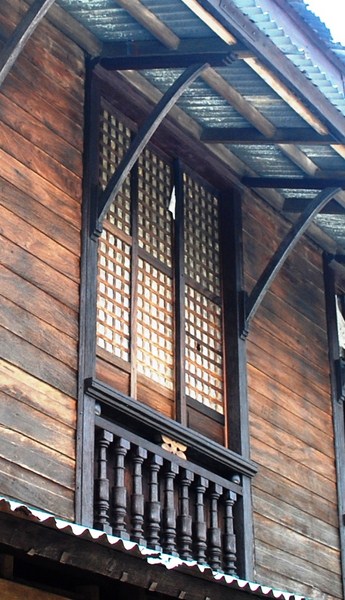
The much photographed gazebo

The much photographed gazebo

Jandy and Almira at the observation deck

Jandy and Almira at the observation deck

It being a long Chinese New Year holiday, there were many visitors when we arrived at the park. At the entrance to the park and at the open parking area at the vicinity of the park are souvenir stalls plus a number of canteens, snack stores and ambulant vendors selling food and beverages such as grilled dried squid, jumbo hotdogs on a stick, fried squidball and corn on a cob (or shredded in a cup).  Across it is Ibay Zion Plaza which sells silver jewelry made by the popular silver shop, Ibay.

The panoramic view of the Central Cordillera mountains

The panoramic view of the Central Cordillera mountains

One of the charming denizens in this really gigantic tourist trap is a popular, cute, cuddly and friendly but huge St. Bernard dog wearing sunglasses named “Doglas” who is available for picture-taking with tourists (PhP20.00). Other photo op gimmicks include having your picture taken riding a small, lazy, pink-maned (and tail) pony wearing a cowboy hat (PhP10 per shot), pose with or take pictures of (both for a fee) natives in Igorot attire (g-strings, vest and headdress for men, plus spear and shield, and tapis for women), or also rent the aforementioned native costumes and have your photo taken (with your own camera) for PhP10 per shot.

The somewhat disappointing view of creeping development

The somewhat disappointing view of creeping development

We all walked down the winding stone-covered stairway to the observation deck situated below. From the observation deck, we had a spectacular and breathtaking panoramic view of the abandoned gold and copper mines of the Benguet Corporation, the surrounding Central Cordillera mountains, a glimpse of the Amburayan Valley and the quite disappointing view of homes below. Here, you can rent a binocular (PhP10 for 5 mins.) for a better view. At the promontory, we sat down at benches to rest and enjoy the view.

Some pine-clad mountain slopes remain

Some pine-clad mountain slopes remain

Later on, we did some souvenir shopping.  The souvenirs stalls here have multiplied over the years.  They now extend to the sides of Gilbraltar Road and Outlook Drive and many are located closer to the ridge itself.  There were some good bargains at the stores and, before deciding to buy a particular item, we checked and compared prices. Stalls here sell native handicrafts such as wood carvings (including the iconic but obscene “barrel” man), locally-made silver products and jewelry (rings, pendants, bracelets, etc.), baskets, scarves, wallets, T-shirts, sweet preserves, tiger grass brooms, sweaters, peanut brittle, native bags, blankets, knitted bonnets and a variety of other items all similar to those found in the dry goods section of the Baguio City Market but only at a much smaller scale.The selections, though, are said to be better here.

Souvenir stalls

Souvenir stalls

For those who love gardening, a variety of plants and flowers such as bromeliads, mums, busy daisy, everlasting, money tree, cactus, and other succulents are also sold along the walkway.

Plants and flowers for sale along the walkway

Plants and flowers for sale along the walkway

On certain months of the year, plan your visits to the park d earlier during the day as the view may not be visible when the fog starts to move in during the afternoon.

Jandy, Almira, Melissa and Albert at Mines View Park

Jandy, Almira, Melissa and Albert at Mines View Park

How to Get There By private transportation: From MacDonald’s, Sesion Road, climb up and turn at Leonard Wood Road, passing iconic Baguio attractions such as Teachers Camp and Botanical Garden and the Pacdal Rotunda, then go straight up C. P. Romulo Drive, passing Wright Park Riding Circle and The Mansion. Climbing up, the road curves to the left to Outlook Drive.  Once you see Baguio Townhouse on the right, Mines View Park will be at the top.  Do not take the road going straight down to Itogon (Benguet).  A more direct route is to pass Gibraltar Road, to the left of Wright Park Riding Circle. Once you see the Good Shepherd Convent on your left, Mines View Park is just a few meters away. The winding stone-covered stairway leading to the observation deck By Public Transportation: Public utility jeepneys (PUJ), using the Plaza-Mines View line, are available along Mabini Street (10 to 20-min. ride). You can also hire a metered taxi to take you there.  Tou can also contract the taxi driver by the hour or for the day. For larger groups, it may be better to hire a jeepney instead.

The Mansion (Baguio City, Benguet)

At the end of the Pool of Pines was The Mansion (formerly called the Mansion House), the Philippine president’s palatial official summer residence and, easily, one of the most visited and photographed landmarks of Baguio City.  Consisting of an elegantly designed, Spanish Colonial Revival-style main building and a guest house, it was designed by French-educated, New York based American architect William E. Parsons and started in 1907 to be the official summer residence of U.S. Governor-Generals.
The Mansion

The Mansion

The site selected was Outlook Point at the edge of the Pacdal Plateau.  Its name is derived from the New England summer ancestral home U.S. Governor-General William Cameron Forbes in the family-owned Naushon Island near the Massachusetts coast, under whose administration the original Mansion House was built. On March 21, 1908, at the onset of summer, the household of Governor-General James Francis Smith moved into the Mansion House. From March 19 to April 28, 1910, the meeting of the Second Philippine Legislature was held at the Mansion House.

Mansion House (24)

With the inauguration of the Philippine Commonwealth in 1935, the Mansion House, along with Malacañan Palace, was turned over to the Philippine president. The High Commissioner to the Philippines Paul V. McNutt, the successor to the Governor-General as the highest American official in the Philippines and representative of the United States Government, then built The American Residence, completed in 1940 at Camp John Hay.

Almira and Jandy along C.P. Romulo Drive

Almira and Jandy along C.P. Romulo Drive

During the Second World War, the Mansion House was badly damaged due to constant bombing and strafing but, in 1947, it was rebuilt at a cost of PhP80,000 and improved, with additional guest rooms and conference rooms constructed. Since then, it has served as the holiday home and working office for each President of the Philippines during his or her visits to Baguio City.
The tall and ornate iron gates of The Mansion

The tall and ornate iron gates of The Mansion

The Mansion House was also used as the venue of important events. In 1947, it served as the seat of the second session of of the United Nations Economic Commission for Asia and the Far East (ECAFE). The next year, it was the site of the second session of the Food and Agriculture Organization (FAO) and, in 1950, the first meeting of the Southeast Asian Union (SEAU), more commonly known as the Baguio Conference of 1950, was conceived and convened by President Elpidio Quirino.

Albert, Melissa, Almira and Jandy posing in front of the gate

Albert, Melissa, Almira and Jandy posing in front of the gate

Parts of the Mansion House are open to tourists. As always, there were lots of tourists taking turns posing in front of its tall and ornate, main gate, still one of the most photographed sections of the property. Made of ornate ironwork, the front gate was earlier falsely reported as a replica of one of the main gates at Buckingham Palace in London. A contingent of Philippine Marines maintains the security of this large compound and we saw some of them manning the guardhouse at the vicinity of the entry gate.
The plaque, in English, installed by the National Historical Institute

The plaque, in English, installed by the National Historical Institute

Mounted on the gate posts are 2 historical markers unveiled by President Gloria Macapagal-Arroyo and the National Historical Institute (now the National Historical Commission of the Philippineson December 30, 2008 (the centenary of the Mansion House), one in English and the other containing the text translated in Filipino, both detailing the structure’s history.  On January 16, 2009, the board of the National Historical Institute, through Resolution No. 1, s. 2009, declared the Mansion House as a National Historical Landmark.
The NHI plaque, this time in Tagalog

The NHI plaque, this time in Tagalog

Some official government vehicles entered the compound by passing through a great circular driveway. Within the compound and adjacent to the Mansion is a two-story building which serves as the official residence of the Philippine President. Nearby is a small amphitheater. As the President was not in residence, Jandy, Almira, Albert, Melissa and I, as well as other tourists, were allowed to enter a little past the gates, posing in front of its beautiful gardens and well-manicured lawn, also a favorite site for sightseeing and picture taking.

The author and Jandy

The author and Jandy

Tourists can also visit the Mansion House’s museum, a branch museum of  the Malacañang Museum (now the Presidential Museum and Libraryestablished on May 18, 2010 by virtue of Executive Order No. 880.  The museum  houses presidential memorabilia and works of art collected over its years by former presidents.

The beautiful gardens and well-manicured lawn of The Mansion

The beautiful gardens and well-manicured lawn of The Mansion

The Mansion: C.P. Romulo Drive (formerly a part of Leonard Wood Rd.), 2600 Baguio City, Benguet.

Wright Park (Baguio City, Benguet)

After breakfast at EGI Albergo de Ferroca Hotel and Sunday mass at nearby St. Joseph Church, I decided to tour my guests Melissa Tinonas and her children Almira and Albert, all first timers in Baguio, around the city.  As our hotel was right across the Wright Park Riding Circle, it was only fitting that this would be the first place we visit and explore.

Wright Park Riding Circle

Wright Park Riding Circle

The Wright Park Riding Circle is located within the flat and wide triangle below Wright Park. Here, 200 horses are available for hire. Wright Park, one of the many scenic parks in Baguio City, is located at the eastern part of the city and fronts the main gate of The Mansion.

4 year old Jandy at Wright Park, July 15, 1900.  The next day, a destructive earthquake struck the city.

4 year old Jandy at Wright Park, July 15, 1990. The next day, a destructive earthquake struck the city.

Named after American Gov.-Gen. Luke E. Wright (1906-1909), the park’s horseback riding area is often referred to, by children, as “Ride Park” because of the horses.  After all, children have no idea who Luke E. Wright is. Although there are now other riding areas in the City of Pines, the Wright Park Riding Circle is still the most popular venue for horseback riding for visitors and locals alike.

Dressing up in Igorot attire

Dressing up in Igorot attire

It being a long and sunny Chinese New Year weekend, the place was crowded with residents and tourists.  I am no stranger to the park, having visited it during Christmas vacations with my parents and siblings and, when I got married, with my family.  In the 1970s, the hourly rates for horse rides back then was just Php5.  Four decades later, it was now PhP300 (PhP200 for half an  hour) an hour and another PhP300 for a guide to tour you around.

Princess for a day

Princess for a day

However, before the horseback riding, Melissa, Almira, Albert and my son Jandy decided to have their photos taken while dress up in full Cordillera regalia (PhP20 per pax) – vests and headdresses for the gents and ladies, shield and spear for the men (without the g-string or bahag) and tapis for the ladies.  We also tried our first taste of strawberry flavored taho.

Trying out strawberry-flavored taho

Trying out strawberry-flavored taho

Then, it was off to the horse riding field. The riding field has an inner circle (best for first-timers) for walking horses and an outer circle for the running horses for more experienced riders who want to make the horse trot or canter. Only the riders and the pony boys (usually the horse owner himself, or his assistant) are allowed within the Riding Circle. So the Riding Circle is NOT a park as only horses, pony boys and riders are allowed in the ring.  All experienced handlers, pony boys lead the horse, walk alongside it or ride behind the child for the latter’s protection and enjoyment of a faster ride. Parents and nannies (yayas) can only observe their kids from viewing decks and benches, documenting their kid’s ride with photos, using their camera’s zoom lens, and videos.

A horse of Wright Park

A horse of Wright Park

There were lots of horses to choose from. There were horses of different sizes and colors. Some horses wore their natural colors (brown, black, and white or mixed) while others wore artificial colors (pink, blue, yellow, etc). Most of the time, children choose the ones which are in pink or blue. I was surprised to see white ponies with a shock of pink hair (Melissa and Jandy chose to ride on this kind) or, sometimes, a brown one with a bright orange mane.

Jandy riding a pink-maned horse

Jandy riding a pink-maned horse

Pony Boys have noticed, in recent years, that children prefer white horses, thinking they’re nicer” or “gentler” (mas mabait) than the brown ones.  To make the white ones even more attractive to customers, the pony boys have taken to dying the horse’s mane (but  hardly ever their tails to match the manes), putting a little pink paper flower on their hair, giving them “bangs by cutting off a piece of the tail and attaching the extra hair to the bridle.

The stone stairway leading up to the Pool of Pines

The stone stairway leading up to the Pool of Pines

After the pony ride, we walked towards and climbed a wide stone stairway leading to the pine-forest preserve of Wright Park itself.  On the way up, we had wonderful views of the place, the horses and the people riding on them. At its end is a pergola-like stone structure or gazebo.

The concrete, pergola-like gazebo at the top

The concrete, pergola-like gazebo at the top

Igorots, dressed in their native attire and regalia, can be found here, willing to pose for a photograph … of course, for a fee of PhP10.  At stalls on the far side of the stairs, you can buy souvenirs such as woven products, key chains, T-shirts, peanut brittle, strawberry jams and a lot more. Beautiful and colorful plants are also displayed and sold here in affordable prices.

The Pool of Pines

The Pool of Pines

The park’s main feature is the beautiful and much photographed Pool of Pines, a 100-m. (328-ft.) long and narrow 5-m. (16.4-ft.) wide, shallow and elongated rectangular reflecting pool filled with lotus. Postcard-type photographs are usually taken here.

Melissa buying strawberries from a vendor

Melissa buying strawberries from a vendor

On the way to the pool, we noticed on the left, a photo booth with the sign “Forevermore” and “La Presa.” The fictional La Presa, in reality Sitio Pungayan of Tuba town, some 40 mins. away from Baguio City, is the location where most of the scenes from the popular ABS-CBN hit teleserye “Forevermore” (starring Enrique Gil and Liza Soberano) were shot. There you have it.  

The La Presa photo booth area

The La Presa photo booth area

It just so happened that Wright Park, together with Burnham Park and The Manor (which, in the series, is a hotel called Hotel Grande owned by the family of Gil’s character) were also featured in the series.

Frolicking among the tall pine trees

Frolicking among the tall pine trees

Here, fans get to dress up in native attire and pose for PhP5.At the Pool of Pines, we walked along a walkway lined, on both sides, with tall pine trees, weeping willow trees and decorative street lights.  Native handicrafts are also sold at the Mansion end of the park by a few Igorot peddlers.

Pool of Pines (20)

Wright Park: Leonard Wood Rd, Baguio, Benguet.

When going horseback riding, choose a horse that is proportionate in size to your child. It would be better if you asked around first or observed other riders before choosing one. For those who intend to take a pony farther out along South Drive, the Mines View Park area or to Outlook Drive, it is advisable to first agree on the hourly cost to be charged.

Mt. Pulag National Park – Manila to Bokod

A very big item in my travel Bucket List is to climb the three highest mountains in the Philippines – the 2,956 m. high Mt. Apo and the 2,938 m. high Mt. Dulang-Dulang, both in Mindanao, and the 2,922 m. high Mt. Pulag in Luzon, all in that order.  Of course, it made sense to first climb the latter, the nearest to home of the three.

Mt. Pulag National Park

Mt. Pulag National Park

I booked my climb to Mt. Pulag, with my son Jandy, through good friend Violeta Imperial, Exec. Director of Nature Awareness and Conservation Club, Inc.  All in all, we were 12 (our 13th member, Mr. Maki Las was to meet us in Baguio) in our group. There are four different trails going to the grassland summit of Mt. Pulag – the Bokod (also called Ambangeg) Trail, the 2 to 3-day Akiki (called the “Killer Trail,” it is the steepest) Trail, the leech (limatik)-infested Tawangan Trail and the Ambaguio (the longest) Trail in Nueva Vizcaya.   and we were going to climb the mountain via the easy Bokod Trail (also called the “Executive Trail”) which is the safest and has the mildest grade.

The ladies at our chartered passenger jeepney

The ladies at our chartered passenger jeepney

Joining Violet, Jandy and I were Expedition Leader Mr. Rexbello “Rex”  Alfafara (mobile numbers 0920-4651626 and 09327435252) of Sierra Adventurers and Mountain Explorers, Inc.; good friends Ms. Rayhil Palaganas (Financial Advisor – Sun Life Financial), Ms. Rosemarie S. Palmera and Ms. Marceju Aizza A. Ragat (JDE Finance Functional Consultant – Cyret Technologies, Inc.); Ms. Almira Ablan Tinonas (De La Salle University student/artist); Ms. Celeste Marie “Lelet” Garcia (HR Manager – Phoenix Petroleum); and Ms. Lorelie Mandela (Project Manager – Global Business World) with her children Celene and Arvin.

Country Road Cafe and Restaurant

Country Road Cafe and Restaurant

We all assembled at the Victory Liner Terminal in Pasay City and left on the 9 PM bus for Baguio City, the jump-off point for our climb.  After running the gauntlet of traffic along EDSA and 2 stopovers at Tarlac City and Sison (Pangasinan), we arrived at the city’s Victory Liner Bus Terminal by 3:45 AM.  We then boarded a passenger jeepney chartered  by Rex for our climb.  Up ahead was a 2-hour/80 km. roller coaster drive, through the winding zigzags of the fabled Ambuklao Road, to Kabayan town.  I shouldn’t have slept through part of the trip as I woke up sick on my stomach.  We had our breakfast at Country Road Café and Restaurant but I didn’t eat much.

DENR Mt. Pulag Park Office

DENR Mt. Pulag Park Office

That done, we returned to our jeepney for the short drive to the DENR Mt. Pulag Park Office to register and secure a permit, both done by Violet, and be given a short briefing.  Climbers are asked to register for orientation either here or at the Babadak ranger station at Bashoy village in Kabayan.

L-R: Almira, Rose, Rayhil, Marceju, Lorelie, Arvin, Celeste and Celene

L-R: Almira, Rose, Rayhil, Marceju, Lorelie, Arvin, Celeste and Celene

There were lots of would-be and real mountaineers waiting for orientation prior to their climb.  We were on the second batch. During our orientation, DENR Superintendent Emerita Albas gave our group a short environmental briefing on the dos and don’ts, the harsh environment and the basics of mountaineering for trekking Mt. Pulag National Park. The orientation was necessary for the climbers’ safety and the park’s environmental protection. Here are some tips and park rules to follow when climbing Mt. Pulag:

  • Garbage in, garbage out. Trash, whether organic or non-biodegradable should all be brought down and disposed of properly.
  • No intimacy at the campsite.
  • Stay on the established trails to minimize damage to vegetation and prevent further destruction of the mountain slopes. Walk single file in the middle of the trail, even when it is wet or muddy.

Hike to Camp 2 (2)

  • Respect the serenity of the place by keeping noise to a minimum level. Wildlife such as birds may get scared and interrupted from their normal routine.
  • Strong hikers, especially for big groups, should be designated to act as sweepers to take care of stragglers. In this way, weaker members are assured that they could get help from others should they be in trouble.
  • All hikers must always be guided by the Mountaineer’s Creed – take nothing but pictures, leave nothing but footprints, kill nothing but time.
  • On the way up, slower hikers must give way to stronger hikers. On the other hand, stronger hikers should not tailgate weaker hikers.
  • If there are no trail signs at trail junctions, advance group members should make temporary directional signs (e.g. Sticks, scratch on the soil, etc.) for others to follow.
  • It is always best to be on the side of caution especially when hiking along slippery trails. Light walking sticks, canes and trekking poles help a lot as it acts like another foot.  Help, especially medical in nature, may take some time to reach anybody. In case of trouble or emergencies, attract help by making as much noise as possible by hollering or shouting.
  • To avoid creating wildfires, smokers must properly put off their cigarettes as the pine forest floor is susceptible to fire, especially during summer months.  Smoking in the grassland is highly discouraged. Bonfires at the campsite are also prohibited.  For cooking and boiling water, bring a portable stove.
  • Before hiking, fill up your canteens or water bottles (1.5 to 2 liters of water is recommended per person). At camp 1 and Camp 2, there are springs nearby and the water is potable.  For people who have sensitive stomachs, the use of purifying tablets is advisable. If you are bringing bottled water with you on your hike, please keep the empty bottle and bring them back down and out the national park when you leave.
  • The weather on the mountain is unpredictable and it could rain anytime.  It is therefore advisable for hikers to bring with them rain gear (raincoat, poncho, etc.) and warm clothing (jackets, sweaters, scarves, bonnets, gloves, thermal underwear, socks, blankets, etc.) to ward off cold temperatures. But don’t wear your warm clothing yet on your hike to Camp 2 as your body will heat up from all the energy you burn.  Waterproof your things.  Bring a waterproof backpack cover, plastic bags or black garbage bags and a drybag for your camera.

Ranger Station (6)

  • As your feet are the most important part of your body during a trek (once you injure them, you have no way of going back down, lest you are carried down), wear comfortable yet sturdy shoes with good traction (you will slide and stumble, at one point or another) underneath. Make sure the shoes you wear are broken-in and comfortable.
  • For those bringing their tents, use a three or four-season tent that can withstand the cold wind and rain.
  • Bring only what is necessary as loads get heavier for every kilometer traversed. The lesser the weight on your bag, the easier your trek will be.
  • Park officers reserve the right to randomly inspect baggage to determine whether banned items (liquor, dangerous drugs, deadly weapons, etc.) are present. Such items, when found, will be automatically confiscated and kept for safekeeping.

  • Communicate with your expedition leader and/or designated/hired guide. He possesses knowledge of the area.
Expedition leader Rex Alfafara

Expedition leader Rex Alfafara

  • Respect the indigenous people’s (Ibaloi, Kalanguya, Kankana-ey and Ibanag) culture. Their culture may be different from yours but it is their culture. Most of them consider Mt. Pulag as a sacred place not only because it is a resting place and playground of their gods but also a place where they bury their dead. You are in their cultural ground.
  • If climbers reach the Badabak ranger station at 5 PM, they are advised to spend the night there and not persist on hiking to the grassland area or camping area since the area, after 5 PM, is always misty and cloudy, making directional signs and trails not easily visible.
  • Hiking is not a race.  It should be fun and is free. Take time to regulate your breathing, look around and enjoy the scenery that nature offers.
DENR Superintendent Emerita Albas

DENR Superintendent Emerita Albas

DENR-PASu Office: Sitio Ambangeg, Brgy. Daclan, Bokod, Benguet.  Tel: (074) 444-3592. Mobile number (0919) 631-5402 (Ms. Albas).

Current park fee rates (the first two are remitted to the Integrated Protected Area Fund or IPAF while the third is remitted to the Kabayan local treasury for their use):

  • Entrance fee: PhP100.00
  • Camping fee: PhP50.00
  • Green fee: PhP25.00

Aside from the fees, hikers are required to engage an accredited guide (member of MPITGA) with a ratio of 1-7 hikers to 1 guide. The pay is P500.00 per guide per overnight.

The author with tour organizer Violeta Imperial

The author with tour organizer Violeta Imperial

Nature Awareness and Conservation Club, Inc.: 18 Pioneer St., Moonwalk Village, Las Pinas City, Metro Manila. Tel: (632) 806-1720.  Mobile numbers: (0915) 510-1600 and (0932) 243-9478.  E-mail: mother_nature888@nacci888.org.

Sierra Adventurers and Mountain Explorers, Inc.: E-mail: sierra.org.ph@gmail.com, Website: www.sierra.org.ph.

Malacanang Museum and Library (Manila)

January came and went without me visiting a notable Philippine museum and I wasn’t about to let February pass without visiting one.  It was with great anticipation that my family (wife Grace, son Jandy, daughter Cheska and grandson Kyle) and I was looking forward to visit the Malacanang Museum and Library, especially with my balikbayan aunt, Pacita B. “Paz” Layug, with Chinese-American friend Harold (a first-time Manila visitor), joining us, both on a short Manila stopover on their Asian cruise.  Also joining us was my sister Tellie.  We all met up at the Kalayaan Gate by 9:30 AM and our museum tour promptly started at 10 AM.

Malacanang Museum and Library

Malacanang Museum and Library

The Palace grounds, with its huge lawn and tress, and its buildings were truly imposing.  Behind it is the Pasig River. The handsome, arcaded museum, housed within the historic Kalayaan Hall (called Maharlika Hall during the time of Pres. Ferdinand E. Marcos), the old Executive Building designed by Ralph Harrington Doane in the elegant Neo-Renaissance style and built in 1920, had the ambiance of an old and grand ancestral house, but warm and homey.

Malacanang Museum and Library (4)

Relaunched in 2003, the museum was, for the most part, restored during the term  of Pres. Gloria Macapagal-Arroyo and has been open to the public since then.  Photography was allowed but only one camera is allowed per group booking, so we choose  Jandy’s Sony AR-3500 digital SLR. Stickers were used to cover our group’s Smartphone lenses.

Plaque installed by National Historical Commission

Plaque installed by National Historical Commission

At the lobby, we met up with Mr. Brian Paul R. Luna, our knowledgeable and lively museum guide.  With his assistance, we learned interesting facts, trivia and stories that add to the many narratives about the Philippine presidents and the Palace during our 2-hour tour. He shared with us the rich history of each of the 9 stately, historically important and architecturally significant rooms in the country displaying the impressive legacies of the nation’s past presidents.

The author and Kyle at the Old Executive Secretary’s Office

The author and Kyle at the Old Executive Secretary’s Office

The well-maintained museum is organized by theme and by period. It features galleries and exhibits showcasing the heritage of the Palace and the Presidency of the Philippines as well as a well-curated collection of  artwork and furniture from the Palace collections.  The exhibits include the history of Malacañang Palace, featuring gifts, relics, memorabilia, artwork and photographs, principally at the ground floor rooms which are dedicated to American colonial era.  Most are paneled in hardwood and sumptuously carved by Isabelo Tampinco, a renowned Filipino master woodcarver, who also carved the wood and plaster ornamentation.

Table settings, in a regal royal blue accented with gold trim

Table settings, in a regal royal blue accented with gold trim

The first room we visited was the Old Executive Secretary’s Office.  It is now a display room for First Ladies (the “Official Hostess of the Palace”), from the time of Manuel L. Quezon’s own first lady, Aurora, to Luisa “Loi” Estrada. However, there was no picture of First Gentleman Jose Miguel “Mike” Arroyo.  On the left is the portrait of the controversial Imelda R. Marcos (also the only one with a bronze bust on display), the country’s most beautiful First Lady.

The Order of Sikatuna

The Order of Sikatuna

Also on display is the Grand Collar of the Order of Sikatuna, Rank of Raja, usually conferred to Heads of State; table settings, in a regal royal blue accented with gold trim, used for official Palace events; and a sample guest book for official state functions and dinner (including the guestbook, encased in glass, signed by the late Pope John Paul II in 1972).

The guestbook, encased in glass, signed by the late Pope John Paul II in 1972

The guestbook, encased in glass, signed by the late Pope John Paul II in 1972

We all then went up a staircase to the Quezon Executive Office, said to be the first airconditioned office in the Philippines. First used by Pres. Manuel L. Quezon as his office, it was later used by Gen. Fabian Ver, the Chief of the Armed Forces of the Philippines under Marcos During Pres. Corazon C. Aquino’s administration, it was transformed into the office of the Press Secretary.

Quezon Executive Office

Quezon Executive Office

Inside is the original presidential desk, elaborately carved by Tampinco; and the first state portrait of Quezon on the main wall, done by Leon Gordon, which was first hung in the Palace Reception Hall from 1937 to 1979.  Now preserved as an executive office, national and presidential flags, as well as the seal of the president, are displayed in accordance with protocol.

The main wall with the first state portrait of Quezon, done by Leon Gordon

The main wall with the first state portrait of Quezon, done by Leon Gordon

From this room, we moved on to the Roxas Cabinet Room, easily one of the brighter rooms in the Palace, with windows that opened up into terraces.  Named after Pres. Manuel L. Roxas, who first used the space as the Cabinet Room, the administrations following him used it for meetings and as offices. In 1981, it was converted into into the control room for President Marcos’ television studio. It is interesting to note that the Seal of the Republic is engraved on the backrest of the 8 chairs.

The Roxas Cabinet Room

The Roxas Cabinet Room

Next room in line during our tour was the Quirino Council of State Room, colored a shade of ivory, windows draped with heavy curtains and with gold-gilded lanterns lining the wall.  Constructed in 1937-39 as the Council of State Room, it was where the newly-reconstituted Council of State during the administration of Pres. Manuel L. Quezon met, a practice kept until the Diosdado P. Macapagal Administration. It was also here that the National Economic Council, today’s NEDA, met. Pres. Manuel L. Quezon preferred to have his cabinet meetings in this room, as did Presidents Elpidio R. Quirino, Carlos P. Garcia and Diosdado Macapagal.

Quirino Council of State Room

Quirino Council of State Room

Presidents Roxas, Quirino, Magsaysay, Garcia, Macapagal, and Marcos also had important meetings in this room and it was here, until the Marcos administration, that officials generally took their oaths of office before the President of the Philippines. From the administration of Pres. Manuel Roxas until Carlos P. Garcia, all treaties and conventions entered into by the Republic of the Philippine and foreign governments were also signed in this room. Pres. Elpidio Quirino (on April 17, 1948, after the sudden demise of Pres. Manuel Roxas) and Carlos P. Garcia (on March 18, 1957, after the tragic death of Pres. Ramon Magsaysay) also took their oaths of office in this room.

Wall with portrait of Pres. Quirino painted by the late National Artist Fernando C. Amorsolo

Wall with portrait of Pres. Quirino painted by the late National Artist Fernando C. Amorsolo

During the administration of Pres. Ferdinand E. Marcos, cabinet meetings were transferred to the State Dining Room (now the Aguinaldo State Dining Room) in Malacañan Palace, and this room was turned into part of a television studio in 1981. It was restored to its original state in 2003 and, on November 16, 2003, was renamed after Pres. Elpidio Quirino by virtue of Proclamation No. 501. On display here are furniture original to the room (perfectly matching the drapes), a portrait of Pres. Quirino painted by the late National Artist Fernando C. Amorsolo and sculptures, from the Malacañan Palace Collection, by National Artist Guillermo E. Tolentino.

The Main Hall

The Main Hall

From these rooms, we proceeded to the Main Hall, formerly the site of guest bedrooms when the building was first constructed in 1920.  During the early years of the Philippine Commonwealth, it was transformed into offices to accommodate the growing bureaucracy. In 1968, upon the directive of President and Mrs. Marcos, the area was cleared and converted into the Maharlika Hall (Royalty Hall), a ceremonial hall where state dinners, large assemblies and lavish parties were held.

Presidential busts

Presidential busts

In 1972, it was temporarily used as an evacuation center for the victims of a typhoon that damaged a large part of Central Luzon. On February 25, 1986, the front west balcony of this hall was where Pres. Marcos proclaimed himself the victor of the 1986 Snap Elections, took his last public oath of office and delivered his farewell speech.

Balcony where Marcos declared himself the winner of the snap election

Balcony where Marcos declared himself the winner of the snap election

The hall now houses the Gallery of Presidents of the Philippines together with a display of selected  State and Official Gifts to Pres. Gloria Macapagal-Arroyo and the Special Exhibit of Campaign Posters of the 1965 Presidential Elections.

Diosdado Macapagal Gallery

Diosdado Macapagal Gallery

Each President in the Gallery has his own bust as well as as a suit or a dress they once wore.  The suits and accessories of presidents, from Emilio F. Aguinaldo to Quezon, is quite interesting as, aside from their other artifacts of clothing, there was the predominance of walking canes, a sign of social status.

Carlos P. Garcia Gallery

Carlos P. Garcia Gallery

However, it is worth noting that none of our presidents grew mustaches, another sign of social status which ilustrados (Spanish for ‘erudite’ or ‘learned ones’) such as José P. Rizal, Marcelo H. del Pilar and Graciano López Jaena all grew.

Manuel L. Quezon Gallery

Manuel L. Quezon Gallery

Other clothing items on display include the riding boots of Pres. Ramon Magsaysay, necklaces of President Gloria Macapagal-Arroyo and more.  As the incumbent president, and entire division is dedicated to Pres. Benigno S. “Noynoy” Aquino III, complete with a life-sized image of himself which we took pictures with.

Posing with the life-size statue of Noynoy Aquino (6)

Posing with the life-size statue of Noynoy Aquino (6)

Also on display is the original, well-preserved blackboard, used by Gen. Fabian Ver and the other generals who were loyal to President Marcos, for planning their attack during the People Power Revolution.  It has a chalk-drawn sketch of the original plans, showing San Juan (Metro Manila), to diffuse the growing crowds along EDSA. On the right hand side is data with the names of Sen. Juan Ponce Enrile and Gen. Fidel V. Ramos.

State and Official Gifts

State and Official Gifts

Painting and sculpture that decorate Maharlika Hall are breathtaking, with pieces made of metal, bronze, and marble, mostly of Italian influence – Roman gods and goddesses or playful nymphs – all from the Marcos’ private collection.

“Nereids” (Las Nereidas) of Joaquin Sorolla

“Nereids” (Las Nereidas) of Joaquin Sorolla

Gifts and trinkets from visiting dignitaries are also on display.  There’s a statue of former Pres. Gloria Macapagal-Arroyo dressed as a ship captain, with her hands on the helm and,  in the background, what seems to be the spirit of Jesus Christ guiding her. There’s one thing wrong with this statue though, she’s a tad too tall. Some of the more impressive collections come from the Marcoses, such as the library the former First Lady Imelda Marcos bought from the estate of Marie Louise of Austria (a.k.a. Maria Ludovica Leopoldina Franziska Therese Josepha Lucia von Habsburg-Lothringen), the second wife of Napoleon I, Emperor of the French, and later Duchess of Parma.

Perseus and Andromache of Auguste Moreau

Perseus and Andromache of Auguste Moreau

There’s also the bronze statue“Perseus and Andromache” signed by famous French artist Auguste Moreau (1855-1919), and the painting “Nereids” (Las Nereidas) of Joaquin Sorolla y Bastida (1863-1923), donated by Alma le Normand de Bretteville Spreckels and conserved and restored by the National Museum, Union Fenosa and Cooperacion Espanola in 2001.

Southeast Gallery

Southeast Gallery

From the main hall, we proceeded to the Southeast Gallery which displays the memorabilia of the late Pres. Corazon C. “Cory” Aquino, the nation’s first female president and the incumbent president’s mother.  A humble housewife, Cory was the only president, thus far, who did not hold any public office prior to being elected the Chief Executive.

Portrait of Cory, by Filipino artist Vincente Lopez Vito, Jr., using nails

Portrait of Cory, by Filipino artist Vincente Lopez Vito, Jr., using nails

On display are some photographs, paintings (including a portrait of Cory, by Filipino artist Vincente Lopez Vito, Jr., using nails), the awards she received during and after her presidency, campaign materials, and other artworks evoking her life and achievements.

Osmena Room

Osmena Room

The more feminine-looking Osmena room was, in my mind, the most amazing. The walls here, decorated with cotton candy pink, were lined with Champagne yellow faux stone stucco with gold accents; the chandelier was impressive and the very masculine black and red dining table was huge enough to evoke a sense of power. It was easy to imagine the many critical decisions that must have been reached in that room.

Osmena Room Plaque

Osmena Room Plaque

The overhead cement French frieze, also done by Tampinco, featured different Filipino landscape scenes amid cherubs, eagles and sea lions.  Between 1921 and 1935, the Cabinet Room served as the meeting room of the Governor-General and his Cabinet as well as other bodies, such as the Council of State (which included Sergio Osmena), chaired by the Chief Executive. On September 9, 2003, the 125 birth anniversary of Osmena, it was renamed the Osmena Room by virtue of Proclamation No. 463.  Its restoration was completed in 2008.

The Old Governor-General's Office

The Old Governor-General’s Office

The Old Governor-General’s Office, used by the various U.S. governor-generals during the American occupation was, as far as I am concerned, the room to see.  It has nothing to do with its origin but, rather, what it holds inside. Inside is the actual furniture set, including the desk used by Pres. Ferdinand E. Marcos when, on September 21, 1972, he announced Proclamation No. 1081 declaring Martial Law, a grim date and an event that would forever alter Philippine history and the psyche of the Filipino people.

The desk used by Pres. Ferdinand E. Marcos when, on September 21, 1972, he announced Proclamation No. 1081 declaring Martial Law

The desk used by Pres. Ferdinand E. Marcos when, on September 21, 1972, he announced Proclamation No. 1081 declaring Martial Law

Here, we even watch the actual black-and-white clip of his TV broadcast on a 1970’s TV set.  Also on display is a reproduction of the text of Proclamation 1081, as well as facsimiles of important documents promulgated by former Chief Executives of the Philippines from Malacañang.

Reproduction of the text of Proclamation 1081

Reproduction of the text of Proclamation 1081

The Old Waiting Room, surrounded by old wooden hardwood panels and big mirrors from the Spanish occupation, with carvings of cherubs and eagles looking down from the walls,  showcases presidential campaign materials and paraphernalia dating back to the time of Manuel Roxas, the fifth president.

Old Waiting Room

Old Waiting Room

They include such items as the neon yellow Noynoy Aquino shirt, the bright orange “Erap Para sa Mahirap” (Erap for the Poor) jacket plus various materials from presidential candidates that didn’t win (posters of Jose de Venecia, Jr.Raul S. Roco, etc.). We also listened to “Mambo Mambo Magsaysay,” appreciating the rock ‘n roll element of this 1950s ditty that was Ramon Magsaysay’s famous campaign jingle.

The Presidential Studio

The Presidential Studio

Our last tour stop was the Presidential Studio, basically a function room that was officially last used in 2012 for the wake of the late Secretary of the Interior and Local Government Jesse M. Robredo.  Here, we had our picture taken behind the podium, carrying the official seal, which the President uses when he rehearses for the SONA (State of the Nation Address).

My family at the podium, carrying the official seal, which the President uses when he rehearses for the SONA (State of the Nation Address).

My family at the podium, carrying the official seal, which the President uses when he rehearses for the SONA (State of the Nation Address).

On our way out, we passed by the tiny souvenir’s booth near the exit door.  Here, you could buy some nice, affordable and unique souvenir items such as bags, mugs and T-shirts with palace’s logo, plus the usual stuff such as key chains and ball pens.

Our worthwhile tour, aside from showing us some amazing rooms and exhibits in the Palace plus some exquisite works of art, also added an insightful take into events that transpired within Kalayaan Hall, helping us  delve deeper into the symbolism and meaning of Malacanang Palace, a silent witness to the men and women who have led this nation, for better or for worse, for the past 100 years. Truly a tour for any history buff or for those who are simply looking to discover and learn.

Malacañang Museum and Library: Kalayaan Hall, Malacañang Palace Complex, 1000 J.P. Laurel, Sr.  St., San Miguel District, Manila. Open Mondays to Fridays, 9 AM to 12 noon and 1 – 3 PM.  Tel: (632) 784-4286 local 4945 or 4645.  Fax: (632) 784-4286 local 4722. Admission: PhP50 (PhP30 for students and senior citizens).  Website: www.malacanang.gov.ph.

Visits are strictly by appointment only and can be initiated by writing or faxing the Director at least seven days in advance.  The communication must contain the full names and nationalities (for foreign nationals, a photocopy of his or her passport main page must be attached to the reservation form) of all people included in the visit, as well as the desired date and time of the visit and contact information. This information is required for security clearance by the Presidential Security Group.  Once the communication has been received, the Visitor and Tours Coordinator at the Malacañang Museum will facilitate the request and confirm the visit. Confirming that the request has been duly received is the responsibility of the requesting party. Approval or denial of the request can be confirmed one day before the date of visit. Groups that are late by more than 30 minutes beyond their scheduled tour appointment shall not be entertained. They may, however, be moved to the next available slot by the Tour Coordinator.

Those not included in the guest list shall not be allowed entrance to the Palace grounds. Visitors to the Museum are advised to adhere to a smart casual dress code. Those wearing shorts, sleeveless tops, and slippers shall not be granted entry to the Palace grounds. All visitors are provided with a tour guide.

Photography is allowed, but is restricted to within the Malacañang Museum. However, taking video footage is prohibited without prior clearance from the Presidential Security Group.  All scheduled visits and tours are subject to rescheduling or cancellation on the advice of the Presidential Security Group.

Entrance is through the Kalayaan Gate. Visitors in private vehicles or by taxi can enter the Malacañang environs through either Arlegui Street or J.P. Laurel Street Entrances and either park or disembark in the Mendiola Street Car Park, after which a short stroll along J.P. Laurel Street will bring them to Kalayaan Gate. Visitors on foot can also arrive via the General Solano Street or San Rafael Street Entrances.

New Year Countdown at the Manila InterContinental (Makati City)

Fireworks (12)

For the third time around (the first was in the iconic Manila Hotel, followed by the Dusit Hotel), my family and I decided to spend New Year’s Eve in a hotel and, this time around, we chose to stay at the nearby InterContinental Manila (colloquially Intercon/ICM).  This 5-star InterContinental hotel, part of the longest operating international chain hotel in the Philippines, holds the distinction of being the first 5-star deluxe hotel in Makati and the second InterContinental hotel to open in Asia.

InterContinental Manila Hotel

InterContinental Manila Hotel

Designed by my uncle, the late National Artist Leandro Locsin, this 14-storey landmark hotel opened on April 11, 1969 as part of the overall redevelopment plan for Makati.It is owned by Ayala Land Hotels and Resorts Corp., Ayala Land’s wholly owned subsidiary. Conveniently located within Ayala Center (Makati Commercial Center years before), opposite the Glorietta, it is walking distance to 5 big shopping malls (SM, Rustans, Landmark, etc.), great restaurants, an MRT-3 station (Ayala Station) and cinemas. It still exudes the charm and elegant atmosphere of the old Manila I am familiar with.

Cafe Jeepney

Cafe Jeepney

 This old but well-maintained hotel has won numerous awards such as the “Best Hotel Kikay Festival” for “Festival Gastronomique le Kikay Bleu” in 1982 and 1983; the Green Globe Award for Outstanding Environmental Programs in 1998; “Outstanding in Community Involvement for Southern Asia” among InterContinental hotels in 2002; and the TTG (Travel Trade Gazette) Travel Awards as the “Best City Hotel” in 2010, 2011 and 2013.

Hotel Lobby

Hotel Lobby

In 1997, the hotel also placed first in Asia Pacific and third in the world in the D’Richey Report and, in 2007, it was voted by readers of Business Traveler Magazine Asia Pacific as one of the three top hotels in the Philippines.

Cafe Jeepney (1)

Cafe Jeepney (2)

Cafe Jeepney dining area

We all checked in at a spacious and comfortable 2-bed De Luxe room (Suite 839), one of 332 guest rooms that were updated in 2006. Incorporating traditional and modern Filipino design infused with a refined European touch, each room had warm earth tones and rich, walnut wood finish. it features individually-controlled airconditioning, flat-screen LCD cable TV, work desk with lamp, in-room safe, IDD/NDD phone, coffee/tea making facility, mini fridge, private bathroom with bathtub and free high-speed wireless internet.

Double Bed De Luxe Suite (Suite 839)

Double Bed De Luxe Suite (Suite 839)

The staff was polite, efficient and attentive to our needs.  The presence of pretty Ambassador ladies greeting guests at the entrance was a nice touch.  They also offer valet, airport transfers, currency exchange, tours, concierge, car rental, laundry and room service.  InterContinental Manila has 4 restaurants and bars that offer a wide selection of food and wines to suit every taste and to match the occasion.

Gambrinus Bar

Gambrinus Bar

The Prince Albert Rotisserie, a fine dining restaurant, offers gourmet French and Continental fare, classic wines and is best known for its tableside preparation of US prime rib and Crepe Suzette. In addition to the main dining section, the restaurant boasts of three dining salons for guests desiring more privacy. During our stay, they offered a special New Year’s Eve set dinner menu (PhP2,990++ per person) which included veal, duckling, and morel terrine and roast prime rib of Aberdeen Angus beef with baked potato, buttered garden vegetables and red wine sauce. A special à la carte menu was likewise be offered. Its impeccable service has reaped prestigious awards and numerous citations including Ordre Mondial des Gourmets Gustateurs ‘Trés Belle Carte” (Best Wine List) Award.

Sol y Sombra

Sol y Sombra

Café Jeepney, a favorite meeting place and watering hole for people in the news and those who write about them, was where we had our breakfast.  The evening of our stay, they offered a buffet for PhP2,000++ per person. Themed around the world famous Filipino jeepney, it features a mouth-watering spread of Filipino and international fare, a la carte and buffet style, including live cooking and carving stations.

Function Room

Function Room

The ground floor Gambrinus Bar, a venue to meet family and friends amongst the view of the poolside garden, offers an appetizing selection of a la carte dishes, bar chows and cocktails while listening to live music in the evening.  Sol y Sombra offers savory snacks, tropical thirst quenchers and cocktails by the poolside or inside one of the “bahay kubos” (nipa huts).

Club Lounge

Club Lounge

The Club Lounge, where we had access, offered breakfast and snacks throughout the day as well as happy hour in the evening.  It had a stunning view of the Makati skyline.  The hotel also has an outdoor swimming pool (said to be the largest in Makati), an 800-1,000-pax grand ballroom, 7 meeting rooms (Bahia, San Lorenzo, etc.), business center, full-service spa (Suriya), sauna, gift shop, beauty salon and a gym (Gold’s Gym)..

Swimming Pool

Swimming Pool

Our room package (PhP9,888 net) also included a New Year’s Countdown for two, which started  8 PM onwards, at its Grand Ballroom, with free-flowing red and white wine, champagne, soda, iced tea, and a buffet spread of holiday favorites.

New Year Countdown (Grand Ballroom) (1)


New Year Countdown at the Grand Ballroom

New Year Countdown at the Grand Ballroom

Performing live music on stage was the all-girl (AJ Salvado, Jen Manalac, and Pia Diamante) Silk Band who rendered rhythm & blues and the best of OPM, from the 1970s to the present.  Right after the countdown, we watched the fireworks outside.

Family bonding at the InterContinental Manila

Family bonding at the InterContinental Manila

InterContinental Manila: 1 Ayala Ave., Ayala Center, Makati City, 1226 Metro Manila.  Tel: (632) 793-7000. Website: www.intercontinental.com/Manila.

Tsiminda Sameba Cathedral (Tbilisi, Georgia)

The highlight of my walking tour of Tblisi, with Filipina expat Ruby Bebita, was my visit to the very majestic Tsiminda Sameba Cathedral, a ready-made photo op also known as the Holy Trinity Cathedral of Tbilisi.  The main cathedral of the Georgian Orthodox Church, it is the third-tallest Eastern Orthodox cathedral in the world.

The author at Tsiminda Sameba Cathedral

The author at Tsiminda Sameba Cathedral

The cathedral, in the historic neighborhood of Avlabari in Old Tbilisi, was erected on Elia (St. Elijah) Hill, which rises above the left bank of the Kura River (Mtkvari). Getting there involved a steep, uphill climb.

Ruby sitting at the steps leading to the cathedral

Ruby sitting at the steps leading to the cathedral

Though it has some Byzantine undertones, it was built in the traditional Georgian tetrahedron style of architecture, a synthesis of traditional styles which, at various stages in history, have dominated Classic Georgian church architecture.   The Sameba complex consists of the main cathedral church, a free-standing bell tower, the Patriarch’s residence, a monastery, a clerical seminary, theological academy, several workshops, places for rest, etc.

The cathedral grounds with the bell tower on the right

The cathedral grounds with the bell tower on the right

A winning design of Architect Archil Mindiashvili, the main cathedral’s construction was mostly sponsored by anonymous donations from several businessmen as well as common citizens. The foundation of the new cathedral was laid on November 23, 1995.  Nine years later, on November 23, 2004 (St. George’s Day), in a ceremony attended by leaders of other religious and confessional communities in Georgia as well as by political leaders, the cathedral was consecrated by Ilia II, the Catholicos Patriarch of Georgia, as well as high-ranking representatives of fellow Orthodox churches of the world.

The cathedral interior

The cathedral interior

The breathtaking cathedral’s exaggerated vertical emphasis is regarded as an eyesore by many but venerated by as many others.  The cathedral has a cruciform plan.  Its golden dome, over a crossing, rests on 8 columns and is surmounted by a 7.5 m. high, gold covered cross.  The dome’s parameters, independent from the apses, imparts a more monumental look to the dome, and the cathedral in general.

The cathedral's dome

The cathedral’s dome

This cathedral consists of 9 chapels (the chapels of the ArchangelsJohn the BaptistSaint NinoSaint GeorgeSaint Nicholas, the Twelve Apostles, and All Saints); 5 of which are situated in a large, underground compartment. The cathedral, measuring 56 m. by 44 m., has an overall area (including its large narthex) of  5,000 sq.  m., a volume of 137 cu. m. and an interior area of 2,380 sq. m. (it can accommodate 15,000 people). Its height, from ground level to the top of the cross, is 105,5 m.. The 13 m. high underground chapel occupies 35,550 cu. m..

The model of the Temple Mount in Jerusalem

The model of the Temple Mount in Jerusalem

Natural materials were used for its construction. Marble tiles were utilized for the floor and the altar was decorated with mosaic. Its murals were executed by a group of artists guided by Amiran Goglidze.  Though still without frescoes, many of the icons that adorn the walls are stunningly beautiful and the doors are carved with very beautiful images of the saints. There’s also a model of the Temple Mount in Jerusalem. Its free-standing, adjacent bell tower is also as grand as the cathedral itself. The well kept and tidy grounds are adorned with beautiful, well-manicured lawns, grass and colorful varieties of flowers

One of the cathedral's nine chapels

One of the cathedral’s nine chapels

Though it lacks the charm of the traditional and historical churches, this lovely, really big and new cathedral is still grand in its modesty and spiritual.   Seen from almost every view point in Tbilisi, it was built by sacrifice and determination.  Truly, it deserves more than a visit. As it sits high up atop a hill, it also has a fantastic view of the city and is also beautiful to behold at night when it is bathed with state-of-the-art spotlights.  The cathedral is especially packed with worshipers on Saturday nights, Sunday mornings and feast days.

How To Get There: The neighborhood is served by the Avlabari Metro Station.

Qatar Airways has daily flights from Diosdado Macapagal International Airport (Clark, Pampanga) to Tbilisi (Republic of Georgia) with stopovers at Hamad International Airport (Doha, Qatar, 15 hrs.) and Heydar Aliyev International Airport (Baku, Azerbaijan, 1 hr.). Website: www.qatarairways.com.