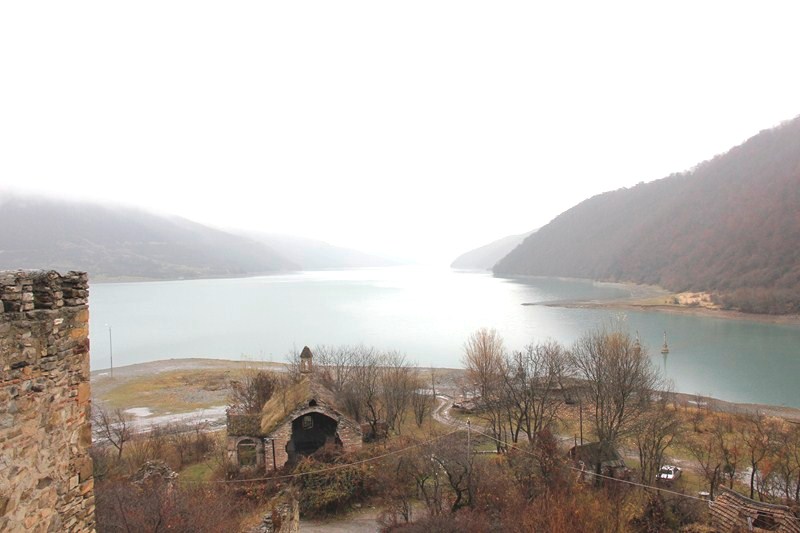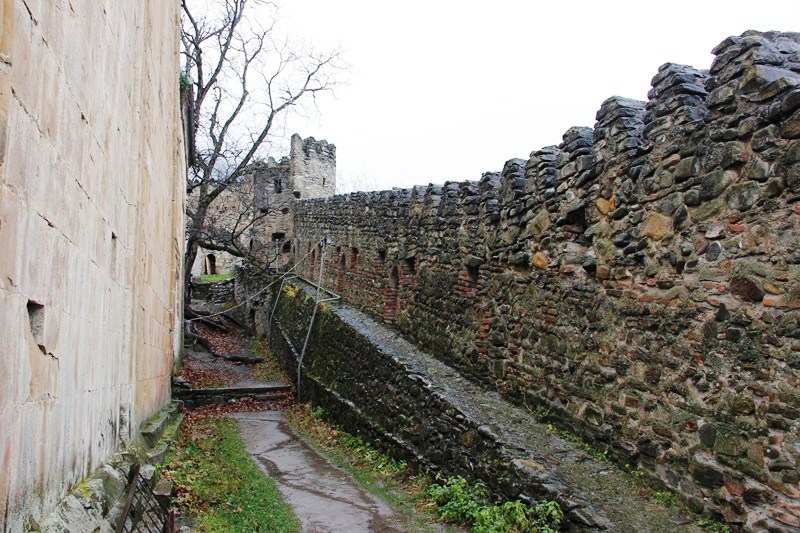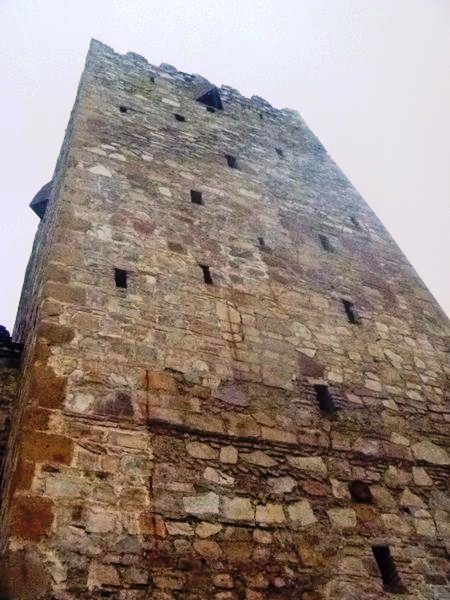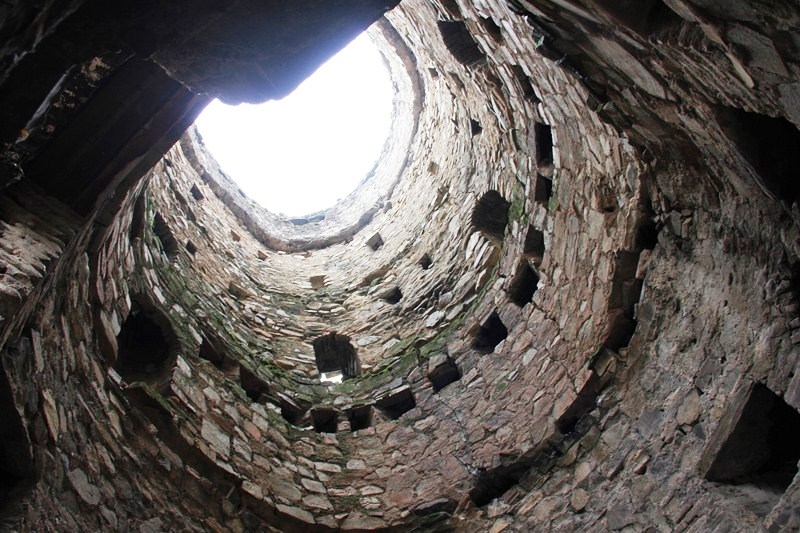
Exploring Sumilon Island (Oslob, Cebu)

The Sumilon Island hiking trail

The Sumilon Island hiking trail

After our lunch at the Island Pavilion Restaurant, Lara, Joy, Jimbo, Rachelle, Risa, Leica (Pete’s daughter) and I decided to burn some calories by doing a hike, with a resort guide, around the 24-hectare island.  Liana and Kaycee opted to stay behind to rest.
View of the natural lagoon from the cliffside trail

View of the natural lagoon from the cliffside trail

The nicely laid out hiking trail (open from 6 AM – 4 PM) started as we descended the steps down from the restaurant and traversed the cliffside pathway, strewn with coral rock, overlooking the natural lagoon where we could see a number of guests kayaking.  Soon enough, we entered the lush forest.  Along the trail are colored pennants tied to trees that indicate the difficulty of the trail – yellow for beginners, blue for moderate and red for advanced.

Hiking along the coral rock-strewn trail

Hiking along the coral rock-strewn trail

Soon we reached a fork in the trail.  The trail on the left traverses the northern point of the island where panoramic views of white sand beaches along the northwestern and eastern shores of the island can be seen.  The trail on the right cuts through the spine of the island and leads up to the island’s highest point, 28 m. above sea level, where a lighthouse and a Spanish-era baluarte (watchtower) is located.  We chose to explore this route.

The concrete lighthouse

The concrete lighthouse

The concrete lighthouse on the top wasn’t much.  It didn’t have a hollow core with a spiral stairway leading to the top, a feature found in many lighthouses.  Instead, steel, U-shaped ladder rungs imbedded in the concrete exterior was used.

The Spanish-era baluarte (watchtower)

The Spanish-era baluarte (watchtower)

The quadrilateral, heavily overgrown but still relatively intact baluarte was more interesting.  It was part of a network of watchtower and fortlets, extending from Santander to Sibonga, built by Augustinian Fr. Julian Bermejo (pastor of Boljo-on from 1804-1836) to warn the townspeople of the approach of pirates.  Lara and Joy entered the watchtower through a small, square hole in one of its sides.

The marine sanctuary

The marine sanctuary

The abandoned marine station of Silliman University

The abandoned marine station of Silliman University

From this vantage point, we now made our way down the trail to the pristine blue waters of the western side of the island where part of Sumilon Island Marine Park is located.  Situated off Cebu’s southeastern coast, 5.5 kms. east northeast of Tanon Point, this marine sanctuary was formerly administered by Siliman University in Dumaguete City (Negros Oriental) as evidenced by a now abandoned hut of the marine station along this part of the trail.  Today, the sanctuary is managed by the resort.  Motorized water sports such as jetskiing and water skiing are not allowed to ensure that the sanctuary is not disturbed.

Aquamania Dive Shop

Aquamania Dive Shop

Equipment at Aquamania Dive Shop

However, fine snorkeling, over coral gardens, can be done along the western, northern and eastern sides of the island.  For scuba divers, it offers waters two to 5 m. deep and 200 m. wide and a drop-off about 100 m. off the southwest coast with spectacular underwater life including the big garoupa.  Large schools of jacks, manta rays, sharks, barracudas, sea snakes, turtles and even an occasional whale shark can be seen off the northern and southern tip.  Dive sites here include Coral Landscape, Garden Eel Plaza, Julie’s Rock and Nikki’s Wall.  Diving season is all year round.  Visibility reaches 30 m. and average depth is 20 m. with a maximum of 35 m..  Waters here are usually calm with strong currents to sometimes very rough, fierce and physically demanding currents.  The resort has a dive shop (Aquamania) with certified dive instructors and extensive diving facilities.

Flower-bedecked table set-up for two at the sandbar

Flower-bedecked table set-up for two at the sandbar

A marriage proposal etched on the sand

A marriage proposal etched on the sand

Further down the trail, we soon reached the island’s white sandbar, the only part of the island that is open to the public.  It shifts and changes its shape with the tides and the current.  Here, we can swim, snorkel or sunbathe.  It was also the setting for last night’s al fresco dinner.  When we passed by, it was already set up for a marriage proposal, with a table for two, surrounded by flower petals shaped into a heart,  set up along the beach.    Nearby, along the sand, were the words “Will you marry me?” etched with pieces of tree branches.

Grotto of Our Lady of Fatima

Grotto of Our Lady of Fatima

On our way back to our cottages, we passed by a grotto with a statue of Our Lady of Fatima and, just past it, the short and seemingly man-made Yamashita’s Cave.  We entered the latter and were surprised by a Halloween set-up, meant to scare visitors, at its very end.  We were totally drained and drenched with sweat by the time we returned to our rooms.

Entrance to Yamashita Cave

Entrance to Yamashita Cave

Sumilon Bluewater Island Resort: Brgy. Bancogon, Sumilon Island, Oslob, 6025 Cebu.  Tel: (032) 382-0008 and (032) 318-9098. Mobile numbers: (0917) 631-7514 and (0917) 631-7512.  Email: info.sumilon@bluewater.com.ph.

Cebu City booking office: CRM Bldg., Escario cor. Molave Sts., Lahug, 6000 Cebu City. Tel:  (032) 412-2436. Mobile numbers (0917) 631-7508 and (0998) 962-8263. E-mail: sales.sumilon@bluewater.co.ph.

Manila Office: Rm. 1120, Cityland/Herrera Towers, 98 Herrera cor. Valero St. Salcedo Village, Makati City. Tel: (632) 817-5751 and (632) 887-1348. Fax: (632) 893-5391.  E-mail: sumilon@bluewater.com.ph. Website: www.bluewatersumilon.com.ph.

Oslob Town Proper (Cebu)

From Tumalog Falls, we again boarded our airconditioned van for the short trip to the town proper of Oslob.  Within its Municipal Heritage Park are a number of Spanish-era structures and at the center of it all is the town’s massive Church of Our Lady of the Immaculate Conception (Nuestra Señora de la Inmaculada Conception).

Church of Our Lady of the Immaculate Conception

Church of Our Lady of the Immaculate Conception

The church was designed by Bishop Santos Gomez de Marañon (the same prelate who built the kiosk of Magellan’s Cross in Cebu City) to replace the destroyed church at Daanglungsod (Boloc-Boloc).  It cornerstone was laid by Fr. Julian Bermejo on May 4, 1830. Townspeople from neighboring Tañon (now Santander) and Ivisan (now Nueva Caceres, Oslob) helped in its construction. The church was finished in 18 years and blessed by Bishop Romualdo Ximeno in 1847.

The church's historical plaque

The church’s historical plaque

The church's modern interior

The church’s modern interior

The bell tower on the church’s left was built by Fr. Apolinar Alvarez in 1858 and Fr. Gregorio de Santiago Vela installed 11 bells at the fifth storey in 1894.  The bells were transferred to the fourth storey when the fifth was destroyed during a strong typhoon.  The bell tower was later repaired by Fr. Mauricio Alvarez (who also built the cemetery, municipal tribunal and the municipal church and made known the medicinal uses of the sulfuric waters of Mainit springs).

The still unrestored, roofless convent

The still unrestored, roofless convent

The convent on the right was started by Fr. Julian Bermejo. The church was finished and reinforced with solid buttresses from 1848 to 1850 by Fr. Juan Jose Aragones, Oslob’s first parish priest (1848–1854 and 1859–1861) and later Bishop of Nueva Segovia.  It was renovated by Fr. Constantino Batoctoy in 1977. The roof, made of tejas sourced out and baked locally at a place now known as Lulukhan, were replaced with corrugated iron sheets by Fr. Pablo Alaxa in 1932.  The church was totally burned by Cebuano guerillas in 1942 and, later on, the vault and dome fell.  In 1954, the wooden flooring of the church was replaced with baldoza tiles.

The now 4-storey bell tower

The now 4-storey bell tower

Fire of unknown origin gutted the complex on November 7, 1955 leaving only the masonry walls of both buildings.  It was restored, with the cooperation of the townspeople, by Fr. Benedicto Zapra and completed in 1980 by Fr. Constantino Batoctoy in time for the sesquicentennial celebration of the original church’s construction (1830 to 1980).  A 2.5-hour (1:40-4 AM) fire again hit the church and adjacent convent on March 26, 2008 but spared the icon of Our Lady of Immaculate Conception, which is inside a glass case, and the 73 other icons near the door to the bell tower.  The church was complete restored on December 10, 2010.

The church gate

The church gate

The church is 64 m. long, 15 m. wide, 9 m. high and has a simple, sober but attractive facade with a semicircular arched main entrance, rectangular widows, half-embedded pilasters and a triangular pediment.  The 4-storey, 30 m. high and octagonal bell tower has rectangular and semicircular arched windows alternating with blind ones. The dome is typically Neo-Classic.

A garita (guardhouse)

A garita (guardhouse)

In front of the church is a prayer room, also known as a waiting chapel, built in 1847.  It was used as an isolation chamber for leprosy-afflicted patients. It has a pediment decorated with a relief of a human skeleton.

Calle de Aragones

Calle de Aragones

Calle de Aragones historical plaque

Calle de Aragones historical plaque

On the left side of the church is Calle de Aragones, the town’s oldest street, built in 1879.  It was named after Fr. Juan Jose Aragones.  At the end of the street, at the intersection of Calle Aeternidad, is the unique, unfinished cuartel.

The unfinished coral stone cuartel

The unfinished coral stone cuartel

The cuartel's double row of arches

The cuartel’s double row of arches

The construction of this barracks for the Guardia Civil was started by el gran maestro Don Marcos Sabandal but was halted with the arrival of the Americans in 1899.  The coral stones used in its construction of its 19 cm. thick walls came from the remnants of the floor of the collapsed church bell tower.  Its façade features a double row of arches.

The interior of the cuartel

The interior of the cuartel

Historical plaque of cuartel

Historical plaque of cuartel

The thick coral stone walls and gates surrounding the church complex, called paril, are topped by a series of inverted, cone-shaped stones.  They were built in 1875 as a defense against raiding Muslim pirates.

The church walls and gates

The church walls and gates

Historical plaque of church walls and gates

Historical plaque of church walls and gates

Along Calle Eternidad, parallel to the coast, is a baluarte (a watchtower locally called lantawan), one of 7 built by the warrior-priest Fr. Julian Bermejo, parish priest of Boljo-on.  Hexagonal in plan and occupying an area of 48 sq. m., it has massive 7 m. high crenellated walls.  Only about a half of the watchtower remains. In 1813, this baluarte, as well as the other watchtowers, helped Fr. Bermejo and the townspeople of Oslob repel Moro slave raiders led by Sultan Goranding during a naval battle near the waters off Sumilon Island. Sultan Goranding was captured during the battle.

Baluarte (watchtower)

Baluarte (watchtower)

Historical plaque of baluarte

Historical plaque of baluarte

How to Get There: Oslob is located 117 kms. (a 3-hr. drive) south of Cebu City.

Tumalog Falls (Oslob, Cebu)

After our butanding (whale shark) interaction at Brgy. Tan-awan, we boarded our airconditioned van for the short 10-min. drive to Tumalog Falls, another great attraction of Oslob.   A visit here is usually combined with your swim with the butanding. The van can only bring us at the entrance since the paved road from there on is very steep.

Tumalog Falls

Tumalog Falls (photo: Liana Smith-Bautista)

From hereon, we could either make a 15-min. hike (a good hike and a warm up for your body) or go via a habal-habal, the local term for riding a motorcycle and ride at the back of the driver. We all chose the latter. The habal-habal ride along the rather steep, 50-degree inclined road going up the mountain is no joke and was an experience by itself.  Along the way, we could already behold the beauty of the postcard-pretty, imposing and multi-tiered falls hidden away in a forest.

OLYMPUS DIGITAL CAMERA

Photo: Liana Smith-Bautista

The falls was really awesome! For city people like us, a view like this was really a breathtaking experience. The beautiful mountainous scenery, with moss hanging off the mountainside and many fine areas of misty water spread out over a glistening green moss mat, was one of the most breathtaking nature scenery that I have ever seen, reminding me of Avatar movie forest scenes. The local government has installed concrete stepping stones, making it easier and safer for us to walk around.

Tumalog Falls (3)

I got a cool feel from the mist of the falls and savored the soothing and very calming sound of falling water as I tried to enter its waters to wash away the sea salt after swimming the ocean during my previous butanding interaction.  Bbbbrrrr, it’s really damn cold! However, I soon got used to the cold.

OLYMPUS DIGITAL CAMERA

The falls has a unique appearance very distinct from all the other waterfalls that I have seen. As the drizzle from the falls touched my face, the stress from my head, shoulders down to the tip of my fingers, all tired from arduous swimming and flipping at the butanding interaction, were all washed away. You cannot really swim here since the falls is not that deep, around 3.5 to 4 ft. (a nice and safe swim for kids), but the sight is exhilarating and refreshing.

Tumalog Falls (4)

The bracingly cold water was clean and the pools they flowed into were clean as well. People around us all seemed to be enjoying. There were families having picnics at some nearby open wooden huts; others were busy taking candid and dramatic photos at the fall’s nooks and crannies, all green with moss and wild growth; while others just bathe. There’s even a small pool, where the water from the falls overflows, where you can a fish spa experience, dipping your feet and letting small fish eat your dead skin off. Definitely a good place to chill and relax.

Tumalog Falls (8)

Despite the many tourists that visit it, it was still a very well maintained area. For those who get local “guides,” they are experts at suggesting the best areas to take pictures. Aside from the very beautiful falls and the magnificent rock formations, there are also wonderful bamboo trees around, all perfect for photos. I even saw a slightly visible rainbow created by the lovely rays of sunlight hitting directly through the falling waters. I was only able to take shots of the falls from a distance but, luckily for me, Liana brought along her waterproof camera. After the heart pounding whale shark encounter in Oslob, seeing and savoring Tumalog Falls brought my blood pressure back to its normal level. I could have stayed there for the whole day.

OLYMPUS DIGITAL CAMERA

Photo: Liana Smith-Bautista

Such a breathtaking natural sight makes you realize that, yes, there is a God. It also felt mystical (I was half expecting fairies to show up). Truly, nature knows how to show off.  This has been one of the most surreal places I have ever been! Despite the booming tourism of Cebu, this place has been not touched by too much commercialism and this natural treasure needs to be kept in its natural form to retain the pristine beauty for all generations to see and experience.

OLYMPUS DIGITAL CAMERA

Photo: Liana Smith-Bautista

The falls does not have a closing time but it does not have lighting at night. Food is not available in the falls area so bring your own. There are no tables, no lockers, some benches, no vendors, no food stalls, no changing rooms and no lounge area. A rudimentary gender specific bathroom is available. Be careful in slippery parts and protect your camera gear since the falls exudes droplets of water. For those making a return hike, the store at the entrance, near the parking lot, offers refreshments such as young coconut, banana cue and soft drinks.

OLYMPUS DIGITAL CAMERA

Doing a U.P. Oblation pose (photo: Liana Smith-Bautista)

Tumalog Falls: Brgy. Tumalog, Oslob, 6025 Cebu. Admission: PhP20.  

Habal-habal at the entrance

Habal-habal at the entrance

How to Get There: From the Oslob whale watching station in Brgy. Tan-awan, you can hire a habal habal (140/pax) or a multi cab (600 for 5 pax), both round trip, to get to the entrance. They are parked and available at the entrance of the whale shark center, near the main road. From the highway, it is a 5-min. habal-habal ride to entrance. The habal-habal ride to the falls costs PhP30 (one-way) and PhP50 (round trip).

Sumilon Bluewater Island Resort (Oslob, Cebu)

Sumilon Bluewater Island Resort

Sumilon Bluewater Island Resort

I again got an invitation, from Mr. Pete Dacuycuy, to join a media familiarization tour of another Bluewater resort (the first one we visited was the Panglao Bluewater Resort in Bohol), this time to Sumilon Bluewater Island Resort.  Joining me was fellow Panglao visitor Ms. Ma. Joy Elaine C. Felizardo (www.gastronomybyjoy.com) and Ms. Lara Louise Gabrielle L. Antonio (Editorial assistant at Mabuhay Magazine) plus Mr. Jimbo Owen B. Gulle (Editor-in-chief of Powerplay Magazine); Ms. Ma. Katrina Camille Cabanos (ZALORA Philippines); Ms. Liana Kathleen Smith-Bautista (www.liveloveblog.com); and Ms. Risa Halaguena and Ms. Rachelle Elaine Mapa (Account Manager), both from Essential Philippines Magazine.

Sumilon Island

Sumilon Island

We all arrived at Sibulan Airport (Negros Oriental) by 3:30 PM via a PAL Express flight. Upon exiting the terminal, we were whisked, via two airconditioned vans, to Sibulan Port where a big 50-pax outrigger boat (Jeffrey) was waiting to bring us to the island.  Normally, to get to the island, visitors usually make a 20-min. land trip to Tampi port, then ride a fast craft going to Oslob on Cebu Island.

Sibulan Port

Sibulan Port

From Oslob (a 3-hour drive from Cebu City), they then make a 10-min. land trip to Bancogon Pavilion, where the private ferry port going to  Sumilon Bluewater Island is located. The free 2-way transfers between the the pavilion and Sumilon Island are scheduled at 1.5 hr. intervals with the first trip at 7 AM and the last at 4:30 PM. We were to forego this tedious land-sea transfer and, instead, directly get to the island via a 1-hr. boat trip.

Arrival at Sumilon Island Wharf

Arrival at Sumilon Island Wharf

We arrived at the island by 4:50 PM and were assigned our respective de luxe rooms in duplex villas.  Jimbo and I stayed at the newly renovated Villa 14-A. Our spacious, tastefully and comfortably decorated airconditioned room had a high ceiling and impressive interiors with 2 very comfortable queen-size beds with many fluffy pillows, a big private bathroom with hot/cold shower and a skylighted ceiling, cable TV with DVD player, a work desk, coffee/tea making facility, sitting area, minibar and a private veranda with lounge chairs.  Glasses of the most refreshing lemongrass-calamansi iced tea and a platter of assorted fruits welcomed us inside our room.

Villa 14-A

Villa 14-A

Sitting area and writing desk

Sitting area and writing desk

Wooden sliding louver doors leading to the bathroom

Wooden sliding louver doors leading to the bathroom

Wi-fi is available in our rooms and public areas (pavilion, the pools, some parts of the beach and the lounge areas along the coastline).  Lounge areas, with seats and hammocks, are located along the seaside and wooden stairs lead guests to a pocket beach. I’ve nothing but praises for the friendly, courteous and efficiently pro-active staff’s hospitality and their earnest desire to fulfill every request.

Al fresco dining at the sandbar

Al fresco dining at the sandbar (photo: Joy Elaine C. Felizardo)

The island's signature shifting sandbar

The island’s signature shifting sandbar

Dinner was prepared, al fresco, along the island’s signature shifting sandbar. After this refreshing repast, we made an ocular tour, using an electric tram, of the resort’s  1 and 2-bedroom villas.

The electric tram

The electric tram

These villas feature, aside from the aforementioned de luxe room amenities, a sitting area, a dipping pool and a free-standing bathtub (also a feature in Panglao Bluewater Resort) for the 2-bedroom villa.

2-Bedroom Villa

2-Bedroom Villa

Interior of 2-Bedroom Villa

Interior of 2-Bedroom Villa

Dipping pool at 1-Bedroom Villa

Dipping pool at 1-Bedroom Villa

Come morning, we had our buffet breakfast at its quiet and lovely, octagonal Island Pavilion restaurant.  It offers assorted breads with orange marmalade, strawberry jam and butter spreads; juice (orange or four seasons); fresh milk; hot chocolate, coffee, hash brown potatoes, crispy bacon, omelet, tocino, noodles, etc.

Pavilion Restaurant

Pavilion Restaurant

Beside the pavilion is an inviting outdoor infinity swimming pool, overlooking Oslob, with loungers and a breathtaking view of the beach.  Just nearby is the resort’s well-stocked bar.

Infinity swimming pool

Infinity swimming pool

Poolside bar

Poolside bar

Up ahead was a full day of resort-sponsored activities at Oslob, starting with a 10 min. boat ride to the mainland where we bonded with butanding (whale sharks) and  frolicked at Tumalog Waterfalls.

The author (left) bonding with a whale shark

The author (left) bonding with a butanding (photo: Ma. Joy C. Felizardo)

The author at Tumalog Falls

The author at Tumalog Falls

We also reminisced the town’s historical past at the poblacion where we visited  the Spanish-era Church of the Immaculate Conception, Cuartel (barracks), baluarte (watchtower), gates and walls.  We returned to the resort via a 15-min. boat ride from Bancogon Pavilion and Wharf.

Bancogon Pavilion

Bancogon Pavilion

Bancogon Wharf

Bancogon Wharf

In the afternoon, we all explored the island via a nicely laid out hiking trail, through lush forests, making stopovers at the lighthouse, a Spanish-era baluarte, Yamashita’s Cave and  Our Lady of Fatima grotto.  Come evening, to refresh their tired bodies, some of the ladies also tried out an outdoor massage at the resort’s Anuma Spa.

Hiking around the island

Hiking around the island

Anuma Spa

Anuma Spa

On our last day at the resort, Joy and I checked out their 3 glamping tents.  Glamping is short for “glamorous camping.” It basically means going camping while trying to make yourself feel that you’re not camping.  The tent has all the other features of a regular room such as 2 single beds, carpeted floor, cabinets, lamps, electric fans and a cooler filled with assorted drinks (beer, soda, juice) and chips, all for free.  The campsite is located near the beach and the natural lagoon and a bathroom and shower room is close by.

A furnished glamping tent

A furnished glamping tent

The natural lagoon

The natural lagoon

The resort also has a children’s playground, library, dive shop (Aquamania Dive Shop), game room and a souvenir shop.   They also offer, airport transfers, 24-hour room service, , kayaking, fish feeding and fishing at the lagoon, Hobie Cat sailing, snorkeling, windsurfing, paddle boating and scuba diving.  In the evening, you can join fishermen as they catch krill to feed the butanding the next day.

Aquamania Dive Shop

Aquamania Dive Shop

This highly recommendable resort, an excellent escape from the hustle and bustle of city life and the chaos and stresses of the mind and body, is truly a good place for reflection, prayer, rest, relaxation and romance.

The author at Sumilon Island

The author at Sumilon Island

Sumilon Bluewater Island Resort: Brgy. Bancogon, Sumilon Island, Oslob, 6025 Cebu.  Tel: (032) 382-0008 and (032) 318-9098. Mobile numbers: (0917) 631-7514 and (0917) 631-7512.  Email: info.sumilon@bluewater.com.ph.

Cebu City booking office: CRM Bldg., Escario cor. Molave Sts., Lahug, 6000 Cebu City. Tel:  (032) 412-2436. Mobile numbers (0917) 631-7508 and (0998) 962-8263. E-mail: sales.sumilon@bluewater.co.ph.

Manila Office: Rm. 1120, Cityland/Herrera Towers, 98 Herrera cor. Valero St. Salcedo Village, Makati City. Tel: (632) 817-5751 and (632) 887-1348. Fax: (632) 893-5391.  E-mail: sumilon@bluewater.com.ph. Website: www.bluewatersumilon.com.ph.

Church of the Immaculate Conception of the Virgen Mary (Baclayon, Bohol)

Church of the Immaculate Conception of the Virgin Mary

Church of the Immaculate Conception of the Virgin Mary

From the Bohol Bee Farm, it was back to our airconditioned coach for the short 15-min. (11-km.) drive, via the Dauis-Panglao Road and Tagbilaran East Road, to the town proper of Baclayon.  Here, we made a stopover at the town’s Church of the Immaculate Conception of the Virgen Mary, one of the oldest churches in the country, the best preserved Jesuit-built church in the region and one of the best examples of Philippine Baroque combined with Western and Eastern influences.

The collapsed bell tower surrounded by scaffolds

The collapsed bell tower surrounded by scaffolds

Stacks of retrieved coral stone

Stacks of retrieved coral stone

Just like a number of Bohol’s Spanish-era churches, it too was damaged during the devastating October 15, 2013 earthquake which caused the collapse of its simple Early Renaissance portico facade and its formerly separated 21 m. high, quadrangular coralstone bell tower (connected to the church by the portico in 1875). Fortunately, its nave remains largely intact.  An international team of heritage restoration experts have assessed damage to this as well as other Bohol churches and it could take around two to three years for the damaged churches to be restored.

The church interior, looking towards where the facade used to be

The church interior, looking towards where the facade used to be

When we arrived, braces and scaffolds to shore and support the unstable structure (to prevent any further damage from future earthquakes) were being installed and temporary storage facilities were constructed.  Loose coral stone blocks retrieved from the clearing of earthquake debris have been amassed and stacked at the spacious church patio for future documentation, labeling and use in future restoration work.

The main altar with its painted ceiling

The main altar with its painted ceiling

Luckily for us, the church interior and its small adjacent Baclayon Museum can still be visited. , The ceiling and intricately-carved, gilded altar and icons plus two side retablos (altar backdrop), all dating back to the Jesuit era, were all spared from destruction.  The floor’s glazed azulejo tiles, imported from Mexico and Spain and installed in 1875 after the completion of the portico, were also spared.

Left side altar

Left side altar

Right side altar

Right side altar

The museum, located at the second floor of the former convent (now the Immaculata High School), displays centuries-old relics, religious artifacts and antiquities dating back to the 16th century. The church inventory books have helped in dating some pieces. However, we weren’t allowed to take photographs inside.

The Baclayon Museum

The Baclayon Museum

Its impressive amount of preserved liturgical material includes an ivory statue of the crucified Christ looking towards heaven; relics of St. Ignatius of Loyola; a statue of the Blessed Virgin  said to be presented by Queen Catherine of Aragon; old gold embroidered ecclesiastical vestments; books with carabao skin covers; and librettos of church music written in Latin on sheep skins.

Stairs leading up to Baclayon Museum

Stairs leading up to Baclayon Museum

There are also cuadro paintings executed by famed 19th century Filipino painter Liberato Gatchalian in 1859. Among the Baclayon cantorals (large handwritten music books) on display is the Misa Baclayana, a musical setting for the Mass which has been revived and is part of the repertoire of the Loboc Children’s choir.

Bohol Bee Farm (Dauis, Bohol)

Bohol Bee Farm

Bohol Bee Farm

After breakfast, a dip at the lagoon pool and an ocular inspection, with Rooms Division manager Mr. Leo P. Go,  of the resort’s Honeymoon Villas, it was now time to check out of  Panglao Bluewater Resort.  After thanking our gracious host, Mr. Pete Dacuycuy (who left for Manila ahead of us), we again boarded our airconditioned coach which was to bring us to the next town of Dauis.  Here, we were to have lunch at the homey and relaxing Bohol Bee Farm.

Potted herbs and vegetables

Potted herbs and vegetables

This self-sustaining, nature-themed and eco-friendly resort  is filled with rustic wooden furniture and a unique lush, green environment.  Alugbati vines grow on the trellises while the frontage is filled with small plots of various organic herbs (oregano, dill, fennel, basil, spearmint, pandan, magic rose, thyme, chives, lemon grass, peppermint, parsley, aloe vera, stevia, coriander, rosemary and tarragon) and vegetables (romaine lettuce, celery, eggplant, mustard, etc.), all used as ornamental plants and lining the walkways.

The cliff with the sun deck and swimming area below it

The cliff with the sun deck and swimming area below it

This agricultural haven, situated on top of a cliff that drops dramatically into the sea (the swimming area below it is accessible by a flight of wooden stairs), was once dedicated to bee cultivation but the bees perished and the farm was moved to Inabanga.

The 2wo-tiered swimming pool

The 2-tiered indoor swimming pool

The farm promotes healthy eating and we were here to sample a delicious and unique buffet lunch, which uses organically-grown vegetables, at its restaurant overlooking the sea.  On our way to the restaurant, we passed the resort’s lounge area and two-tiered, indoor swimming pool.

The restaurant

The restaurant

Too bad, resort owner and chef Victoria “Vicky” Wallace-Sandidge, a Bohol-born and New York-based nurse-turned-farmer, wasn’t around to entertain us.  Married to African- American Thomas Edward Wallace, she had two children (Mellanie and Abdul) with him but was widowed in 1988.  In 1991, she bought a 4.8-hectare property and established the Bee Farm two years later. Here, she promotes organic farming which doesn’t use expensive conventional fertilizers and harmful pesticides for the farm’s crops. Vicky sits as an active member of the Bohol Initiatives for Sustainable Agriculture and Development (BIFAD).

Organic garden salad

Organic garden salad. Notice the edible flowers? They say that any flower being sucked by bees is not poisonous and, therefore, is edible

Cabcab with pesto & green tomatoes

Cabcab with pesto & green tomatoes

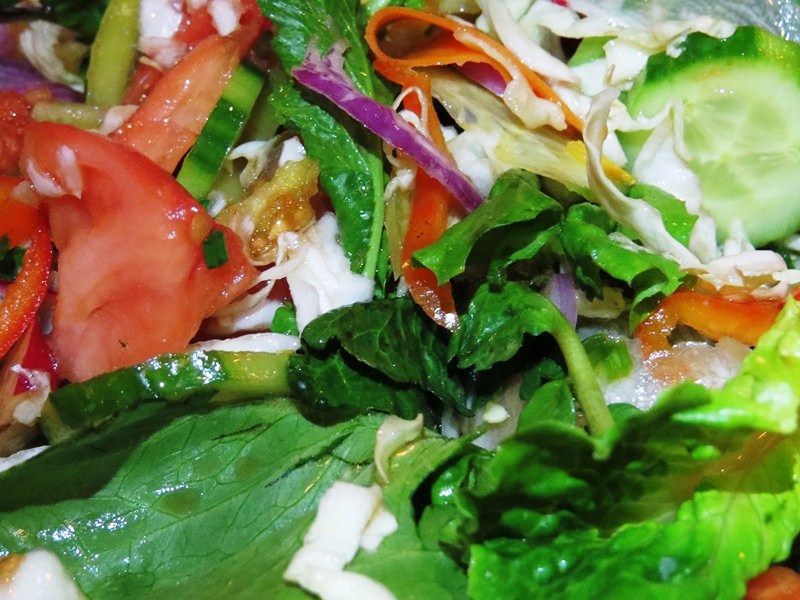
We started our lunch buffet (reasonably priced at PhP600/pax), amidst the cool sea breeze and stunning ocean view, with glasses of fresh lemongrass juice; a very spicy, colorful and tasty organic garden salad (romaine lettuce, turnips, mustard greens and indigenous flowers topped with honey mustard dressing); an appetizer of light, crisp cabcab (mashed cassava pulp dried and deep fried into thin wafers or crackers) with a dip of pesto & green tomato; and a bowl of seafood soup.

Grilled fish

Grilled marlin

Honey-glazed chicken

Honey-glazed chicken

Spare ribs

Spare ribs

The main dishes consisted of grilled marlin, honey-glazed chicken and spare ribs plus seafood lasagna, organic red rice with camote, and squash bread with homemade spreads. Dessert was healthy and very delicious, homemade ube and malunggay (moringa) ice cream.

Seafood lasagna

Seafood lasagna

Squash bread with homemade spreads

Squash bread with homemade spreads

After lunch, we proceeded to the Buzz Shop, their gift and souvenir shop up front which sells all sorts of organic products.  On sale are various vegetable breads and muffins (squash muffins, carrot muffins, camote bread, honeyed muffins, etc.); fruit and vegetable chips (cassava, banana, etc.); spreads (honey, mango, pesto, choco, etc.); a variety of teas, both in leaf and powdered form (including the very  popular honeyed ginger tea); black berry wine; native vinegar; kape mais (coffee made from roasted corn and wild berries); and dried cabcab.

An array of food products

An array of food products

They also sell wild honey from the farm; bee propolis, pure honeybee pollen, honeyed tableya, honeyed garlic; honeyed mustard salad dressing and honeyed hot sauce.   You can also buy soap (milk, papaya, lemongrass, etc.); buri and raffia woven products; beewax lip balm; virgin coconut oil; and honey or pollen-based shampoos and lotions.

Souvenir shop

Souvenir shop

We have already sampled the homemade ube and malunggay ice cream but we still visited the small Buzzz ice cream shop to check out their other very exotic offerings (PhP40 for 1 scoop and PhP80 for 2 scoops) – chocolate, durian, avocado, pandan, tomato, mango, guyabano, spicy ginger and buko (young coconut). Their ice cream is the star of their very unique and interesting halo-halo.

Buzzz Ice Cream

Buzzz Ice Cream

After our pasalubong shopping and prior to leaving, Mr. Ariel B. Logrono, a staff member of the farm took us on a 30-min. guided tour. He first gave us a lecture on different organic farming methods.  The resort practices vermiculture, mostly using their waste products mixed with animal manure for vermicompost.   After 6 months, it is then used as fertilizer.

Listening to Ariel's lecture on organic farming

Listening to Ariel’s lecture on organic farming

They  also practice the concept of companion planting, a form of polyculture wherein different crops are planted in close proximity to each other.  The theory is that these plants assist each other in nutrient uptake, pest control, pollination, and other factors necessary for increasing crop productivity.

Companion planting.

Companion planting at work. Grasshoppers feeding on their favorite leaves but leaving the nearby herbs intact

We were also given a highly educational tour of the Crafts and Livelihood section of the resort, our guide demonstrating and giving inputs on the process involved in each activity. Here, the Bohol Bee Farm staff are encouraged to do livelihood activities such as raffia making, basket making and sewing,  enabling them to give a little back to the community.

Crafts and Livelihood Section

Crafts and Livelihood Section

Seasonal basket and raffia decors

Seasonal basket and raffia decors

At the center, we observed members of the cooperative operating looms and sewing machines as they turned raffia and buri palm leaves into fabric sheets, bags, place mats, purses, slippers, curtains, seasonal decors, table runners, tissue holders, hats and other merchandise.  The loom weavers made it look so easy, their shuttles zipping back and forth without hardly any effort. A 10-foot long sheet of raffia fabric usually takes 3 to 4 days to complete.

Observing loom weaving

Observing loom weaving

Bohol Bee Farm: Brgy. Dao, Dauis, Panglao Island, 6339 Bohol.  Tel: (038) 502 2288 and (038) 510-1821 to 22. Mobile number: (0917) 710-1062, (0939) 904-6796 and (0917) 304-1491.  E-mail: vickywallace@boholbeefarm.com.   Website: www.boholbeefarm.com.

Punta Cruz Watchtower (Maribojoc, Bohol)


Earthquake-damaged Punta Cruz Watchtower

Earthquake-damaged Punta Cruz Watchtower

From Hinagdanan Cave, we returned to our airconditioned coaster for the 22 min./21.7-km. drive, via Carlos P. Garcia Ave and Tagbilaran North Road, to Maribojoc where we were to watch the sunset at the Spanish-era Punta Cruz Watchtower, located at the most westerly point of Bohol.

DSC05176

Built in 1796 as a defense against pirates, the Castillo de San Vicente, as it was called then, has ramparts shaped in a perfect isosceles triangle over which rises a short hexagonal tower.  From its windows at the top, coast watchers can see as far as Cebu, Siquijor, and Mindanao.

Plaque installed by National Historical Intitute

Plaque installed by National Historical Intitute

Maribojoc was severely hit by the 7.2 magnitude earthquake on October 15, 2013.  Many houses were destroyed or damaged and its historical Spanish Church of the Holy Cross was completely destroyed.  The watchtower also sustained significant damage, especially on its upper portion. Inscriptions on top of the main entrance were destroyed.

The viewing deck and cross

The viewing deck and cross

Sunset at Punta Cruz

Sunset at Punta Cruz

Before the earthquake, the watchtower and the sunset was the only thing that appealed to visitors.  Today, Punta Cruz watchtower is no longer directly along the sea. From the view deck in front of its time-weathered wooden cross, we saw that the old coastline has receded some 50 to 100 m., a result of 400 hectares of sea-bed being lifted more than a meter due to tectonic uplift.

New coastline at the left

New coastline at the left

New coastline at the right

New coastline at the right

Bohol actually added more land to its area when the water permanently receded as wider coastlines were exposed. The high tide mark had changed such that the tidal flat (hunasan) dried out and the shoreline widened.  No longer submerged by seawater, exposed brain corals and branching coral recruits within the Punta Cruz Marine Sanctuary started bleaching.

Our media group

Our media group

How to Get There: From the Tagbilaran Integrated Bus Terminal in Dao, take a bus going to Tubigon.  These pass along Punta Cruz.  Upon dropping off at Punta Cruz, walk down, for about 500 m., to the watch tower.

Pamilacan Island (Baclayon, Bohol)

Pamilacan Island

Pamilacan Island

It was now Day 2 of our 3-day media familiarization tour of Bohol.  After a very early breakfast at Panglao Bluewater Resort, we were slated to do some dolphin watching off Pamilacan Island, followed by lunch at Balicasag Island.  The tide was still low and our large motorized outrigger boat was anchored some distance off.  To get on board her, we took turns riding a tandem kayak until all were on board.  The sun was already up in the sky when we got underway.

On our way

On our way

The island’s name was derived from the word meaning “nesting place of manta rays.”  However, it has also been interpreted to to have been derived from the word pamilac, a harpoon (large hooked implement) used to capture manta rays, dolphins, whale sharks and Bryde’s whales. Under the jurisdiction of the municipality of Baclayon, it is situated 14 kms. (8.7 mi) south of the Bohol mainland.

Our spotter scanning the horizon for dolphins or whales

Our spotter scanning the horizon for dolphins or whales

The waters around the island are home to at least 11 species of dolphins and whales, including the playful Spinner Dolphins, Bryde’s whales and the gigantic Sperm Whale. Blue Whales are sometimes seen in the early months of the year. The whale watching season begins in March until the onset of the rainy season in June or July.

Soon to make landfall

Soon to make landfall

The 15 to 20 m. long boat we rode on was possibly a former canter, a boat formerly used for whale hunting.  These have been refitted with seats and roofing for a comfortable ride for 7 to 10 passengers who want to go whale or dolphin watching.  A skilled, elderly spotter, who is also an excellent guide, soon took his place at our boat’s bow, scanning the horizon for any whales or dolphins. Resident dolphins and small whales can be found all year round but sightings are dependent on weather and sea conditions.  Just like my first try in 2003, we were unlucky to find any of them.

The island's immaculately white sand beach

Footprints along the island’s immaculately white sand beach

We made landfall at the island’s beautiful white sand beach located on its northwest side.  Upon landing, we were welcomed by members of the island’s small and closely knit fishing community which has around 200 families living in 3 sitios – one facing Baclayon, another amid an island and a third on the southern coast.  Their main livelihoods now concentrate on dolphin and whale watching tours and subsistence fishing. In the past, it also included whale, dolphin and manta ray hunting. However, with the strict enforcement of marine life preservation laws in the country, this practice was stopped. Their houses, though, are still adorned with jaws and bones of these marine mammals.

The island's barangay

The island’s barangay

When we arrived, a table (with red tablecloth) and chairs were set up under a shady palm tree, beside some picnic sheds.  A merienda of sliced camote (sweet potatoes), either steamed, caramelized or fried, plus rice cakes and corn coffee were prepared for us. The latter looked and tasted like your good old caffeinated coffee but is said to be healthier.

A merienda of camote, rice cake and corn coffee

A merienda of camote, rice cake and corn coffee

After this filling repast, I together with Czarina, Euden, Joy, Kathleen and Lara went on a snorkeling tour on 3 small boats, each with a local boatman who paddled for us.  Czarina joined me on one boat.  The island’s wide flat reef, now a marine sanctuary, offers good snorkelling and diving (it has some great dive sites such as Dakit-Dakit).

Dining al fresco along the beach

Dining al fresco along the beach

After some great snorkeling over coral gardens, we returned to shore early as Czarina wasn’t feeling good.  Back on dry land, I explored the nearby Spanish-era fort which, in the past, served as a watch station for pirates, intruders and other enemies. Triangular in shape and probably constructed in the 19th century, it was made with rubble while cut coral blocks lined its portal and windows. The three corners of the structure were supported by round buttresses.

The triangular, Spanish-era fort

The triangular, Spanish-era fort

Another view of the fort

Another view of the fort

Inside are embedded trusses and a triangular pillar in the middle, indication that the fort may have had a second floor, probably made of wood. A large hardwood cross, with an 18oos date carved on it, once stood near the fort but is now housed in a nearby modern chapel. The fort was said to have formed a network with the towns of Baclayon, Loay and Tagbilaran.

View of the fort from another angle

View of the fort from another angle

The ladies were already back from their snorkeling trip when I returned.  Soon enough, we were back on board our boat for the second half of our island hopping expedition – Balicasag Island.  The waters were already choppy when we left and our boat had to travel slowly as the waves kept pounding the boat.  Soon a number of us (including me), especially the already ill Czarina, were already feeling seasick and, since our destination was still a long way off and it was already way past noontime, it was decided to just return to our resort.  Anyway, I have been to Balicasag Island 11 years ago, going around it on foot and snorkeling its coral gardens.  However, I felt sorry for those who haven’t been there. Oh well, you can’t win them all.

The triangular pillar in the middle of the fort

The triangular pillar in the middle of the fort

How to Get There: Pamilacan Island is located about 20 kms. southeast of Tagbilaran City, 23 kms. east of Balicasag Island and 11 kms. (a 45-min. pumpboat ride) offshore from the town. Pumpboats can be hired at Baclayon port.

Arrival in Panglao (Bohol)

Panglao Bluewater Resort

Panglao Bluewater Resort

Come evening, after the end of our Bohol Countryside Tour, it was now time for us to check in at the 5.5-hectare, extremely quiet and refreshing Panglao Bluewater Resort.

Check out “Bohol Media Familiarization Tour

Mr. Pete Dacuycuy (in white shirt) with the media group

Mr. Pete Dacuycuy (in white shirt) with the media group

Our home for the three days and two nights we were to stay in Bohol, all 7 members of the media team, plus 3 Department of Tourism personnel and our tour operator and ground handler Ms. Edna M. Faustino, were to stay in some of the 54 elegantly appointed, spacious, very Zen and modern airconditioned guestrooms.

Check out “Resort Review: Panglao Bluewater Resort

The Premier De Luxe Room I stayed in (118)

The Premier De Luxe Room I stayed in (118)

On arrival, we were welcomed by Rooms Division manager Mr. Leo P. Go and resort consultant Mr. Pete Dacuycuy and offered welcome lemon grass drinks and cold towels while waiting for our Premier De Luxe rooms to be ready. The ladies all stayed at the ground-level Poolside Wing while the guys all stayed at first-floor Poolview rooms. Our breakfast, lunch and dinner was at its full-service Aplaya Restaurant

Check out “Restaurant Review: Aplaya Restaurant

Panglao Bluewater Resort: Bluewater Rd, Sitio Daurong, Brgy. Danao, Panglao, 6340 Bohol.  Tel: (038) 416-0702 and (038) 416-0695 to 96. Fax: (038) 416-0697.  Email: panglao@bluewater.com.ph. Website: www.bluewaterpanglao.com.ph.  Manila sales office: Rm. 704, Cityland Herrera Tower, Rufino cor. Valera Sts., Salcedo Village, 1227 Makati City, Metro Manila.  Tel: (632) 817-5751 and (632) 887-1348.  Fax: (632) 893-5391.

Loboc River Cruise (Bohol)

Floating restaurant of Village Floating Resto & Cruises

Floating restaurant of Village Floating Resto & Cruises

Upon arrival at Loboc, we all crossed over to the other bank of the Loboc River, via the Alfonso L. Uy Promenade, to get to the Loboc Tourism Complex where the floating restaurants are docked.  It has been 11 years since the last time I had my first Loboc River Cruise with my family and I was curious as to what’s new with the cruise.

The Loboc Tourism Complex - a tourist attraction by itself

The Loboc Tourism Complex – a tourist attraction by itself

This time, I now notice so many improvements in the area. Well for one the floating restaurant terminal is now concreted, there are now lamp posts along the river banks (for night cruises), helpful directional signage and an orderly parking lot, the restrooms are clean and the complex was wi-fi enabled.  This made the complex an exceptional tourist attraction by itself.

Floating restaurant terminal

Floating restaurant terminal

When we got to the boat terminal, we were all whisked to the waiting double-hulled floating restaurant of Village Floating Resto & Cruises.  The setup this time was different from our past typical boat tour.   Instead of different tables for different groups of guests, a long, flower-bedecked table was instead set up with green table cloth and fresh buco in the shell for each one of us.

Being serenaded with bossa nova songs

Being serenaded with bossa nova songs

Our lunch was also to be something different, not the typical buffet.  When our boat got underway, we were first entertained by a local band with a versatile and talented female lead vocalist singing bossa nova songs for our listening pleasure.  This got us in the mood for lunch, however late it was.

Our media group

Our media group

The food soon started coming in, starting with the appetizers – fish kinilaw, puso salad and summer rolls.  This was followed by law-oi soup.  The main course that followed next was out of the ordinary – a humongous boodle feast, to be eaten kamayan-style

Appetizers – fish kinilaw, puso salad and summer rolls

Appetizers – fish kinilaw, puso salad and summer rolls

Fruit skewers, puto cuchinta, ube pannacotta, banancue

Fruit skewers, puto cuchinta, ube pannacotta, bananacue

It consisted of pork humba, chicken inasal, sisig-stuffed squid, grilled vegetables, pinais na isda and corn on the cob plus steamed rice, all laid out on banana leaves.  Our delightful lunch was capped by a series of desserts consisting of ube pannacotta, bananacue, puto cuchinta and fruit skewers.

Our boodle feast

Our boodle feast

In about an hour, our boat reached the endpoint of our 2-km. cruise – Busay (or Tontonan) Waterfalls.  These series of low waterfalls, used to generate electricity for the town, drops 15 m. in 2 stages.  We were already done with lunch when docked near a floating wooden platform with rope railing.  Alighting here, we had the luck of seeing a rare rainbow beneath a nearby small waterfall.

Busay Falls

Busay Falls

The author at the floating viewing platform

The author at the floating viewing platform

The rainbow uderneath a small waterfall

The rainbow uderneath a small waterfall

After a few minutes at the viewing deck, we again boarded our boat and, when all were accounted for, turned around for our return trip upriver.  Along the river, the boat stopped at a small bamboo and nipa jetty decorated with banderitas and colorful guitars hung on the rafters. Here, some locals, dressed in apple-green filipiniana outfits, provided us a culture show, dancing the kuradang and the tinikling.

A kuradang dance performed for us at a riverbank jetty

A kuradang dance performed for us at a riverbank jetty

Tinikling dancers in action

Tinikling dancers in action

Continuing on our return cruise, our band, not to be outdone, also regaled us with a modern dance number. Soon enough, we back at the boat terminal by 3:30 PM, totally refreshed by this showcase of Boholono hospitality, cuisine and culture and quite ready for our next adventure.

The band and staff of Village Floating Resto & Cruises

The band and staff of Village Floating Resto & Cruises

Village Floating Resto & Cruises: Brgy. Valladolid, Loboc, Bohol. Tel: (038) 537-9223  and (038) 501-8078. Mobile number: (0928) 507-7627. E-mail: villagefloatingresto@yahoo.com.