Day Tour of Puerto Galera (Mindoro Oriental)

The next day, we were again off, to another excursion, this time to Puerto Galera itself.  We again took a jeepney from the town proper and, once outside the city, the others, including me, again went up the jeepney’s luggage rack.  However, we had to always be on the lookout for approaching trees, ducking to avoid being thrown off the roof.  About 15 kms. out, we again passed the previously visited Tamaraw Falls.  The road to Puerto Galera zigzags most of the way and the scenery – thick forests, mountains planted with rows of calamansi trees, deep ravines – made for a thrilling and scenic ride. 

We first dropped off at Muelle Pier where RO-RO (Roll On Roll Off) ships and motorized outrigger boats from Batangas City dock.

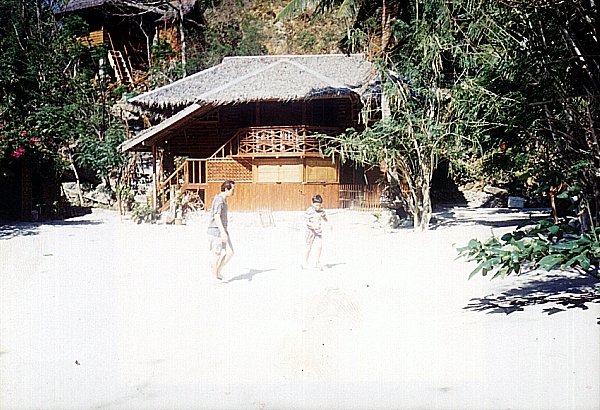
White Beach

At the town, we had the choice of at least 13 superb connected beaches that have been developed for tourism within 7 kms. or so of the town. About 6 kms. from the poblacion, we dropped off at the broad 1-km. long White Beach which is immensely popular with tourists.  The water, however, gets very deep a few meters from the shore.

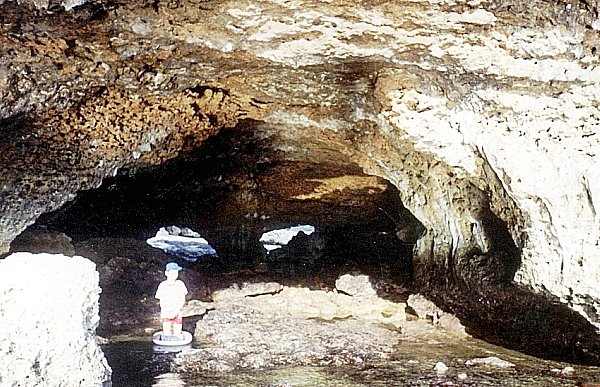
Trick photography along Tamaraw Beach

From White Beach, we hiked to the less developed Tamaraw Beach where many go for seclusion or peace and quiet.  Again, we had this beach to ourselves.  From Tamaraw Beach, we retraced our way back to White Beach where we boarded a jeepney back to Calapan.  Back at home, Rainy, Lulu, Liezl and Erwin boarded the 6:30 PM boat back to Batangas City.  Jandy, Ronnie and I stayed behind for another night, leaving the next day on the 10 AM boat.  We arrived in Batangas City by 12:45, and boarded a Manila-bound bus.  We arrived in Manila by 4:30 PM.

Pulong Laki (Calapan, Mindoro Oriental)

The next day, All Saints Day, Jing again packed us some lunch (including beer) for our excursion to Pulong Laki (Big Island), one of the 3 Baco Islets, the others being Pulong Munti (Little Island) and Pulong Gitna (Middle Island).  All have white sand beaches.  We espied these beautiful islands during the ferry crossing from Batangas City to Calapan.  Ronnie also brought along his fishing rod.

On our way

Jing also chartered a boat very early in the morning for our use as, if there are no charters, their owners usually leave early in the morning to catch fish for a living.  From Ronnie’s home, we walked towards the nearby beach where our motorized outrigger boat and the boatmen where waiting for us.  Once on board, we were soon on our way.  The trip was smooth, usual for the morning and, after about an hour, we made landfall on the island.

The island’s coarse sand beach

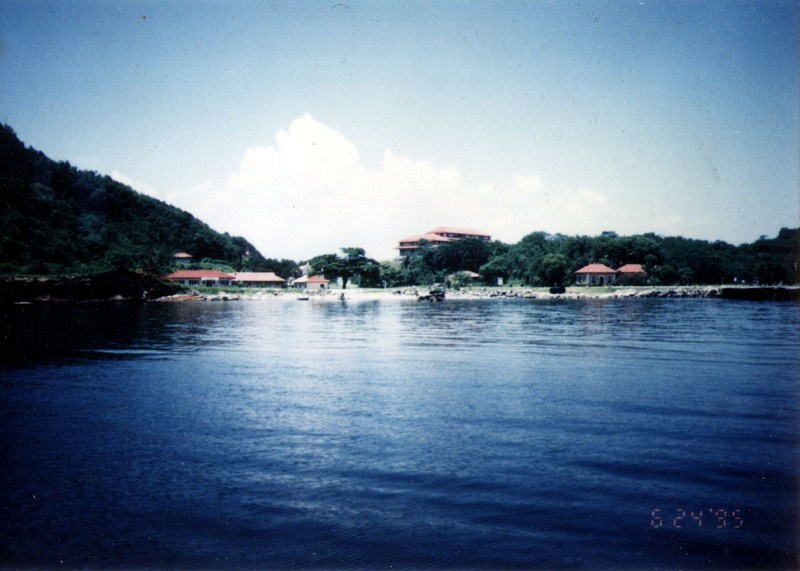
The island had a broad, coarse sand beach, with vegetation and shade some distance away.  This didn’t matter much to us as we savored our first dip in a Mindoro Oriental beach.  From the beach, we also had a panoramic view of a couple of islands.  We were the only excursionists on the island that day.  I guess that most Calapenos were visiting their dead while most local and foreign tourists were in Puerto Galera.  We had this beach to ourselves.  

Doing some trick photography

Ronnie went fishing  and sunbathing while the rest went swimming or shell hunting.  Ronnie caught a couple of small fish that day which he cooked.  By mid afternoon, we all left the island, upon the boatman’s suggestion,  to avoid the high, late afternoon waves.  Back on the mainland, we again had supper at the house of Ronnie and Jing’s aunt.    

Tamaraw Falls (Puerto Galera, Mindoro Oriental)

Come morning, after breakfast, we packed up our swimming gear as well as a picnic lunch as we were headed for the Tamaraw Falls, the largest waterfall in the province and a popular swimming spot for weekenders.  The falls, located 131 m. above sea level, is a 15-km. drive from Calapan. We took tricycles to the Calapan town proper where we all boarded a jeepney bound for the resort town of Puerto Galera.

Tamaraw Falls
Once outside the city proper, the others went up the jeepney’s luggage rack to better enjoy the view and the air.  The narrow road towards Puerto Galera alternated from sometimes paved to mostly rough.   After about an hour, we espied the falls along the road and alighted beside the aptly named Waterfall Bridge, just a couple of meters from the falls.  At this distance, we could feel the mist of water from the falls as we posed by the bridge.
 
The waterfall’s natural pool
It being the eve of All Saints Day, we were expecting a lot of tourists at the falls but it seems we were the only visitors.  Passing jeepneys sometimes stop for their passengers to take pictures but, after a few minutes, continue on their way.  Just below the waterfall is a shallow natural pool, fed by waters coming from the forested ravine above.
 
Our cool  dip
There were some picnic tables and a changing room across the road from the waterfall and below it are 2 man-made pools fed by the waters of the falls.  Its waters were equally shallow as the wooden barrier which dammed up the water was removed.
 
The man-made pool
We quickly changed into our bathing attire and first tried the natural pool below the falls.  Later, we transferred to the man-made pools.  In both cases, the waters were bracingly cold but refreshing.  The rocks were also slippery so we had to watch our step.  Even after lunch, we continued frolicking at the pools.  After this refreshing dip, we packed up and hailed a Calapan-bound jeepney to get home.
 
Tamaraw Waterfalls: Brgy. Villaflor, Puerto Galera, Mindoro Oriental

Tour of Calapan (Mindoro Oriental)

From Calapan port, we all boarded tricycles which brought us to Ronnie’s 2-storey house which is located by the sea. Upon arrival, we were welcomed by Ronnie’s elder sister Jing and their other relatives.  

At dining room with Ronnie (left) and Jing (center)
The porch overlooking the sea

Probably the only concrete house in the area, it had a spacious porch facing the sea (ideal for fishing and catching the sea breeze) and an airy roof deck where we had a panoramic view of the town, the sea and offshore islands.

View of Calapan Point
View of the town from the roof deck
View of offshore islands

After lunch, we all made a walking tour of the town proper.  At the town plaza, in front of the municipal hall, is a monument to a Mangyan youth.  There are also statues to our national heroes Jose Rizal and Andres Bonifacio as well local son Macario Adriatico, the first representative of Mindoro.

The town plaza

The Cathedral of the Holy Infant (Sto. Nino) is the seat of the Calapan Vicariate since October 3, 1951.  The original church, founded by Recollect Fr. Diego de la Madre in 1670, had two watchtowers.  It was torn down in 1959 to give way to the new cathedral. 

The Cathedral of the Holy Infant
After our sightseeing tour of the town center, we proceeded to the gray sand Aganhaw Beach which is located 4 kms. from the town proper.

Aganhaw Beach

After our sightseeing tour, we all proceeded to the house of Ronnie’s aunt where we had supper before returning home for a much needed rest.

My First Visit to Mindoro Oriental

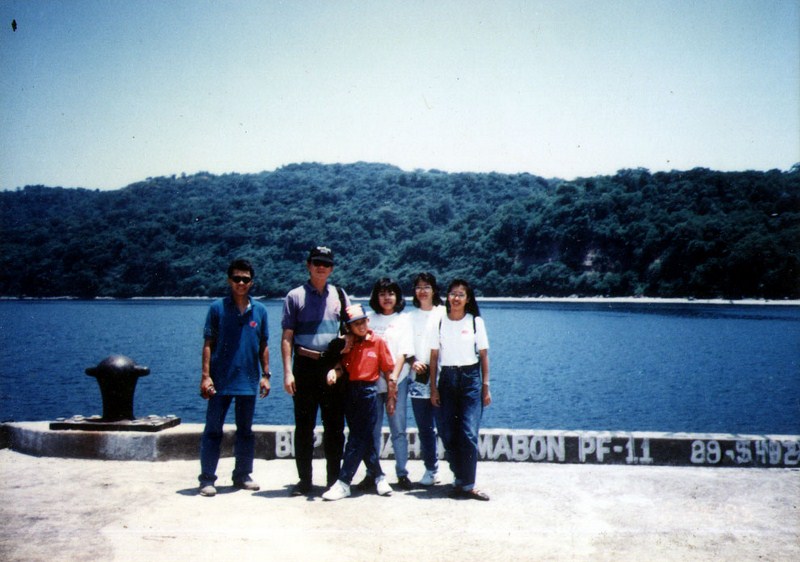
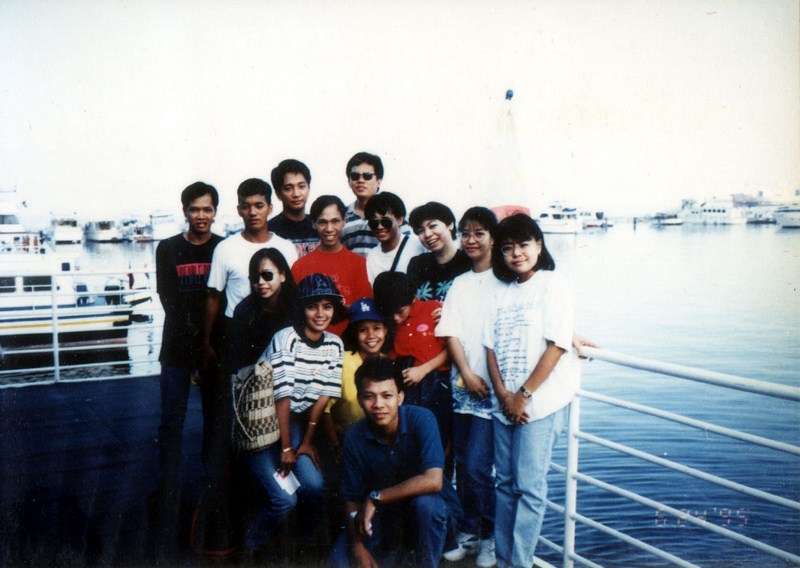
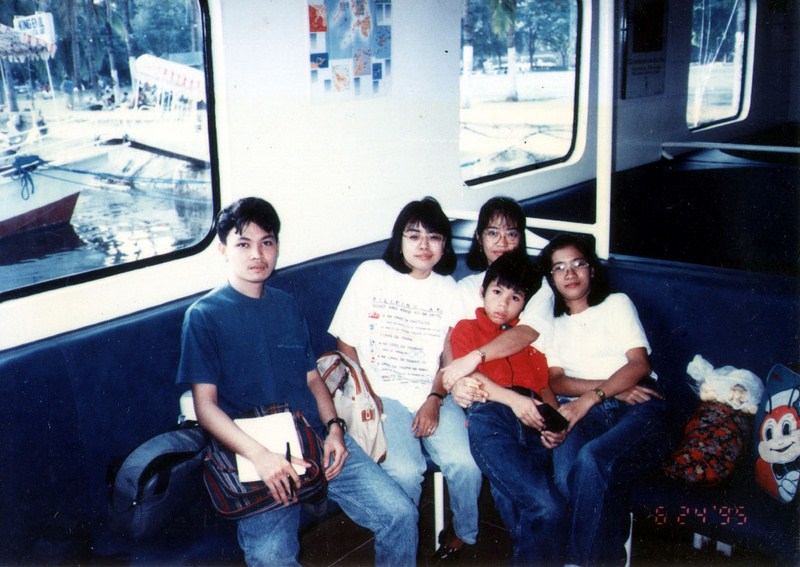
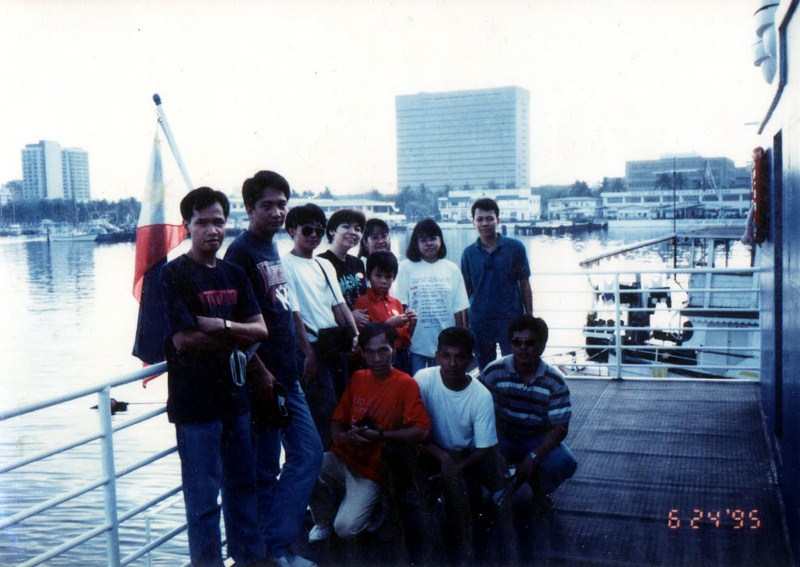
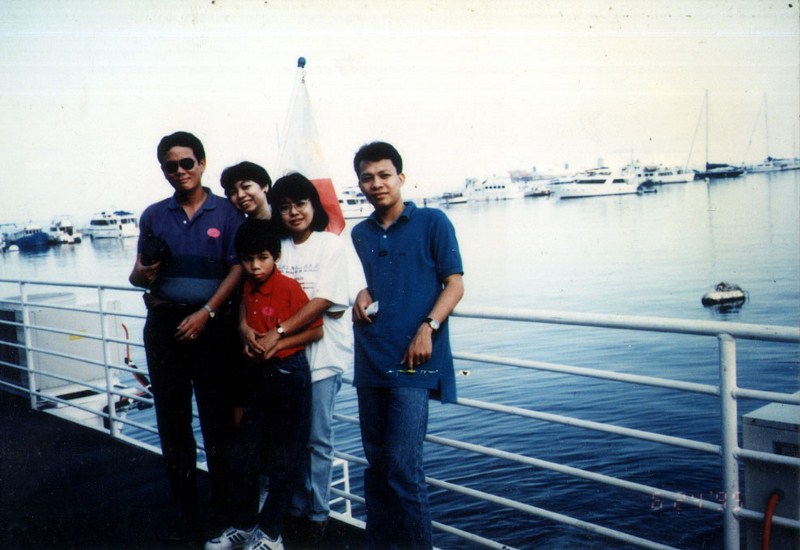
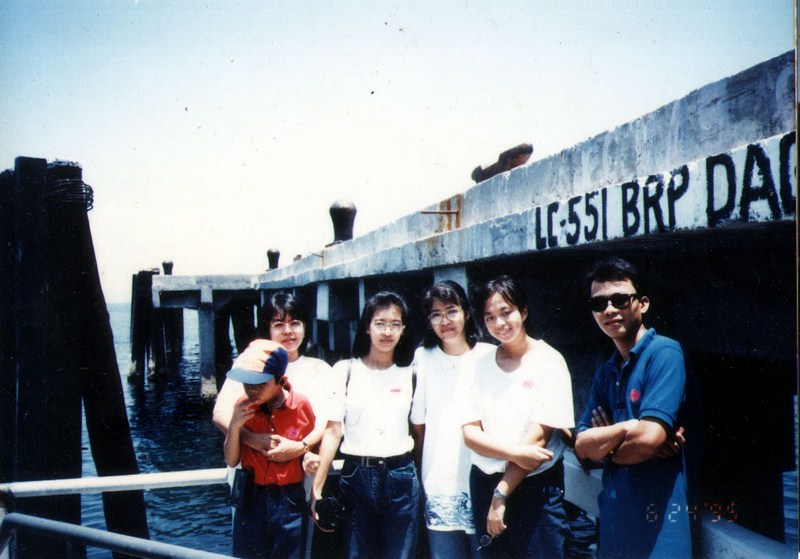
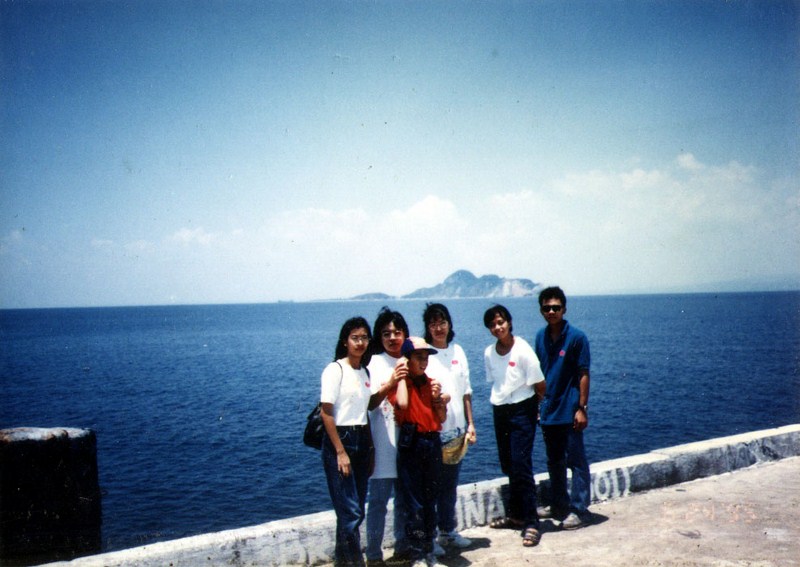
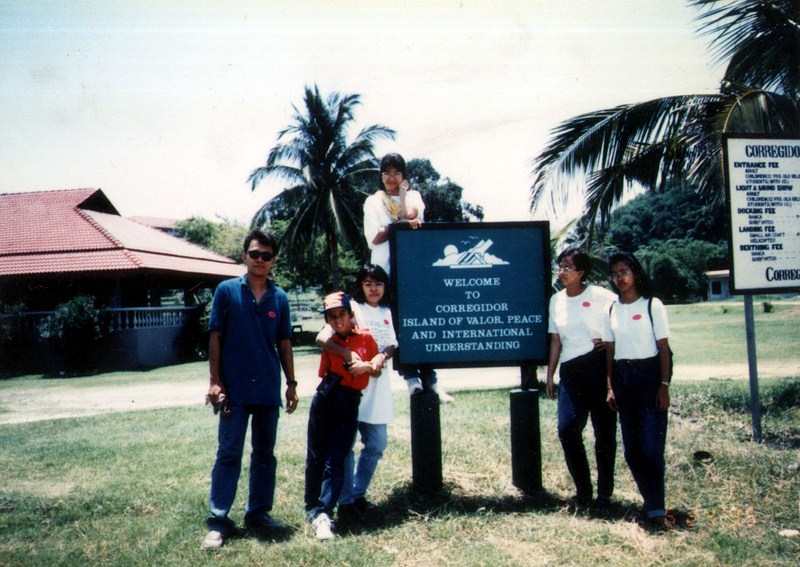
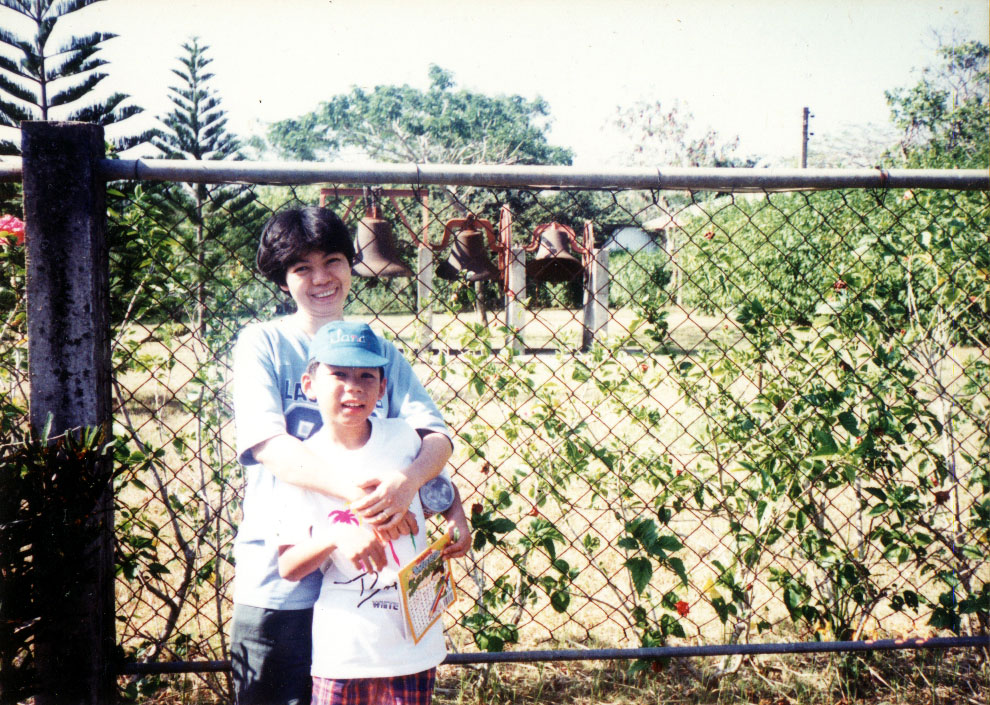
During the All Saints Day break, 8 year old Jandy and I joined Jandy’s TLC (The Learning Center) teachers Erwin Cifra, Glorain “Rainy” Canillas and Felipe Ronnie Martinez plus Rainy’s friends Lourdes “Lulu” Siguenza and Liezl Lumbao, on a tour of Mindoro Oriental, a first for both of us.  We plan to stay in Ronnie’s family home in Calapan, the capital of the province.  

L-R Erwin, Jandy, Rainy, Lulu & Liezl

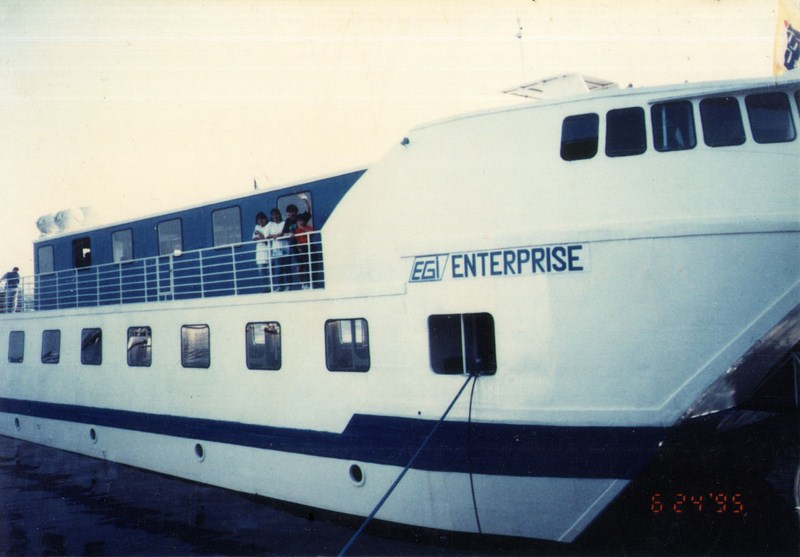
From Manila, we all took the very early morning (4:30 AM) airconditioned  BLTB (Batangas Laguna Tayabas Bus) bus bound for Batangas City.  The land trip took just 2.5 hrs. and we arrived at Batangas International Port in time to buy tickets and catch the next RORO (Roll On Roll Off) ship to Calapan.

On our way

Aside from passengers, these ancient, ocean-going ships also carry wheeled cargo such as cars, trucks, trailers and buses that are driven on and off the ship on their own wheels.  They are so named for their built-in ramps and doors that allow cargo be “rolled on” and “rolled off” the vessel when in port.

One of the islands we passed

The boat trip, via the Verde Island Passage (one of the busiest sea lanes in the country) took a slow 2.5 hours.  Still, it was scenic all the way as our passed a bevy of islands.  Just out of Batangas Port, we were awed by the rugged cliffs and white sand beaches of the 8-km. long, thickly vegetated Verde Island.  Then, as we approached Calapan Bay, we passed the much   smaller but equally beautiful Baco Chico Island, Pulong Gitna and Pulong Munti.  We arrived at Calapan port by 9:30 AM.

Grand Palace and Wat Phra (Bangkok, Thailand)

We were now on my fourth and last day in Bangkok, with my whole morning free prior to my evening return to Manila, I decided to go at it alone, taking a tuktuk (the Thai equivalent of our tricycle) to get to the fabulous Grand Palace (Phra Borom Maha Ratcha Wang) and its adjoining Wat Phra Kaew. I just brought along my camera and portable tripod. Incidentally, today was also the Songkran Festival, the Thai New Year.

Grand Palace Complex

This complex of buildings is just walking distance from the previously visited Wat Pho and sits on the east bank of the Chao Phraya River. It being a holiday, many Thais were in the temple to pray and give food to monks.  Many were also cleansingBuddha images by gently pouring water mixed with a Thai fragrance over them (believed to bring good luck and prosperity for the New Year).

Wat Phra Kaew

Despite being in one compound, the Golden Palace and Wat Phra Kaew have a distinct difference in architectural style, except for the traditional Thai roof.   Except for the Wat Phra Kaew (I had to remove my shoes before entering), the interiors of most of the buildings remain closed to the public.

Wat Phra Kaew - Porch

Wat Phra Kaew (Chapel Royal of the Emerald Buddha), Thailand’s most important temple, houses the small (45 cm. tall), beautiful, gold-clothed and greatly revered Emerald Buddha, carved from a block of green jade (instead of emerald) and said to have been created in India in 43 BC. I wasn’t allowed to take pictures inside.

The Galleries

The temple’s grounds are enclosed by galleries with beautiful, vivid and colorful murals which depict the story of the  Indian epic Ramayama (Ramakien in Thai) of the first reign version.  The European-inspired Grand Palace, the official residence of the king of Thailand from the 18th century to the mid-20th century, is nowadays used only for occasional ceremonial purposes.

Chakri Maha Prasat Hall

It has 2 groups of residences: the Dusit Maha Prasat (built in a style influenced by the Italian Renaissance, it has a spacious, European-style reception room decorated with galleries of portraiture) and the Phra Maha Monthian (consists of the Amarin Winitchai Audience Hall and the Paisal Taksin Hall where coronations take place).

Amarin Winitchai Audience Hall

Construction of the palace complex began in 1782, during the reign of Rama I.  After the death of King Ananda Mahidolin the Baromphiman Palace, the much-revered King Bhumibol (Rama IX), the present king, moved the official royal residence to Chitralada Palace (closed to tourists).

Viseschaisri Gate

My Grand Palace tour should have included Vimanmek Mansion along Rajavithee Road, also a former royal residence.  The biggest wooden building made from golden teak in the world, it was built by King Chulalongkorn (of the “King and I” fame).  Regrettably, I had to forego this visit as it was time to go and pack for home.

Don Muang International Airport

I returned to the hotel, joined the others in checking out of the hotel and left, via coach, for Don Muang International Airport, arriving there by noon.  By 2:30 PM, we left Bangkok on a Thai Airways International flight (TG-624) back to Manila.

Golden Palace: Na Phra Lan Road, Bangkok, Thailand.

Coral Island – Koh Larn (Pattaya, Thailand)

After an early breakfast at the hotel, we prepared for a change of pace as we were scheduled to do an island tour, with lunch, of Koh Larn (translated as “Coral Island”).  Located about 7-8 kms. off the coast of Pattaya Beach, Koh Larn is about 4 kms. long and 2 kms. wide.  It has 2 villages (Ban Ko Lan and Ban Krok Makhan)  and a number of white sand beaches (Tonglang Beach, Tien Beach, Samae Beach, Naon Beach, Na Ban Beach, Ta Waen Beach, etc.) with clear, blue waters, mostly on the western side.  Koh Larn is part of a cluster of 3 islands called the Near Islands (the other 2 are Koh Sak and Koh Krok).

On Our Way to Koh Larn

From the Bali Hai Pier, we all boarded a cruiser for the 45-50 min. trip, across the Gulf of Thailand, to the hilly island.  Within sight of the crescent-shaped Ta Waen Beach (the most frequented beach), we all transferred to a glass-bottom boat so that we could view the marine life and offshore coral garden.

Glass-Bottom Boat Ride

Upon landing, we were assigned to a long picnic shed with other guests. As the beach was very inviting, the sun was out and the skies were clear, we all changed into our swimming attire.  The sand here was definitely much cleaner (and whiter) than in Pattaya Beach.

Koh Larn (Coral Island) – Ta Waen Beach

Salve and Tellie tried jetskiing while I donned  mask and snorkel and explored the island’s coral garden.  Come noontime, we returned to our picnic hut were a seafood lunch was arrayed before us. This we feasted on with gusto.  After lunch, we all went back to our boat for the return trip back to the mainland. Once on shore, we returned to the hotel, checked out and, by 4:30 PM, boarded our bus for the return trip to Bangkok.  Back in the city, we had supper at a MacDonald’s outlet along Sukhumvit Rd., then returned to our hotel.

Arrival in Pattaya (Thailand)

Pattaya

After our Bangkok city tour, we were returned to our hotel. Upon arrival, we readied ourselves for our overnight stay at Pattaya, Thailand’s premier and most successful beach resort within (but not part of) Amphoe Bang Lamung in the province of Chonburi.

After lunch, we boarded our airconditioned tourist bus which would take us there.  The 147 km. trip, via Highway No. 3, took all of 2.5 hrs. and we arrived in Pattaya by 3 PM.  We were all checked in at the 5-storey Regent Marina Hotel.

Check out “Hotel and Inn Review: Regent Marina Hotel

Until the 1960s, Pattaya was just a sleepy fishing village along the Gulf of Thailand. Then, during the Vietnam War, American servicemen stationed at nearby U-Tapao or other US bases in Thailand began visiting Pattaya.

Pattaya Beach, parallel to the city center, runs from Pattaya Nuea south to Walking Street. Along Beach Road are restaurants, shopping areas, and bars.

Offshore are a number of islands. The three “near islands,” located 7 kms. (4.3 mi) from the shore,  are Ko Lan (main island), Ko Sak, and Ko Krok.  Located further west of the “near islands” are the “far islands” – Ko Phai (main island), Ko Man Wichai, Ko Hu Chang and Ko Klung Badan. Ko Rin lies to the south-west, south of Ko Phai group.

Regent Marina Hotel: 463/61 Pattaya Beach Rd., Pattaya, 20260 Thailand.  Tel: (038) 428-015.

Gems Gallery International (Bangkok, Thailand)

After our tour of Wat Traimit and Wat Pho, we next moved on to the 7,200 sq. m. (1.8 acre) Gems Gallery International, an ISO certified gems gallery.  Open in 1987, it is said to be the world’s largest jewelry and gems center. Here, we watched skilled, in-house Thai artisans cut, polish and set each precious stone to create exquisite pieces of jewelry.

Gems Gallery International

Its eye-catching showroom also displays thousands of world-class natural gems (diamonds, sapphires, rubies, emeralds, topaz, etc.) mined from Chanthaburi and Kanchanaburi provinces; pearls as well as unique bracelets, necklaces, rings, bangles, earrings and other jewelry masterpieces.

Gems Gallery International – Showroom
Gems Gallery International: 198/23-24 Rama VI Rd., Samsen Nai, Phaya Thai, Bangkok 10400, Thailand.  Tel: 02-2710150.

Wat Pho (Bangkok, Thailand)

Our next stop was the 80,000 s.m. Wat Pho (officially called Wat Phra Chetuphon Vimolmangklararm Rajwaramahaviharn), the largest and, technically,  the oldest wat in Bangkok. Thailand’s first university, it is the birthplace of traditional Thai massage (stone walls have plaques inscribed with medical texts on Thai massage, dating from the reign of King Rama III).

Wat Pho

The complex consists of 2 walled compounds bisected by Soi (Thai for “street”) Chetuphon which runs east to west. The southern walled compound, the Tukgawee, is a working Buddhist monastery, with monks in residence and a school.

Phra Uposatha (Main Chapel))

The northern walled compound, the one opened to us tourists, includes the largePhra Uposatha, a bot (temple hall or main chapel) enclosed by 394 bronze Buddha images. Outside are 152 marble slabs depicting the second half of the epic Ramakian story.

The 4 Chedis of Phra Maha Chedi Si Rajakarn

Also near here are 4 chedis of Phra Maha Chedi Si Rajakarn, constructed to honor the first 3 Chakri kings (2 for King Rama III).  Around the grounds are another 91 massive chedis, of varying sizes, along with chapels, rock gardens, an array of different types of statues, inscriptions, bell towers and resident fortune tellers. Nearby is a library, impressively decorated with figures, and pagodas made of porcelain.

Vihara of the Reclining Buddha

Wat Pho is known, however, for its Reclining Buddha (Phra Buddhasaiyas), one of more than 1,000 Buddha images(the most in the country, mostly gathered from the ruins of the former capitals Ayuthaya and Sukhothai) in the temple.

Reclining Buddha

Housed in the Vihara of the Reclining Buddha, this highly impressive, gold-plated Buddha, the world’s longest, is really huge, measuring 46 m. long, 15 m. high and is designed to illustrate the passing of the Buddha into nirvana. The soles of the feet and the eyes are engraved with mother-of-pearl decoration.  The feet also show the 108 auspicious scenes in Chinese and Indian styles, all characteristics of the true Buddha.

Wat Pho: Phra Nakhon District, Bangkok, Thailand.