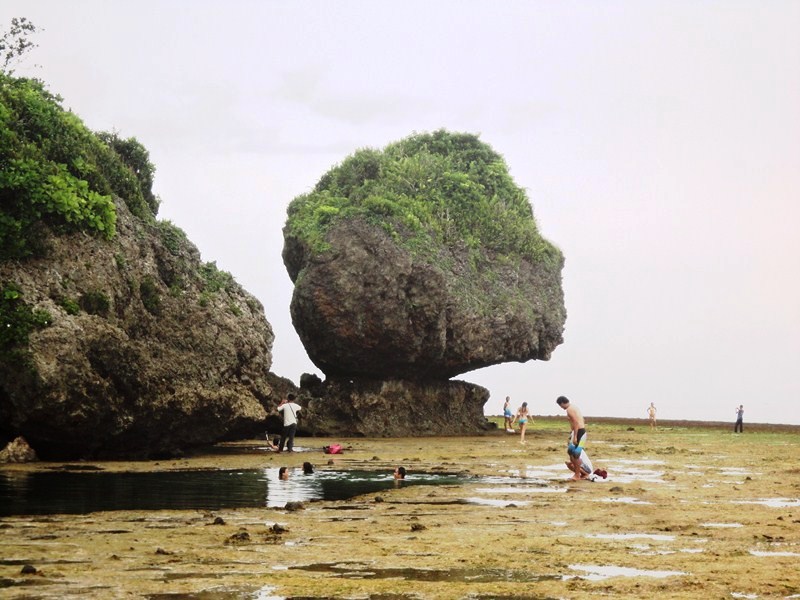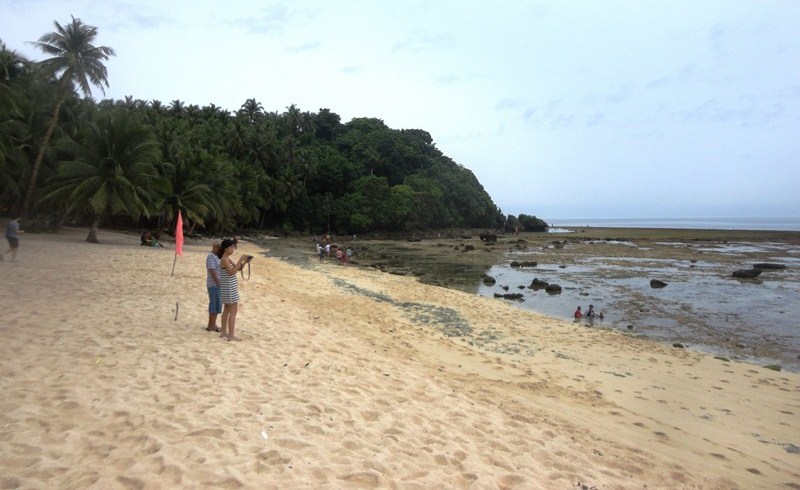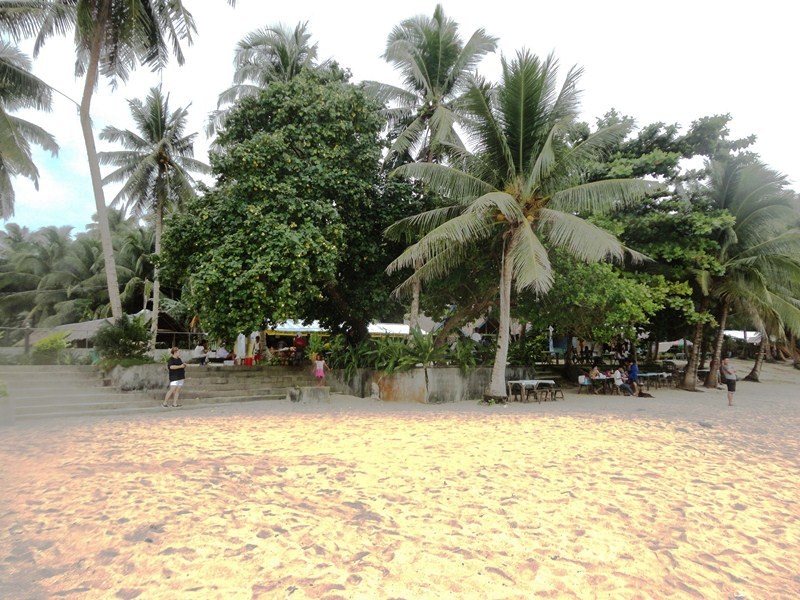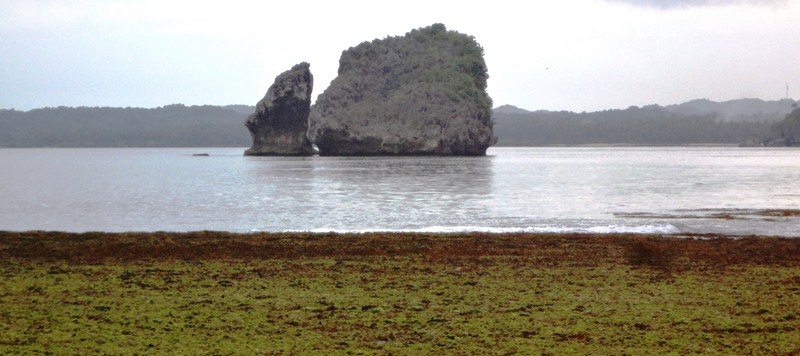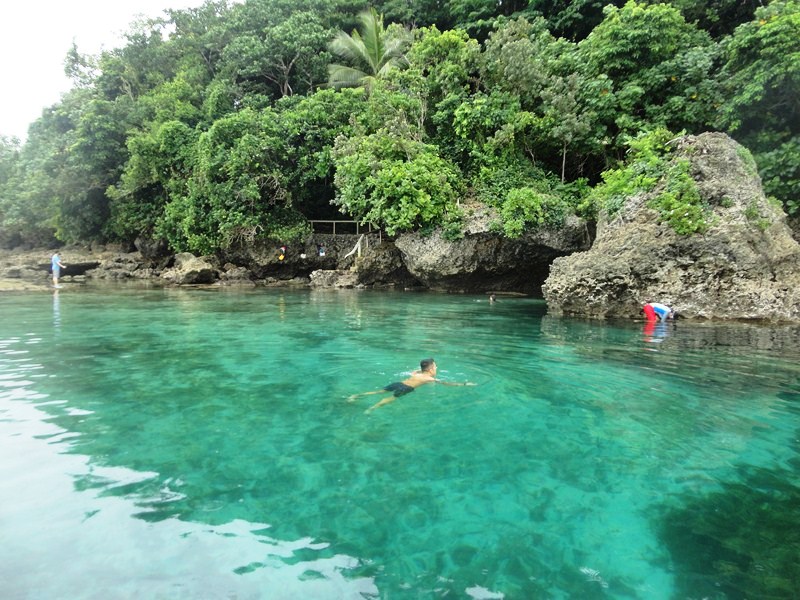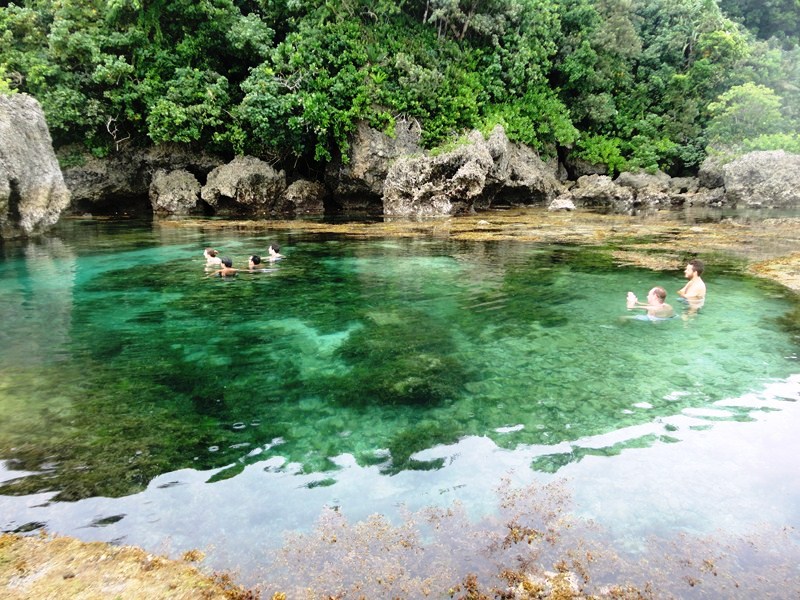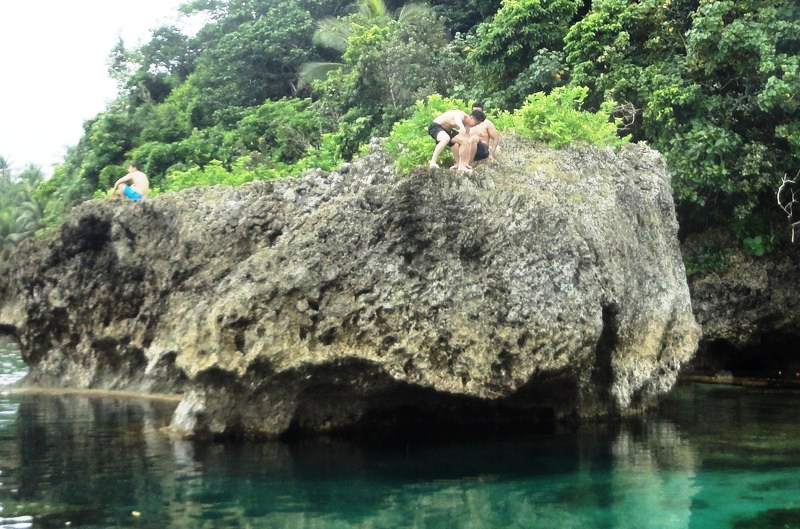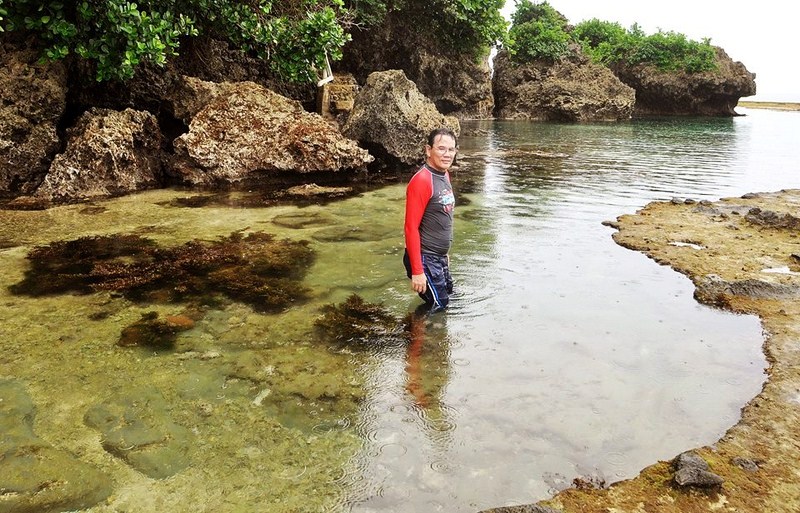
Guyam Island (Gen. Luna, Surigao del Norte)
Guyam Island

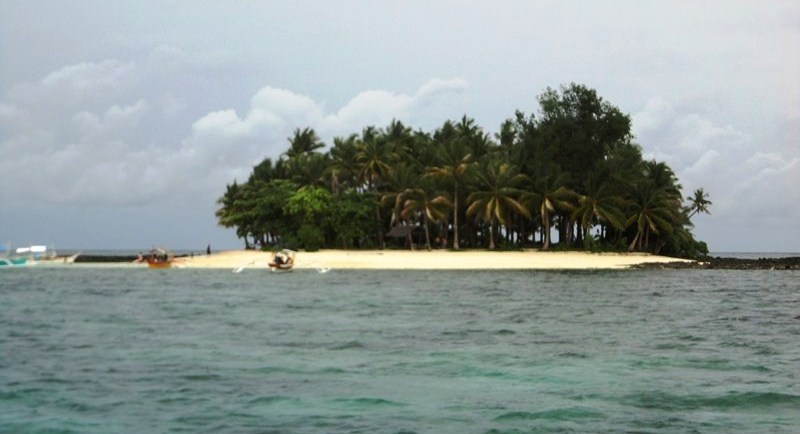
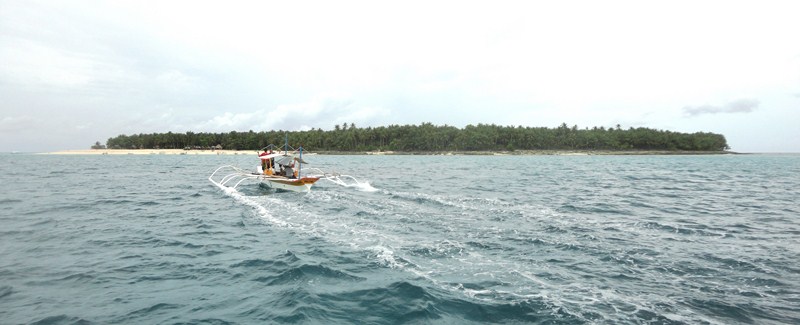
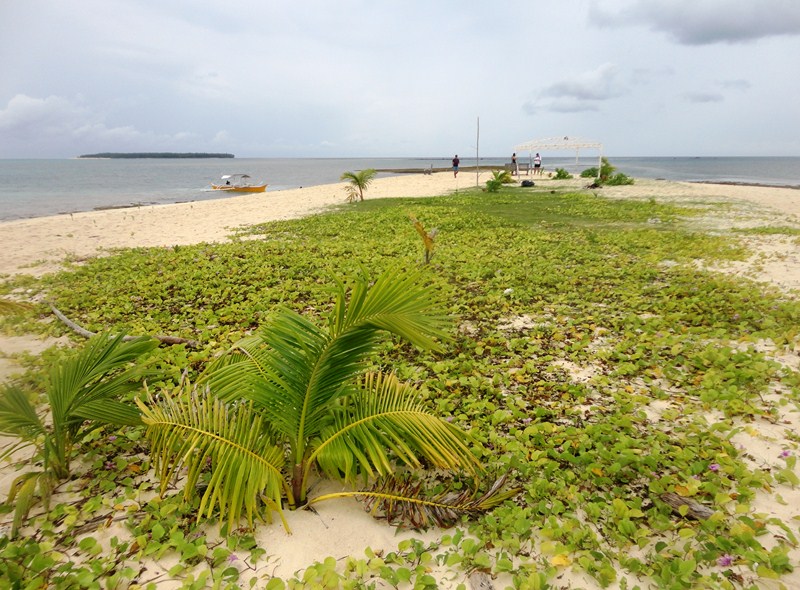
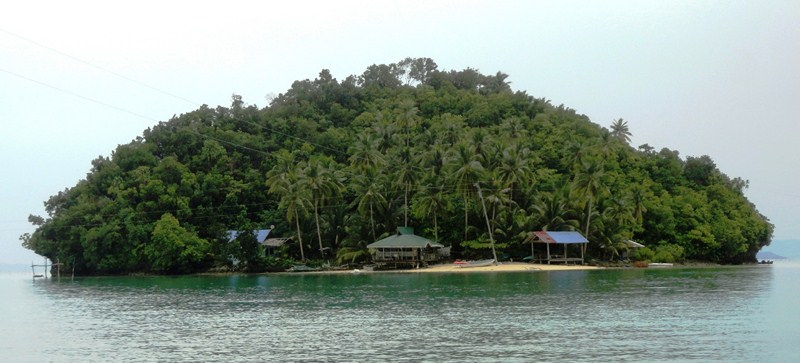
After lunch at Daku Island, we again boarded our respective boats for the short trip to our third and final island in our tour – Guyam Island.  Located just few hundred meters north of Daku Island, this small, 4,300 sq. m. (46,000 sq. ft.) tear-drop shaped island is 84 m. (276 ft.) long, 64 m. (210 ft.) wide and has a 230 m. (750 ft.) long coastline which one can walk leisurely around in a little more than 15 minutes. The island is unpretentious but is equally interesting as Naked and Daku Island.

Check out “Naked Island” and “Daku Island

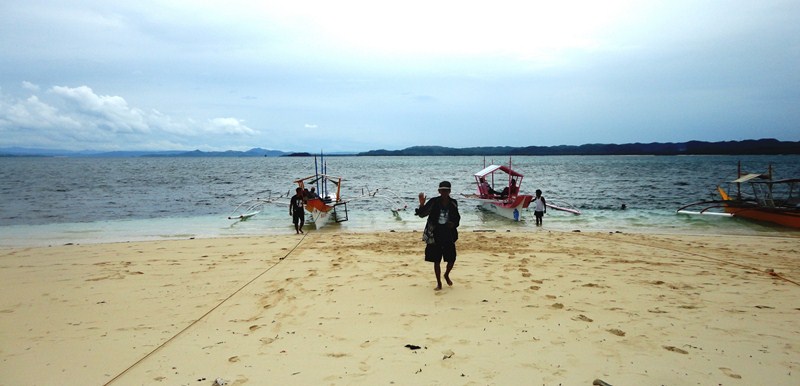
PDI writer Amadis Ma. Guerrero makes landfall on the island

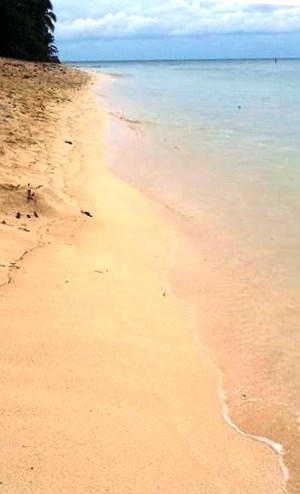
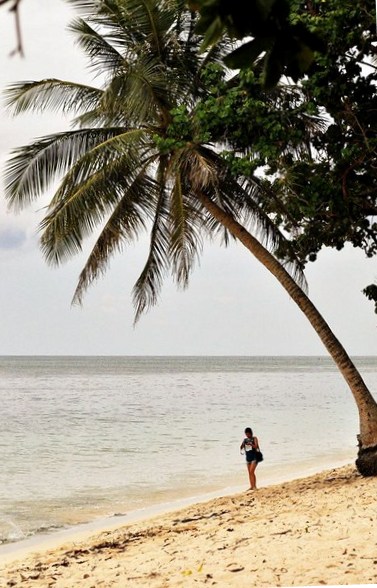
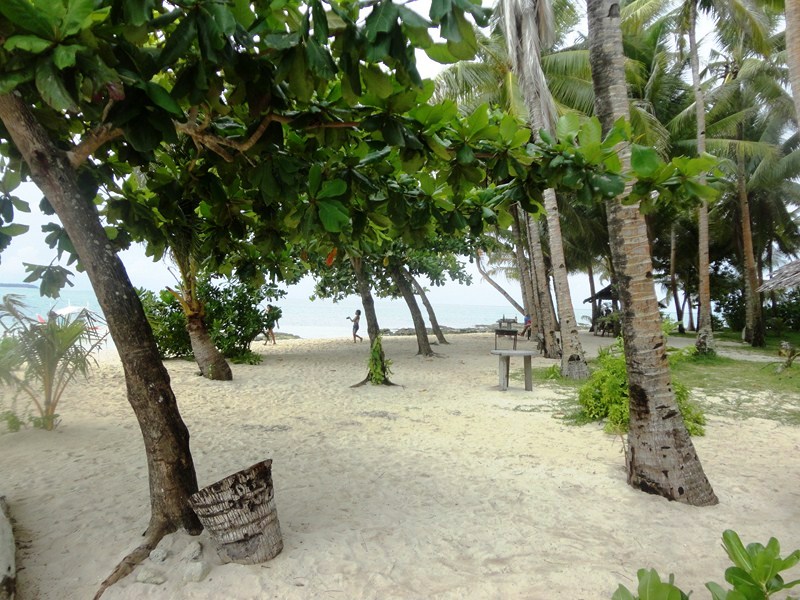
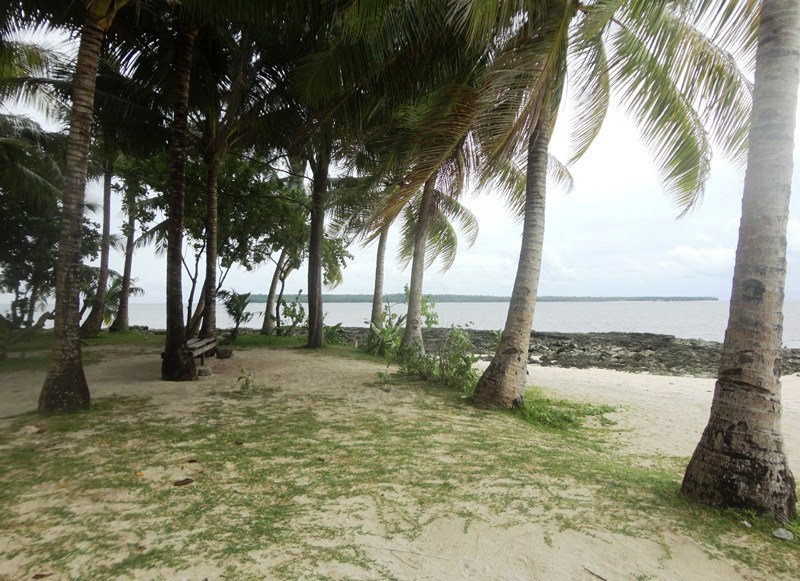
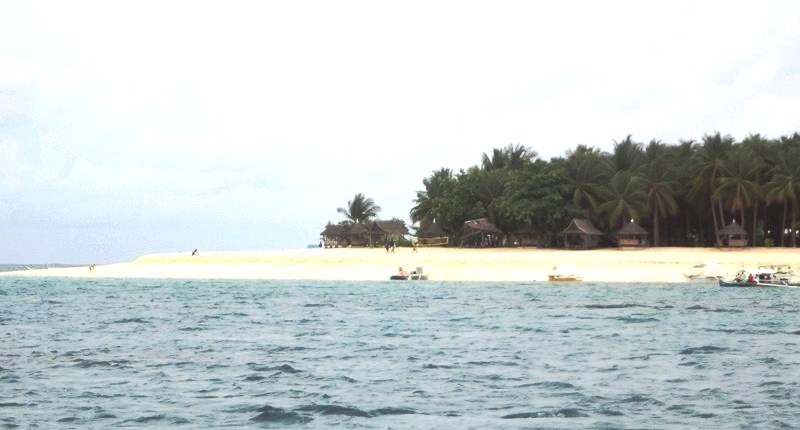
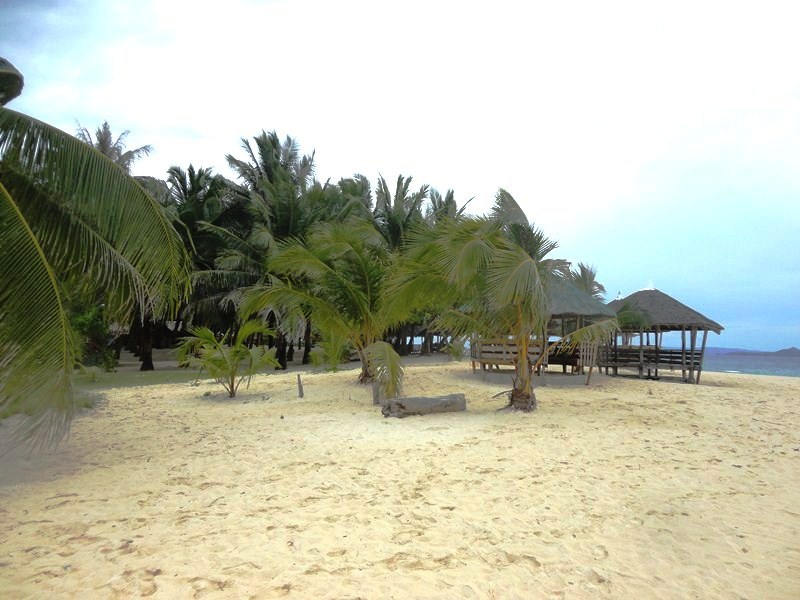
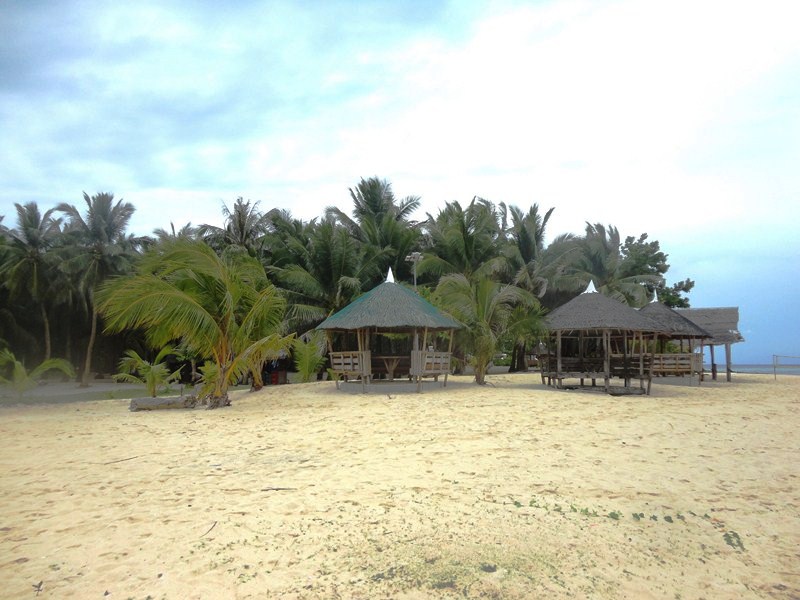
This picturesque, privately owned island has resident caretakers that collect a PhP10 entrance fee from every visitor. This islet has a small stretch of powdery to coarse, ivory to white sand and is home to a small grove of coconut, talisay (beach almond) and pine trees that have thrived there for years. It also has interesting coral rock formations that are perfect for snorkeling.

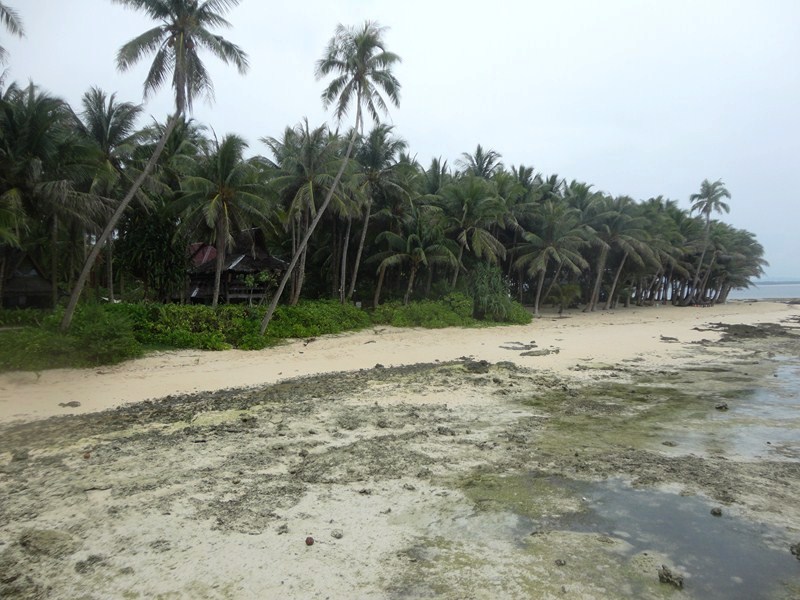
The small grove of talisay and coconut trees

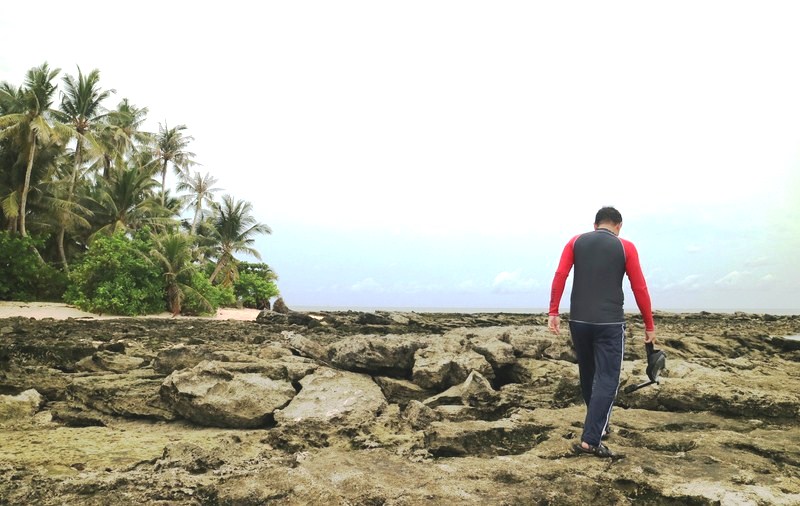
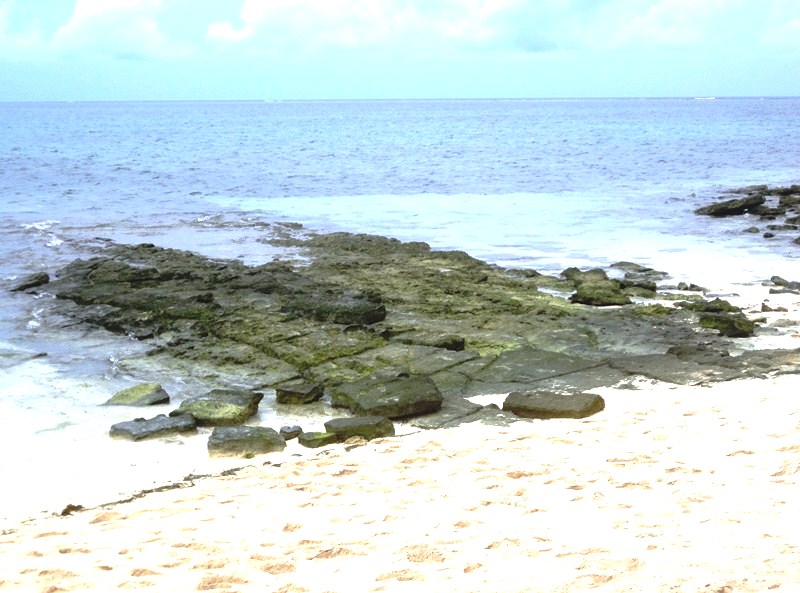
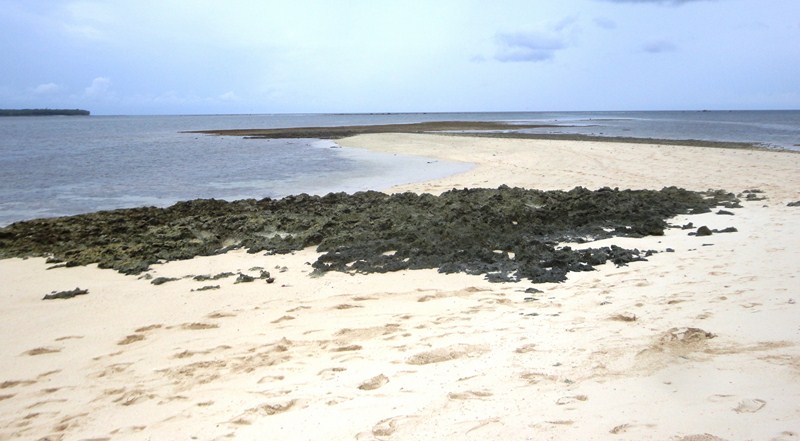
The part of the island facing the the Philippine Sea is littered with boulders and hard corals that protect the island from storm surges and from constant tidal terrain movement.

The author walking along the rocky part of the island (photo: Ms. Louise Santianen)

A few meters away from this miniature tropical paradise, tourists can enjoy surfing, fishing and swimming. Supposedly, the island also offers a nice view of the raging surfing waves that Siargao is best known for.

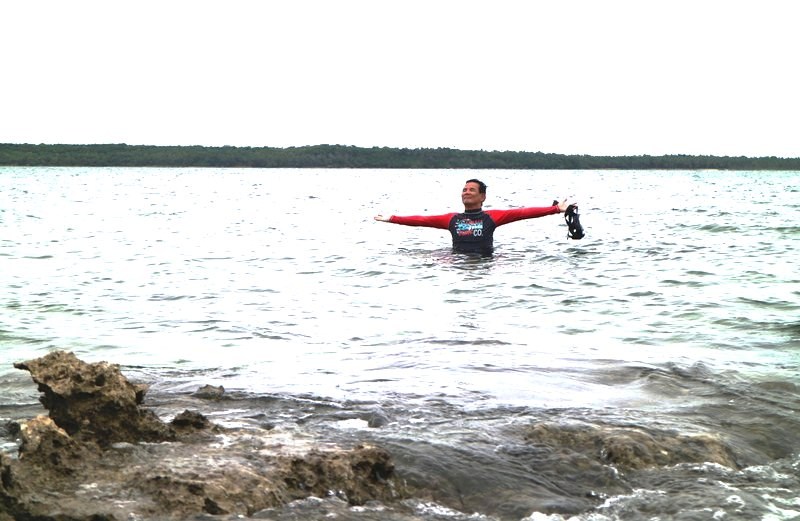
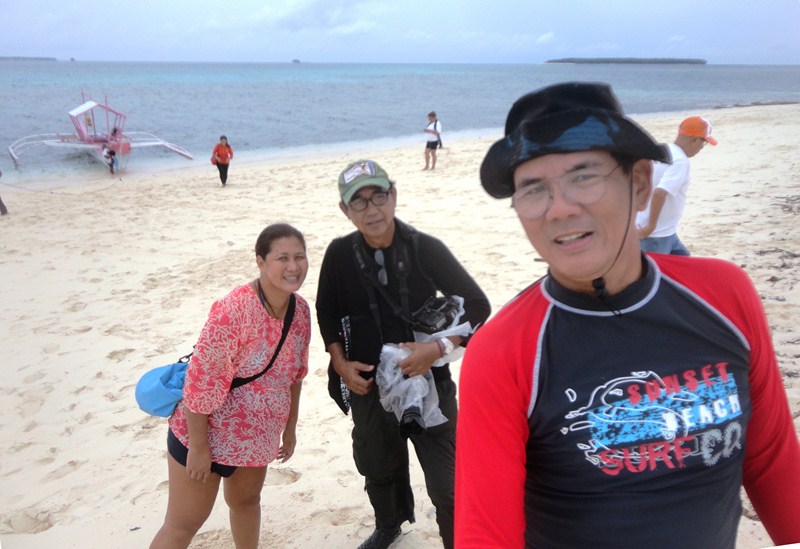
The author doing an Oblation pose …… (photo: Ms. Louise Santianen)

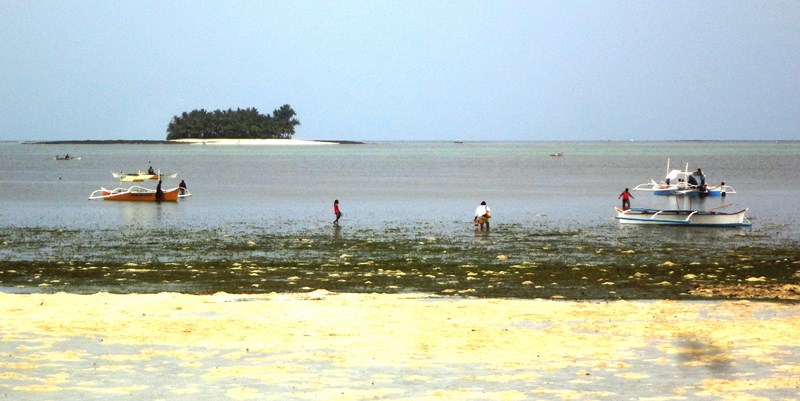
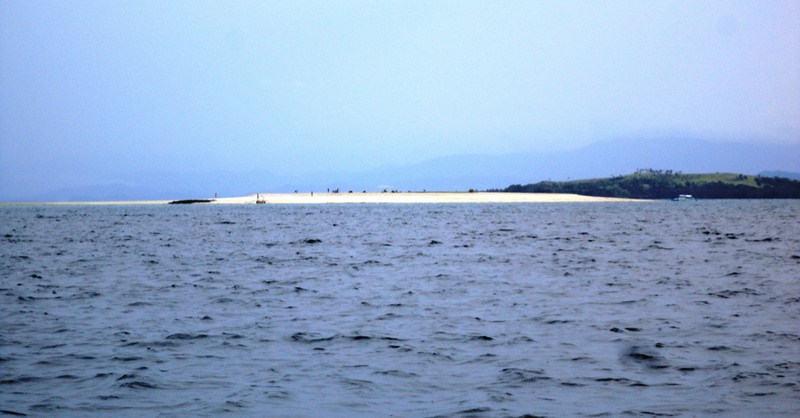
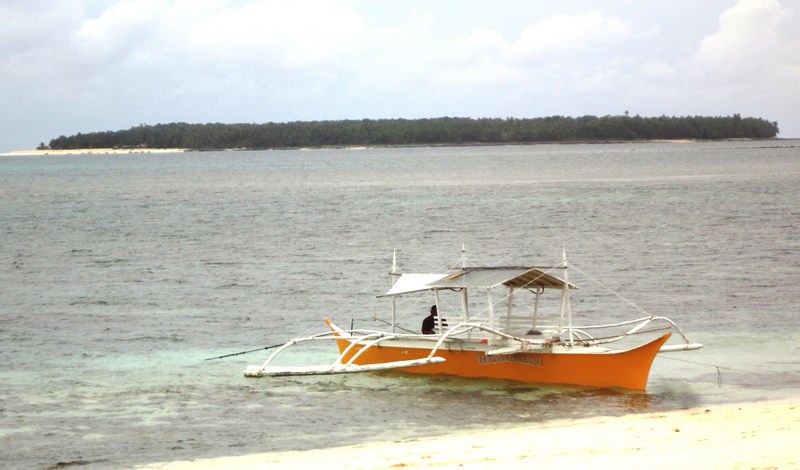
The island, located around 2 kms. (1.2 mi) south-southeast of General Luna municipality, can be seen when you are in General Luna boulevard.

Guyam Island seen from General Luna boulevard

Two to three wooden cottages are available for rent. If you wish to stay overnight, you can pitch your tent for a small fee. Bring your own food and water.

The best feature of the island is its stunning view of the sun setting in the west but we weren’t going to experience this as we had to return to the mainland, just a 10-min. boat ride away. Despite being small, this  island has quite a lot of charm for island lovers.

Siargao Tourism Office: Paseo De Cabuntog, Brgy. Catangnan, Gen. Luna, Siargao Island. Mobile number: (0921) 718-2268 (Ms. Donna Grace T. Estrella – Siargao Tourism Coordinator)

How to Get There: Skyjet Airlines has daily, 100-min. direct flights from Manila (NAIA Terminal 4) to Siargao (Sayak Airport). ETD Manila at 6 AM (M8-421), ETA Siargao at 7:40 AM. Return flights: ET Siargao at 8:10 AM (M8-422), ETD Manila at 9:50 AM.

Skyjet Airlines: Manila Domestic Airport, Parking A, Terminal 4, NAIA Complex, Brgy. 191, Pasay City, Metro Manila. Tel: (02) 863-1333 and (02) 823-3366. E-mail: sales@skyjetair.com. Website: www.skyjetair.com.

Daku Island (Gen. Luna, Surigao del Norte)

Daku Island

After our short stopover at Naked Island, we again boarded our boats for the short trip to Daku (or Dako) Island, the biggest among the three popular island destinations in Siargao. Named after the Visayan word for “big,” it’s unlike the other two islands (Naked and Guyam Islands) as it is inhabited, with a village of 300 residents, mostly fisherman, grouped in less than a hundred families.

Check out “Naked Island” and “Guyam Island

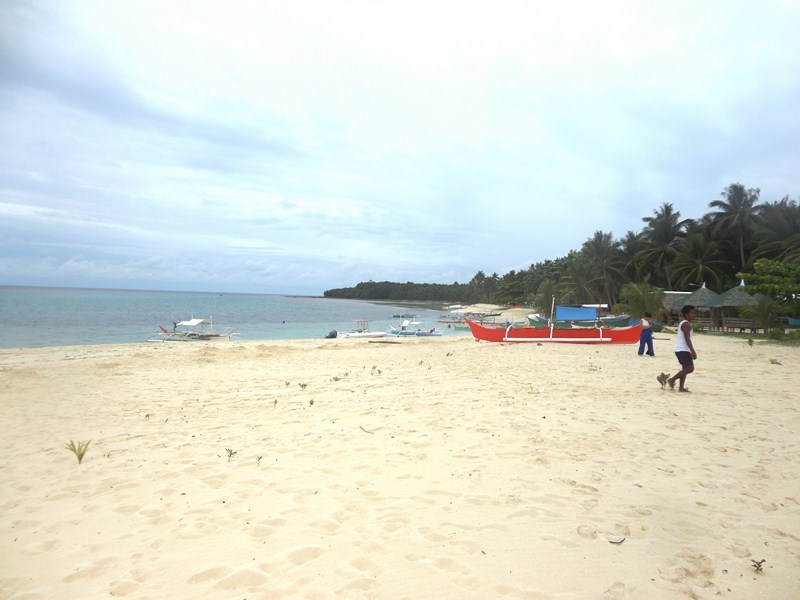
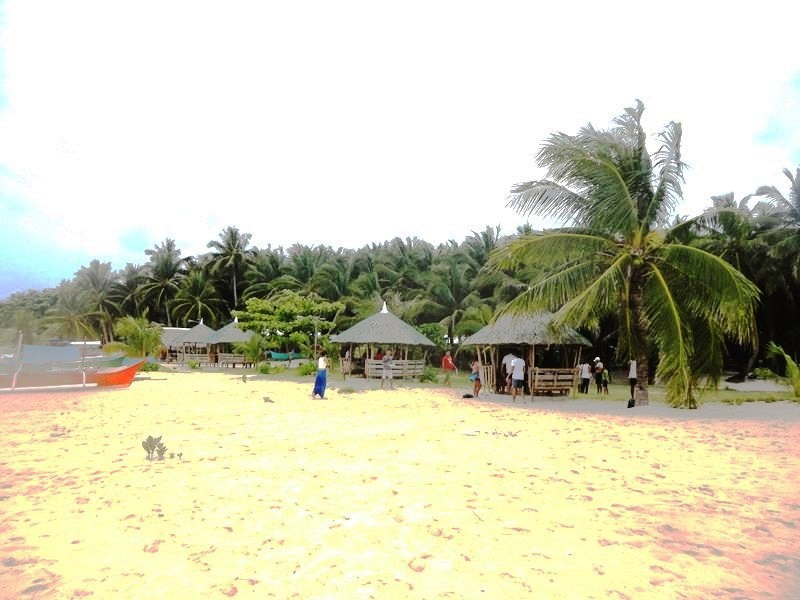
This unheard of paradise, with its cool vibe and breathtaking, picturesque scenery, has one of the finest best beaches in the Philippines, with a long, powdery white sand beach sprinkled with countless tall coconut trees (the best sweet-tasting fresh coconuts are a-plenty here) and surrounded by superb crystalline waters. Seaweeds are non-existent here. Locals also say that the beach area changes every season.

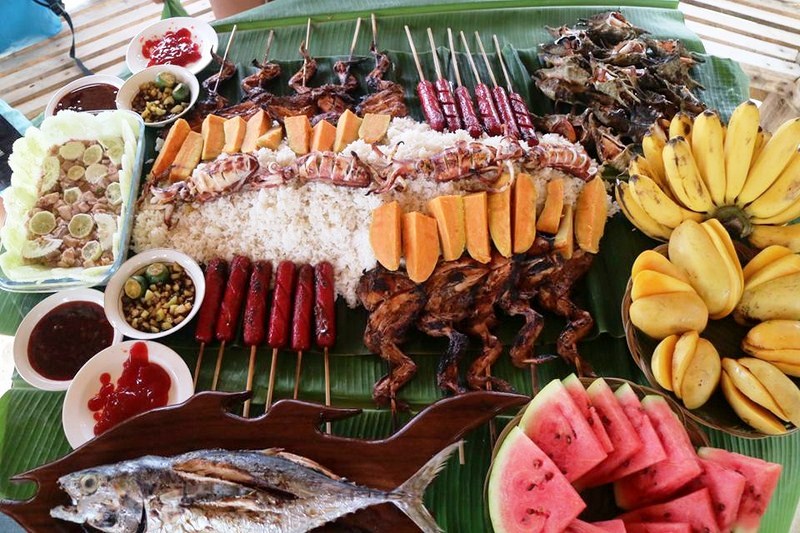
Our boodle lunch

The island was our longest stopover as we were to experience a boodle lunch, prepared by Chris G. Estrella (husband of Siargao Tourism Coordinator Donna Grace T. Estrella) of Mayambago Catering Services. The fare included grilled chicken, squid, tambakol (yellow fin tuna), ganga (spider conch) and hot dogs; steamed rice; and a dessert of ripe mangoes, bananas and sliced watermelon; all washed down with fresh buko juice and soft drinks. For a first timer like me, the cleanliness of the place was etched in my memory and I found it unbelievable at how the locals managed to maintain the place, with no plastic or other waste materials scattered along the beach.

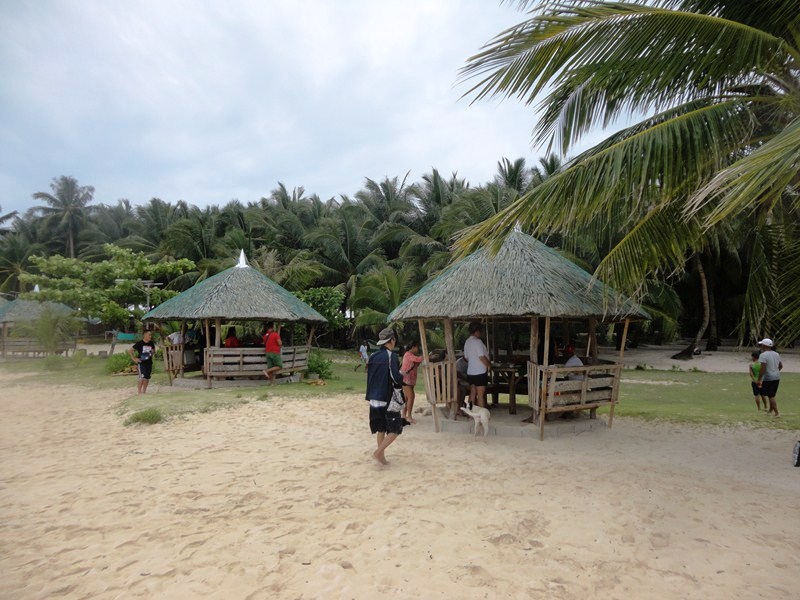
The two huts we occupied

With its fine white sand, very clean surroundings and pretty cool winds coming from the Pacific Ocean, I was enticed to swim in such a place. The island is also ideal for surfing. During the amihan (southwesterly wind), there are fun right-hander that breaks during large swells.  Its waves, small and great for beginners, break on the protected eastern side of the island.

Aside from swimming, other activities on the island include snorkeling (around the southern end of the island), fishing, skim boarding, beach bumming and kayaking (you can rent a double kayak at an affordable price and kayak as long as you want).

Ideal for a family or group picnics, you can rent a centerpiece cottage lined up on the western side of the gorgeous beach for a day for PhP250. For PhP50/kg. cooking fee, you can also have your rice and fish cooked for you. Additionally, tourists and visitors alike can experience the cool vibe and island culture as well as feel the serenity and tranquility of the place with an overnight stay in simple beachfront native huts for as low as PhP700.

Keep in mind, though, that there is no electricity on the island. The community has a tiny chapel, a small community center, a day-care center but no commercial establishments (just a single, small sari-sari store where you could buy some snacks and drinks). Still, secluded Daku Island is certainly a truly wonderful destination to visit.  For me, it is even more beautiful than Boracay Island (minus the maddening crowd and the hustle and bustle of city life), making it a perfect getaway for those who want to have an unspoiled vacation.

Siargao Tourism Office: Paseo De Cabuntog, Brgy. Catangnan, Gen. Luna, Siargao Island. Mobile number: (0921) 718-2268 (Ms. Donna Grace T. Estrella – Siargao Tourism Coordinator)

How to Get There: Skyjet Airlines has daily, 100-min. direct flights from Manila (NAIA Terminal 4) to Siargao (Sayak Airport). ETD Manila at 6 AM (M8-421), ETA Siargao at 7:40 AM. Return flights: ET Siargao at 8:10 AM (M8-422), ETD Manila at 9:50 AM.

Skyjet Airlines: Manila Domestic Airport, Parking A, Terminal 4, NAIA Complex, Brgy. 191, Pasay City, Metro Manila. Tel: (02) 863-1333 and (02) 823-3366. E-mail: sales@skyjetair.com. Website: www.skyjetair.com.

Naked Island (Gen. Luna, Surigao del Norte)

Naked Island

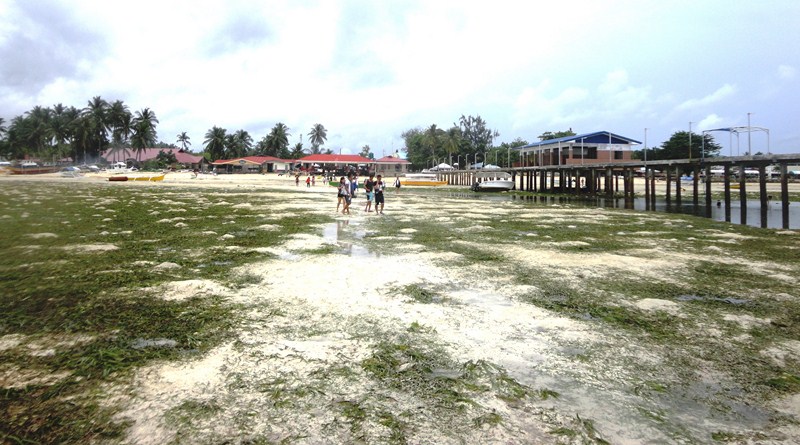
After our short visit to the Cloud Nine boardwalk at Gen. Luna, we again boarded our respective vans as we were scheduled to go on an island hopping tour sponsored by Surigao del Norte District I Cong. Francisco Jose “Bingo” Matugas II.  When we arrived at the port, we had to wade the shallow water, as it was low tide, to get to our two motorized outrigger boats moored some distance away.

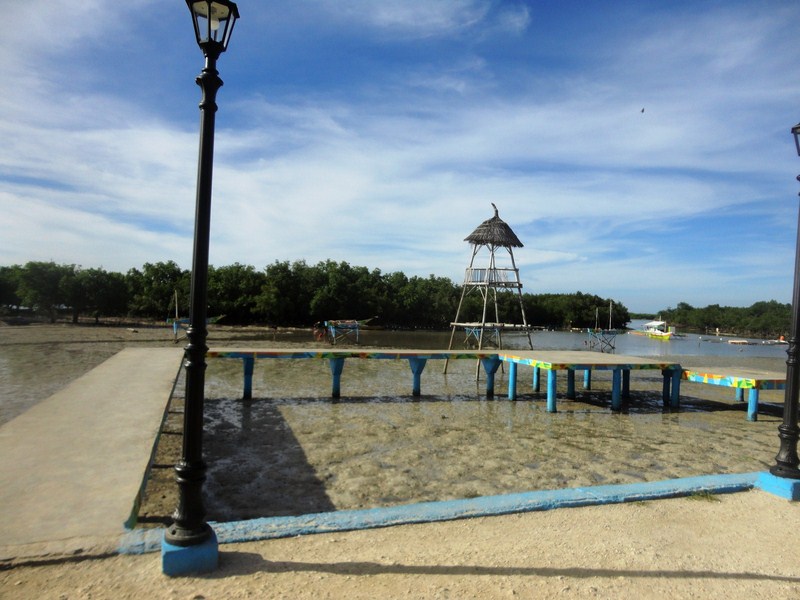
General Luna Port at low tide

Offshore are the three white sand islands we were to visit – Naked Island, Daku Island (the biggest of the three) and Guyam Island (the tiniest).Once on board, we proceeded on our 25-min. boat ride to our first destination – Naked Island.

Check out “Daku Island” and “Guyam Island

A lone palm tree amidst sparse vegetation

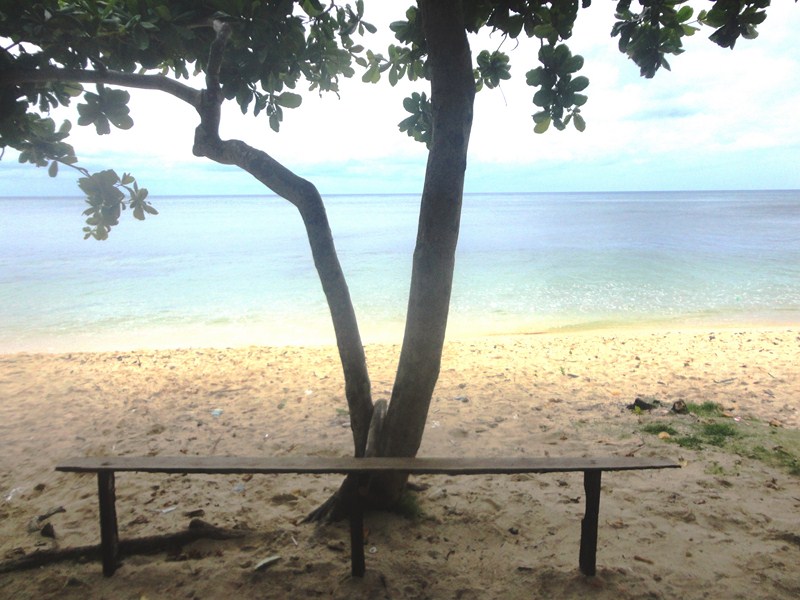
Also called Pansukian Island, Naked Island is, in fact, only a bare, 200 m. long sandbar with no trees (just some occasional patches of bushes), no structures (save for a wooden bench), no nothing. It’s just a tiny speck of pristine, powdery white sand (with some patches of rock) in the horizon, surrounded by a deeper, crystal-clear lagoon between the blue sky and the turquoise sea, similar to the more famous White Island of Camiguin, only smaller. And, just like White Island, this sandbar also changes positions depending on the tide.

Check out “White Island

Patches of rock on the island

It was a good thing we arrived during low tide as this island submerges significantly during high tide.   With not a single tree in sight for you to rest under, Naked Island is a perfect place to get a tan without getting bugged by the crowd (though some take the “naked”” in the name too literally by posing naked). However, attempts have been made to green the island as some plants have now been growing in the sand.

Daku Island seen from Naked Island

For those afraid of getting a sunburn, it is advisable that you visit the island early in the morning to somehow avoid the peak of the sun’s heat. If you intend to stay longer, bring your own beach umbrellas, sunscreen lotion and mattresses. You can actually own Naked Island for a day and do whatever you like by actually renting it but you have to reserve it ahead of time.

L-R: Ms. Donna Grace T. Estrella (Siargao Tourism Coordinator), Mr. Donald Tapan (noted photographer) and the author

Aside from swimming with a school of fish, snorkeling and sunbathing, you can also take pictures of migratory birds such as terns who frequent the island or or just relax by the shore, with a book and a tall, cold glass of juice, while enjoying the great view of the neighboring islands. Additionally, it is also a perfect spot for surfing because of the large waves.

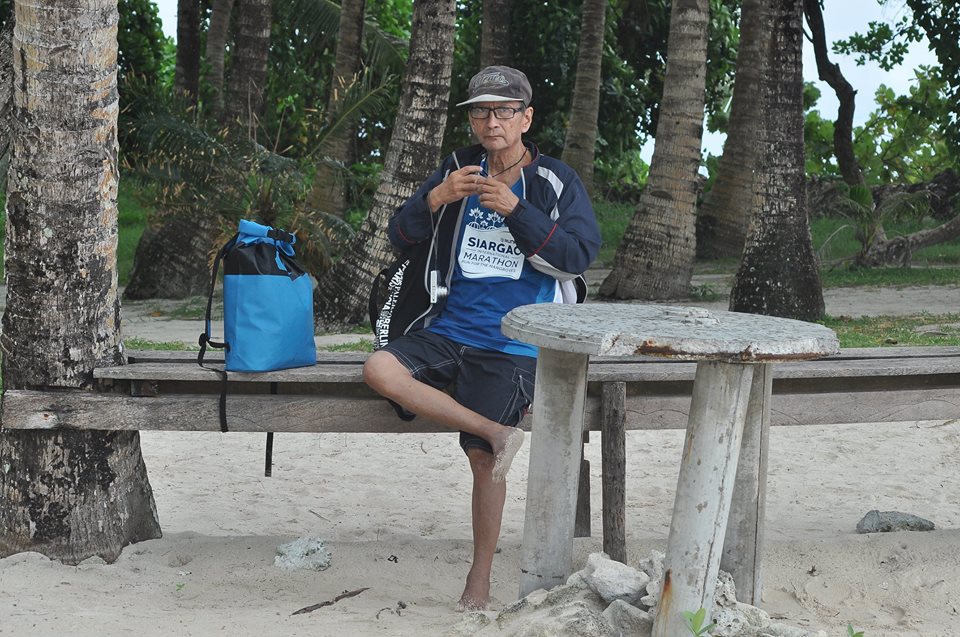
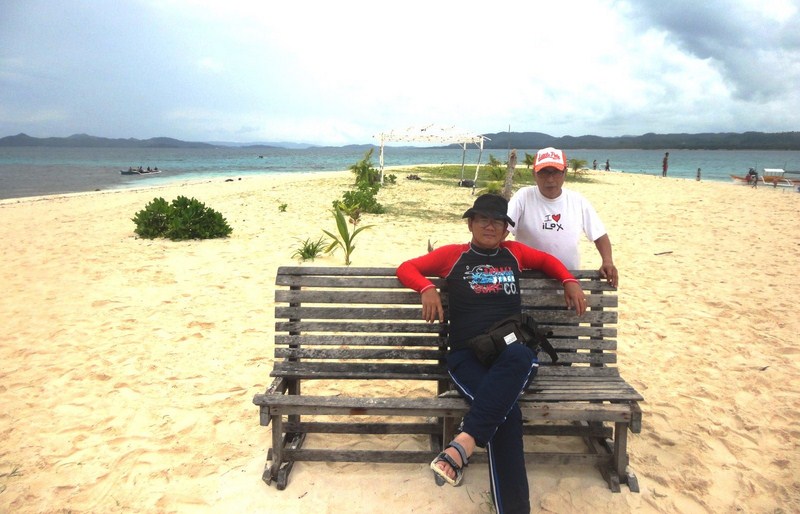
The author, with Mr. Pete Dacuycuy, seated on the lone wooden structure on the island

Siargao Tourism Office: Paseo De Cabuntog, Brgy. Catangnan, Gen. Luna, Siargao Island. Mobile number: (0921) 718-2268 (Ms. Donna Grace T. Estrella – Siargao Tourism Coordinator).

How to Get There: Skyjet Airlines has daily, 100-min. direct flights from Manila (NAIA Terminal 4) to Siargao (Sayak Airport). ETD Manila at 6 AM (M8-421), ETA Siargao at 7:40 AM. Return flights: ET Siargao at 8:10 AM (M8-422), ETD Manila at 9:50 AM.

Skyjet Airlines: Manila Domestic Airport, Parking A, Terminal 4, NAIA Complex, Brgy. 191, Pasay City, Metro Manila. Tel: (02) 863-1333 and (02) 823-3366. E-mail: sales@skyjetair.com. Website: www.skyjetair.com.

Cloud 9 Boardwalk (Gen. Luna, Surigao del Norte)

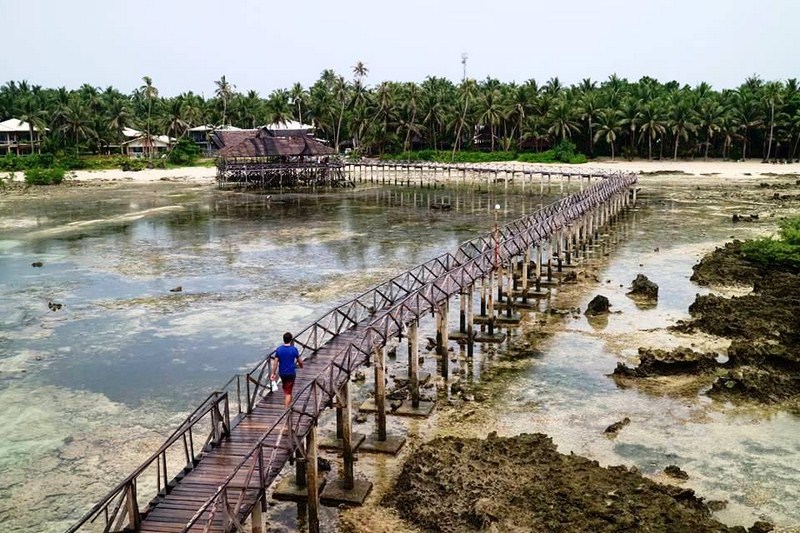
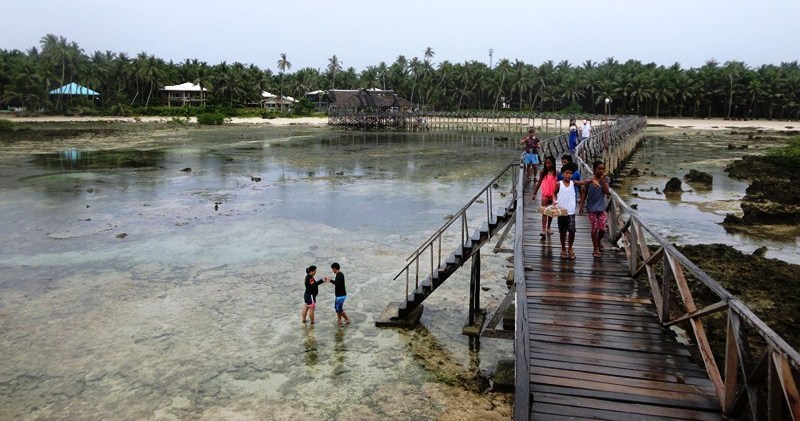
Cloud 9 boardwalk

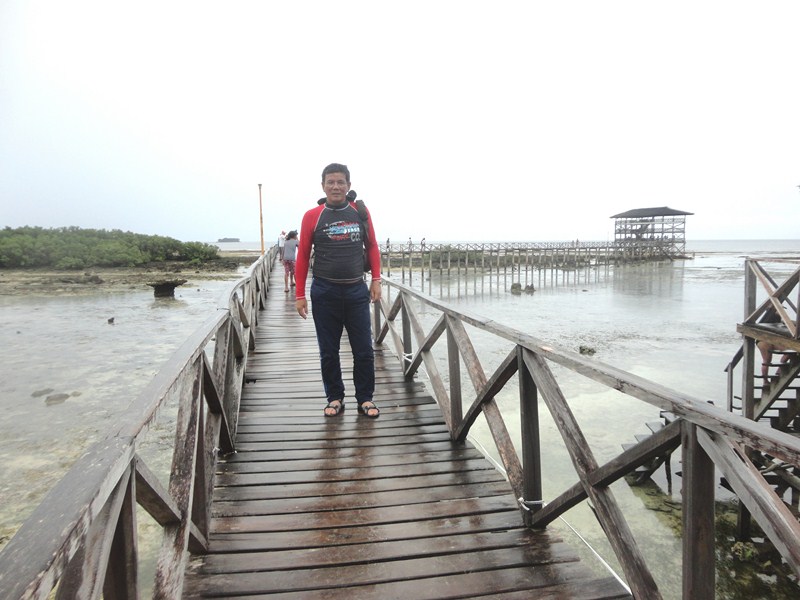
After our Sugba Lagoon tour, we returned to Del Carmen’s port and then boarded our respective vans for the 38 km. (45-min.) drive to Gen. Luna, arriving at the town’s iconic Cloud 9 boardwalk by 4 PM.  This wooden boardwalk was built for the hundreds of spectators, judges, VIPs, tourists, non-surfers, competitors and photographers, during the 2014 Siargao International Surfing Cup in September, so that they can be very near where the waves are at Cloud 9.

Cloud 9’s white sand beach

One of Siargao’s most famous landmarks, many world-renowned, champion surfers like Alana Blanchard, Paul Fisher, Chris Zaffis, John Mark Tokong, Philmar Alipayo, Philippa Anderson (Australia), Sandon Whittaker (Australia) and Piso Alcala have strolled its length. We too would pretty much walk up, on the same wooden planks these world’s top wave riders walked on, to the area where the large waves form.

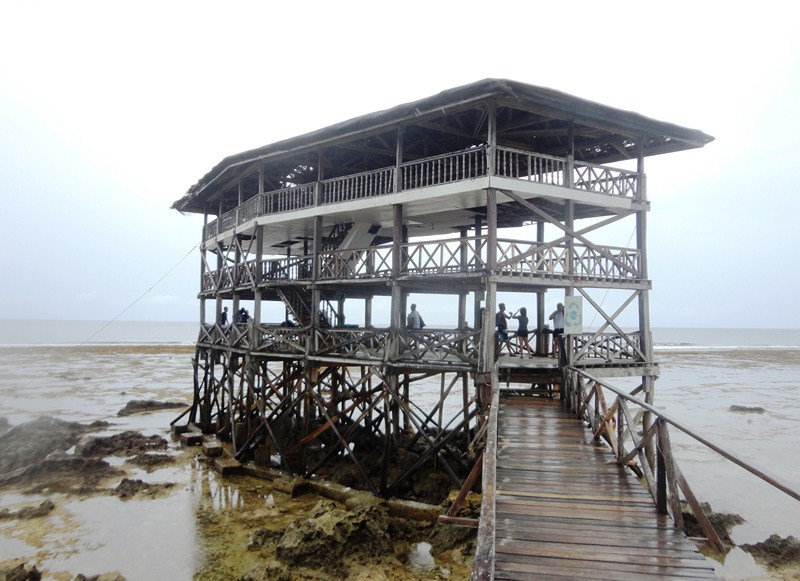
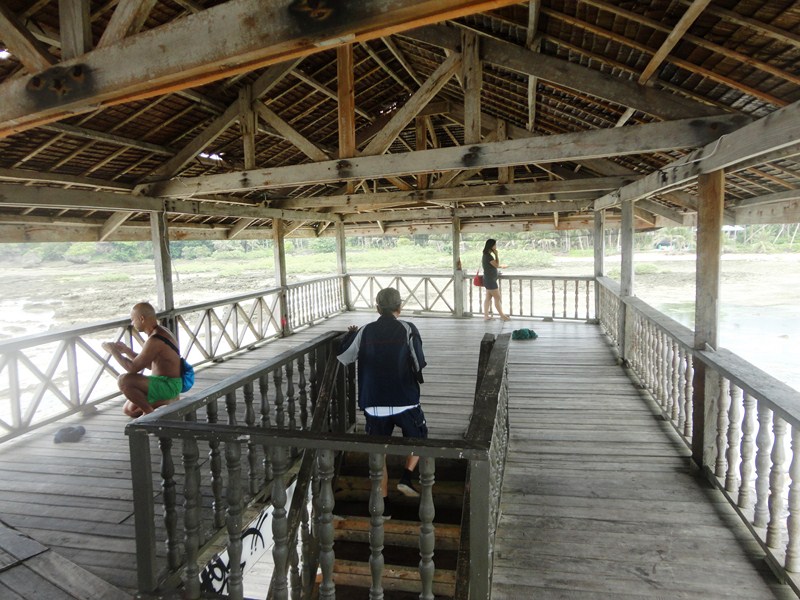
The 3-storey observation deck

The third storey

At the end of the 100-m. long boardwalk is a 3-story observation deck on stilts where surfers can relax after a hard-day’s practice , watch their fellow surfers riding out the waves or while the cool afternoons away. During every Siargao International Surfing Cup (the country’s most-awaited surfing event), this observation deck is laden with colorful banners of different surfing-related brands (RipCurl, Stoked, Fluid Surf, Billa, etc.).

The author

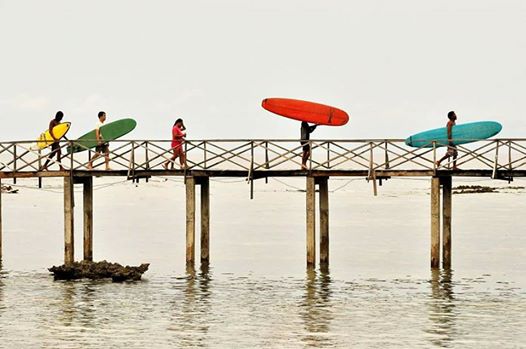
Surfers with their surfboards (photo: Donald Tapan)

As we arrived during high tide, surfers of all ages, genders, and nationalities, beginner or professional, were already starting to enjoy the waves of Cloud 9. This famed surf spot, in the country’s southeastern Pacific seaboard, was so-called after the popular chewy chocolate bar that can keep your glucose level high until those with sweet tooth can get their next meal.  In the 1980s, foreign surfers subsisted on this candy bar when the obscure surf spot was yet a best-kept secret. Today, because of the heavenly feeling it brings, riding its 16-ft. high waves is much like walking on Cloud 9.

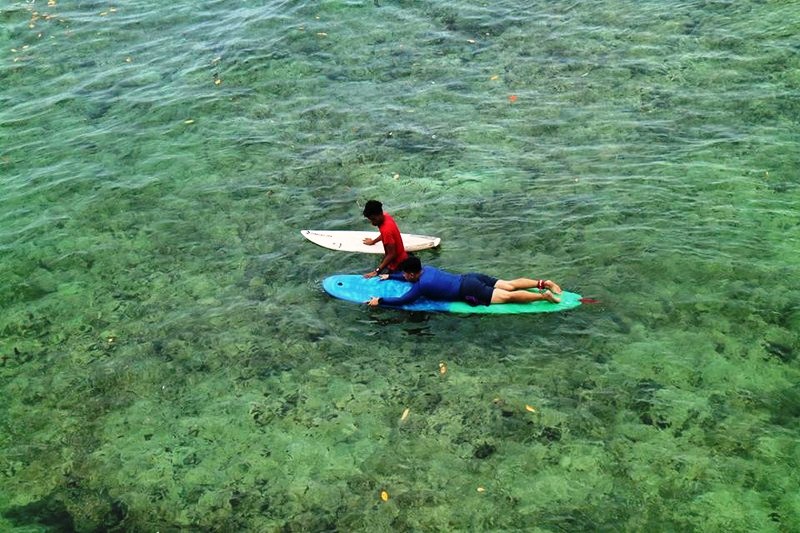
This dramatic and powerful reef break, which crashes onto shallow, razor-sharp coral, offers right and left death rides to daring surfing buffs. In 2012, CNNGo, the travel news web site of the Cable News Network, listed Cloud 9 as No. 8 in the World’s Top 50 Best Surf Spots. Its surfing areas are categorized as Jockeying Horse for the beginners, Quicksilver for the intermediate class and Cloud 9 for the professionals. For beginners, surfing lessons are offered by local surfers at Php300/hour, while surfboard rental is at Php200/hour. Children as young as 8 years old are allowed to take lessons.

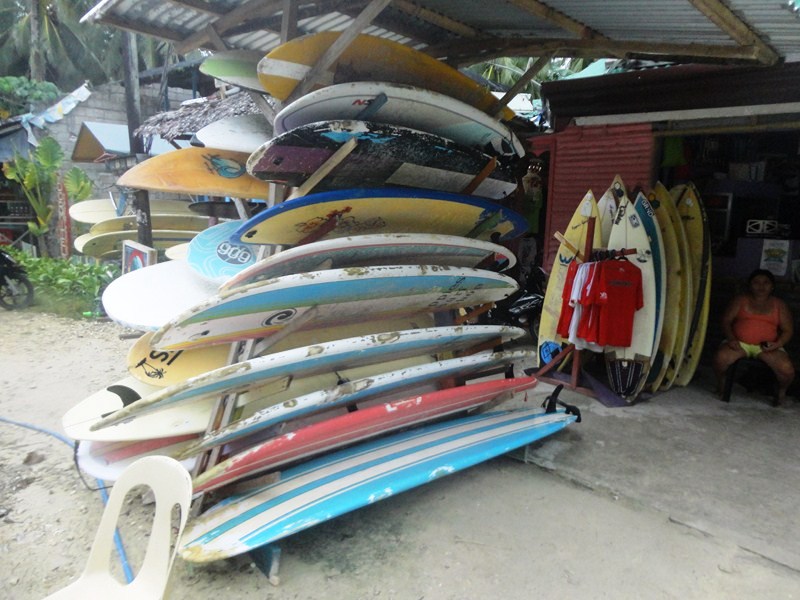
A selection of surfboards for rent

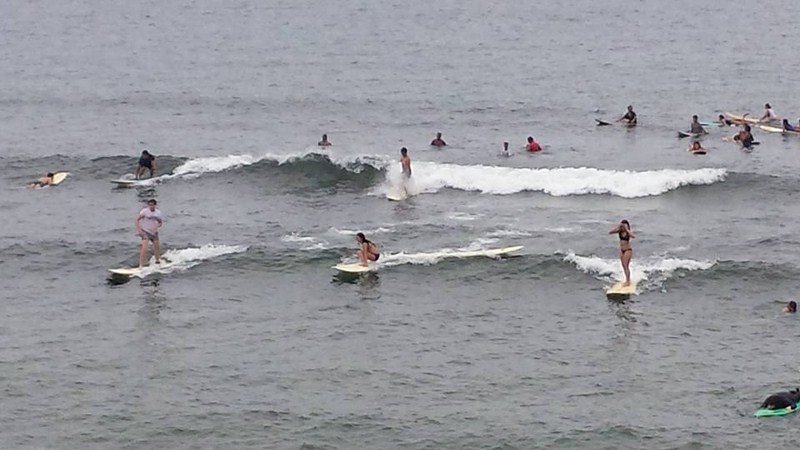
Surfers paddling towards Cloud 9

Even during high tide, the area is not really for swimming since a large expanse of it is shallow, waist-high waters.  Locals say that waves start to pick up in August to September when the southwest wind (habagat) is prevailing, the beginning of the surfing season.  Even during our third week of July visit, sun-baked local boys and pro surfers who can teach you the basics of surfing were everywhere. The waves look small in our photos but they’re actually quite big and powerful. Everyone was having the time of their lives experiencing this ethereal out-of-this-world emotional journey.

Surfers strutting their stuff at Cloud 9 (photo: Mr. Pete Dacuycuy)

Siargao Tourism Office: Paseo De Cabuntog, Brgy. Catangnan, Gen. Luna, Siargao Island. Mobile number: (0921) 718-2268 (Ms. Donna Grace T. Estrella – Siargao Tourism Coordinator)

How to Get There: Skyjet Airlines has daily, 100-min. direct flights from Manila (NAIA Terminal 4) to Siargao (Sayak Airport). ETD Manila at 6 AM (M8-421), ETA Siargao at 7:40 AM. Return flights: ET Siargao at 8:10 AM (M8-422), ETD Manila at 9:50 AM.

Skyjet Airlines: Manila Domestic Airport, Parking A, Terminal 4, NAIA Complex, Brgy. 191, Pasay City, Metro Manila. Tel: (02) 863-1333 and (02) 823-3366. E-mail: sales@skyjetair.com. Website: www.skyjetair.com.

Sugba Lagoon (Del Carmen, Surigao del Norte)

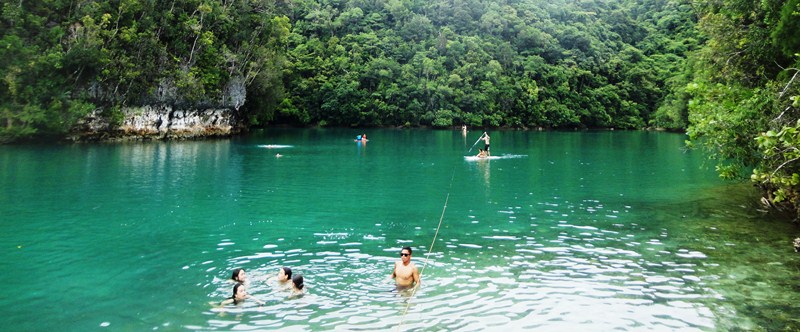
Sugba Lagoon (photo: Ms. Louise Santianen)

After a lunch at Krokodeilos and tour of the nearby Mangrove Protection and Information Center (MPIC), we all went down a gangplank to Del Carmen’s modular plastic floating dock and boarded two motorized outrigger boats for our boat tour to Sugba Lagoon (also known as Caub Lagoon).

Check out “Mangrove Protection and Information Center

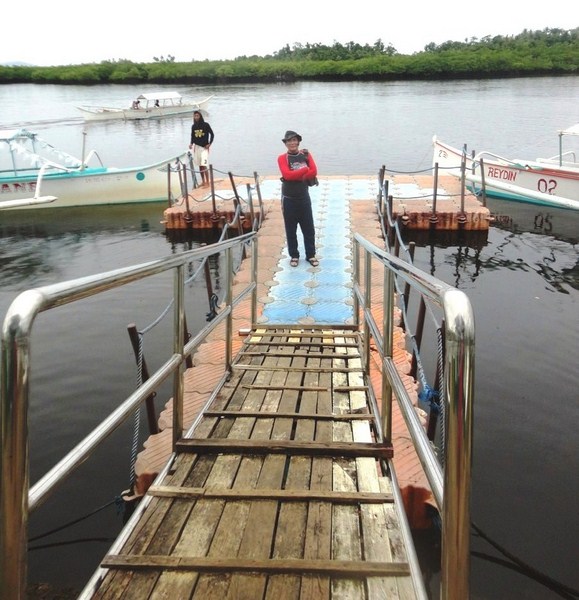
Del Carmen’s floating dock

The 30 to 45-min. boat ride to the lagoon from the port was half the fun as we were to traverse wonderful and breathtaking scenery.

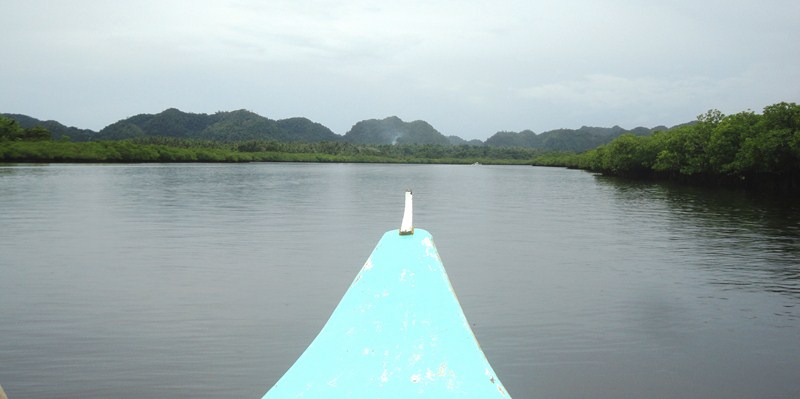
Entering the town’s massive mangrove area with its backdrop of green hills

Initially, we entered Del Carmen’s massive mangrove area with a backdrop of small green hills, passing fishermen on their boats, to some offshore islands.

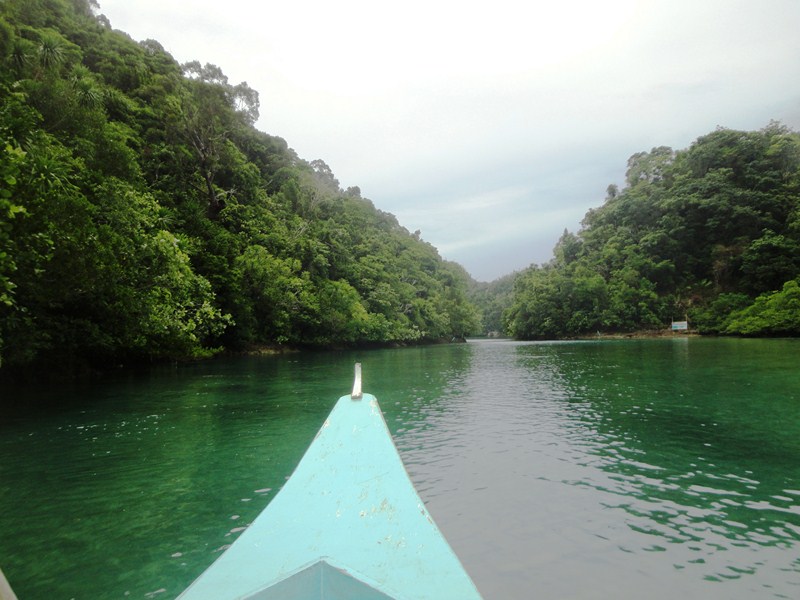
Our boat wining its way through a narrow passage

Then, we went through a narrow passage that opened up into a large bay.  Here, we espied some small, thickly vegetated islands with sandy pocket beaches and small villages with houses on stilts.

Small island with a pocket beach and houses on stilts

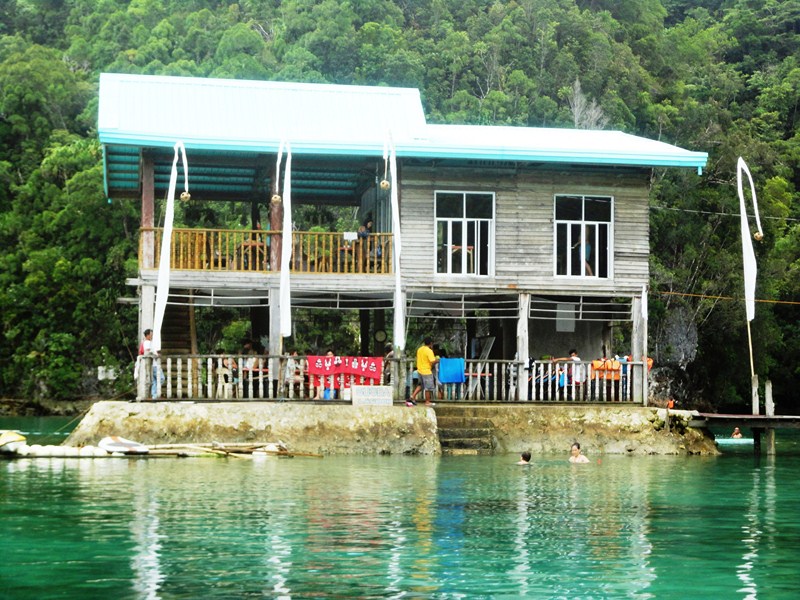
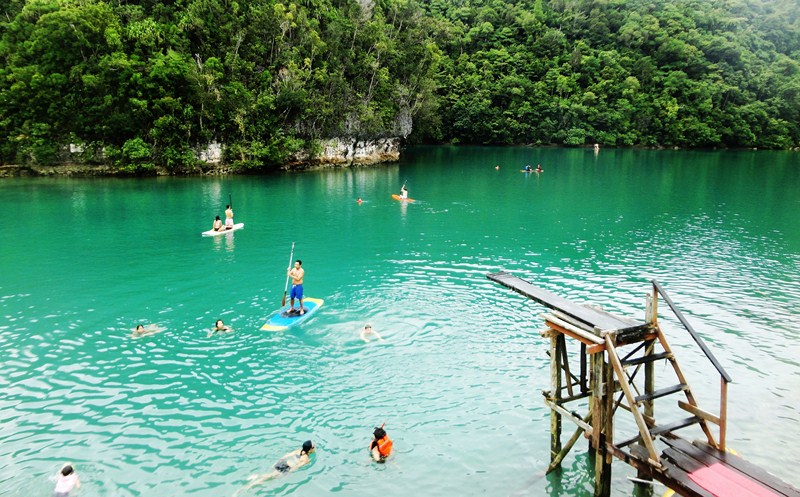
Soon after, we reached the small, secluded Sugba Lagoon and its two-storey pavilion built by the local government unit to cater to visitors. At the pavilion, you can rent a table (PhP50). The lagoon, with an estimated area of 87 hectares, visually captivated us with its overwhelming natural beauty.

The two-storey pavilion for visitors

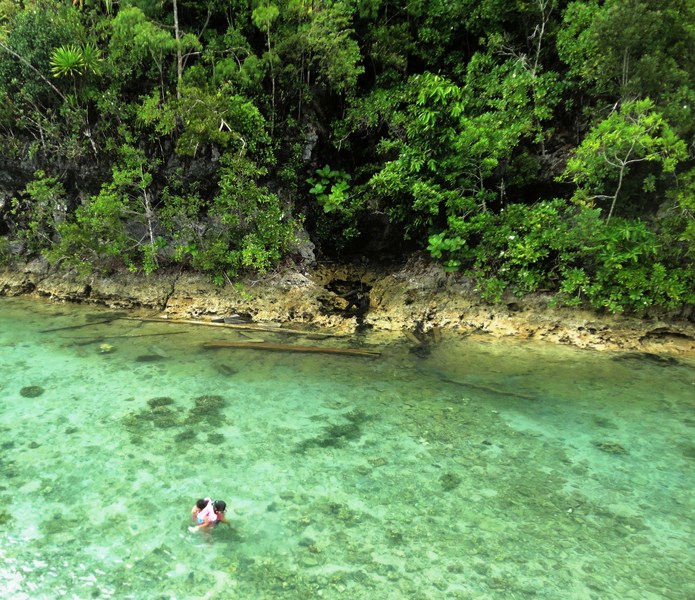
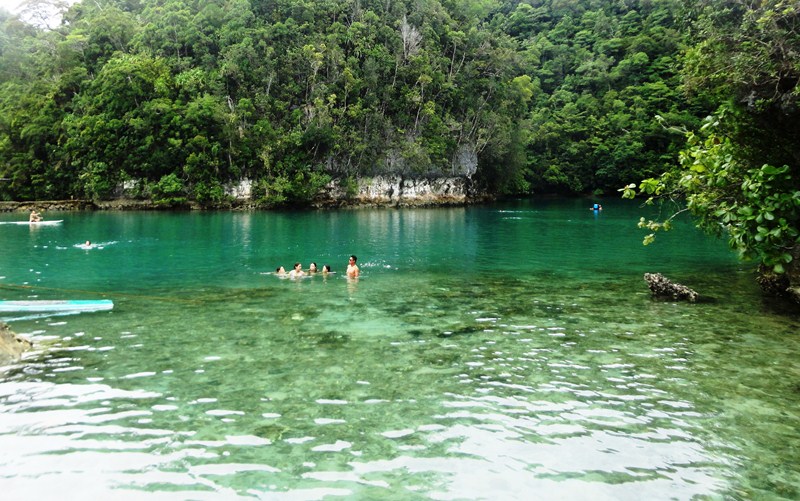
The clear green-blue, brackish waters, inhabited by different variety of fish, are surrounded by large rocky limestone hills that are home to a rich diversity of flora and fauna, different species of birds as well as endangered species of hardwood trees.

The lagoon is said to have gotten its name from the Visayan word sugba meaning “to grill,” in reference to the smoke seemingly coming off the lagoon when it is covered with fog. With its nice and clear waters, it was perfect for swimming.

Diving area

The water is quite deep but you can rent (PhP50) life vests if you don’t swim. There are some jellyfish here but, apparently the small ones are harmless, but the big transparent jellyfish with long tentacles do sting.

The shallow part of the lagoon

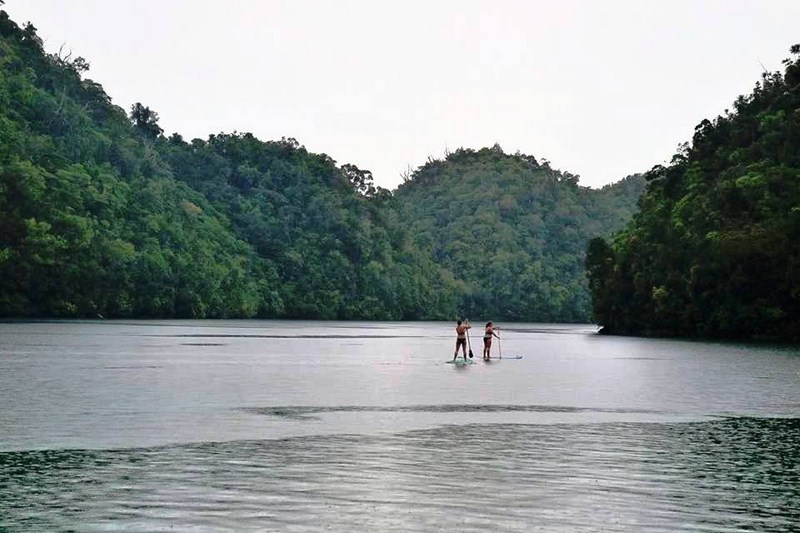
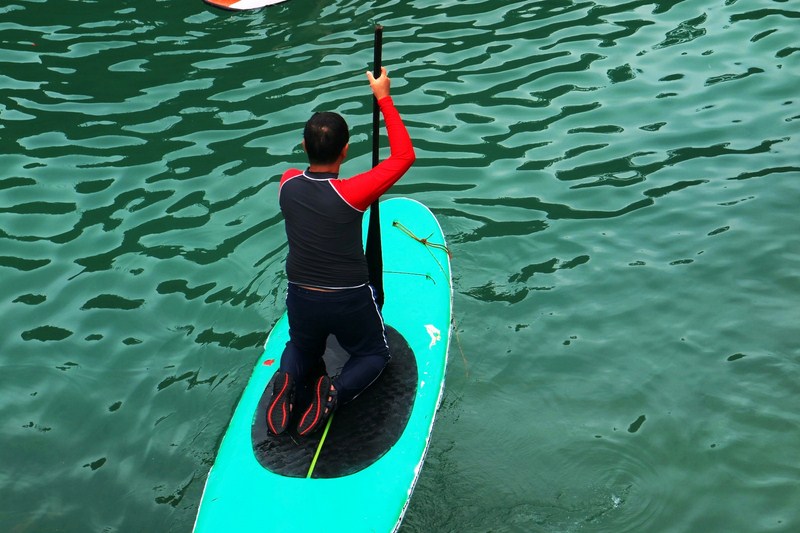
Here, TJ and I tried stand up paddle boarding (rent: PhP600/ay or PhP200/hour).  The rest of our media group just stayed within the pavilion. You can also do snorkeling, kayaking or jump off from a 2 m. long wooden diving board of moderate height.

You can also rent rafts at the lagoon. You can get some decent lunch to take out at the Krokodeilos restaurant. So you won’t be abruptly short on time, it is best to go there in the morning or noon as the place has a curfew in the afternoon unless you’re booked for an overnight stay.

The author taking his first baby steps in stand up paddle boarding (photo: Ms. Louise Santianen)

Sugba Lagoon: Brgy. Caub, Del Carmen 8418, Surigao del Norte. Admission fee: PhP250/group. At Del Carmen port, a boat ride costs PhP1,600 for 6 persons (additional PhP200/pax if there are more than 6 people in your group). If you have a guide with you, he gets in for free. You will also need to pay for a boarding pass of PhP50/boat.

Siargao Tourism Office: Paseo De Cabuntog, Brgy. Catangnan, Gen. Luna, Siargao Island. Mobile number: (0921) 718-2268 (Ms. Donna Grace T. Estrella – Siargao Tourism Coordinator).

How to Get There: Skyjet Airlines has daily, 100-min. direct flights from Manila (NAIA Terminal 4) to Siargao (Sayak Airport). ETD Manila at 6 AM (M8-421), ETA Siargao at 7:40 AM. Return flights: ET Siargao at 8:10 AM (M8-422), ETD Manila at 9:50 AM.

Skyjet Airlines: Manila Domestic Airport, Parking A, Terminal 4, NAIA Complex, Brgy. 191, Pasay City, Metro Manila. Tel: (02) 863-1333 and (02) 823-3366. E-mail: sales@skyjetair.com. Website: www.skyjetair.com.

Mangrove Protection and Information Center (Del Carmen, Surigao del Norte)

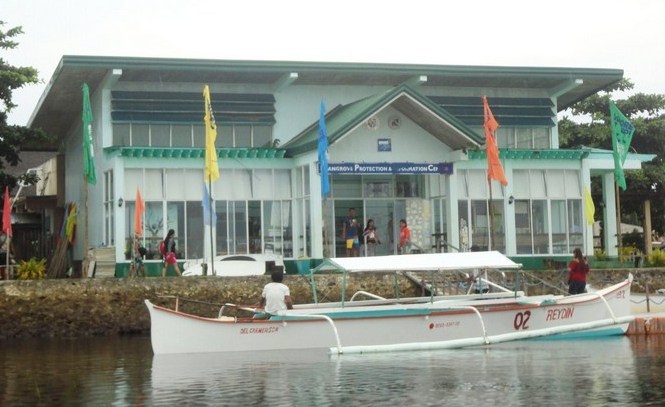
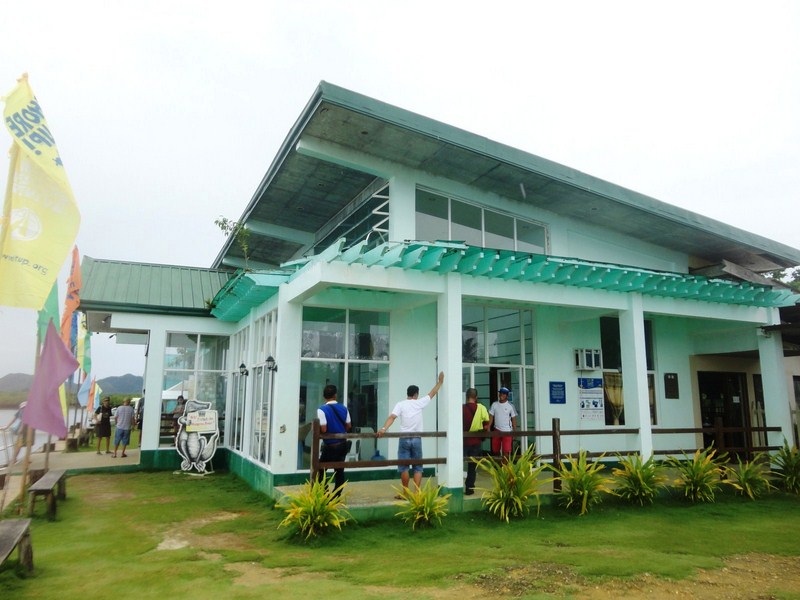
Mangrove Protection & Information Center

After a lunch prepared for us by Surigao del Norte District I Cong. Francisco Jose “Bingo” Matugas II and hosted by Del Carmen Mayor Alfredo M. Coro II at Krokodeilos, we proceeded to the nearby Mangrove Protection and Information Center (MPIC). The first of its kind in the Philippines, it was inaugurated last November 15, 2014 as part of the town’s and Metro Pacific Investments Foundation’s (with the support of the Manny V. Pangilinan group of companies) “Siargao It Up!” program (started in 2009) which promotes environmental awareness throughout the whole country.

A center for the protection and propagation of mangrove trees in the coastal estuaries, including the rehabilitation of degraded mangroves in the whole island of Siargao, it aims to let locals, tourists and guests know of the importance and benefits of mangroves in terms of biodiversity and its contribution to the safety of the coastal communities.

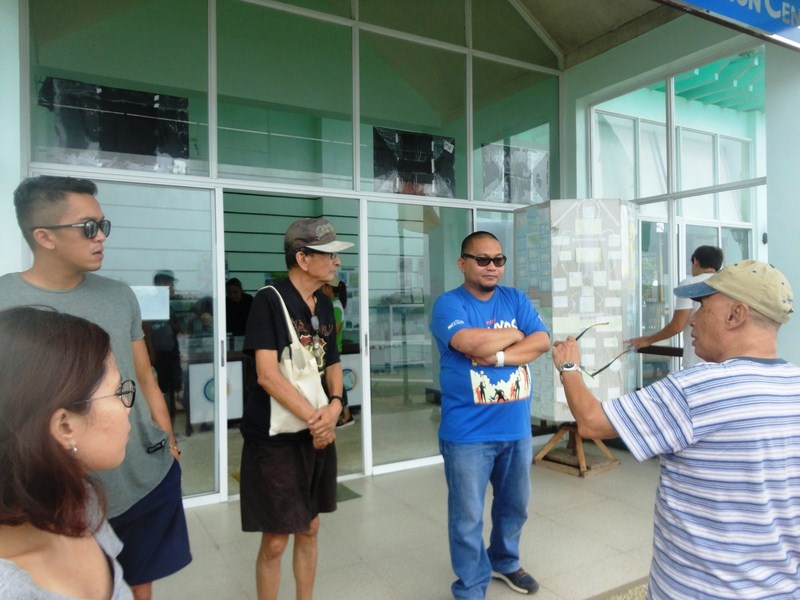
Del Carmen Mayor Alfredo M. Coro II (in blue shirt and shades) meeting with members of print media

To date, this program has successfully propagated around 800 hectares of new mangroves. As a result of its efforts, the Department of Environment and Natural Resources (DENR) has conferred on Del Carmen  the Environmental Hero Award.  The town observes its Shore It Up Week every first week of March.

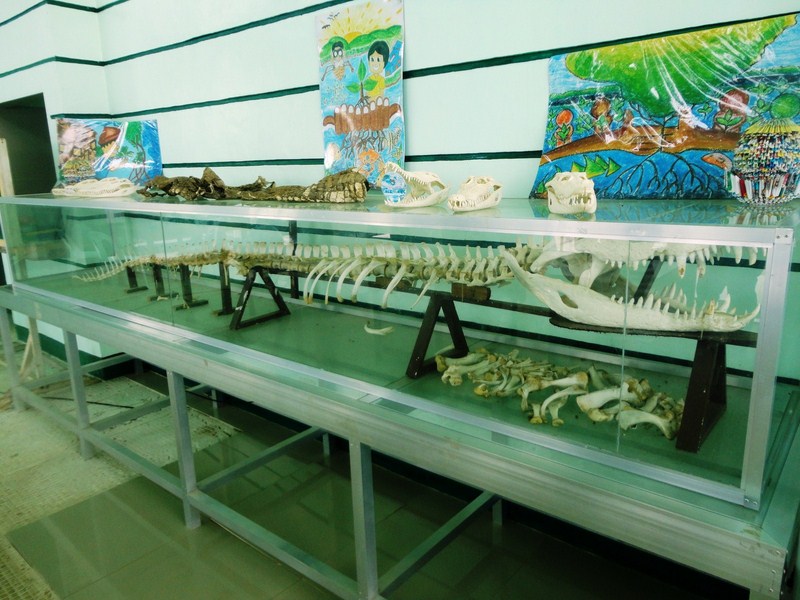
A complete skeleton of a saltwater crocodile on display

Mangrove forests are sanctuaries to rare and endangered wildlife species such as the Philippine Cockatoo, the Hawksbill Turtle, the Green Sea Turtle, the Golden Crown Flying Fox, Dinagat Gymnure, the Olive Ridley Turtle and the endangered dugong. It also prevents soil erosion, protects coastline from strong winds and waves, and filters off agricultural run-off and pollution. It is also a breeding ground for different marine organisms; is a source of food, medicines and firewood; and supplies dissolved organic matter for nutrient cycle.

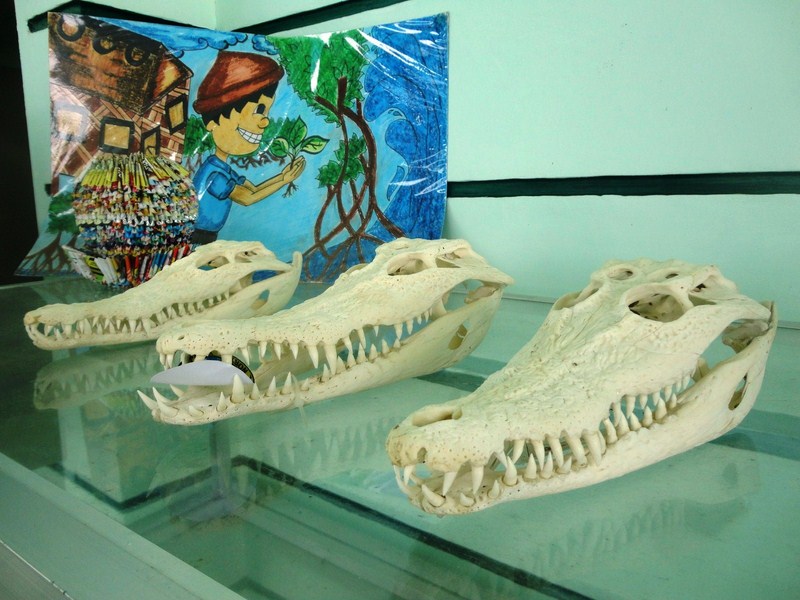
An array of crocodile skulls

According to Mayor Coro, Siargao has an approximately 8,600 hectares of mangrove cover, the second largest in Mindanao, and 4,259 hectares of contiguous mangrove are found in Del Carmen, the largest in the Philippines. Out of the 54 mangrove species worldwide, 44 can be found in Del Carmen, and the Crocodylus porosus, the largest of all living saltwater crocodiles, can be found in the town’s mangrove forest. The town’s vast mangrove forest has also become a major tourist destination in Siargao, with 21 boat operators doing from three to four trips per day, thus generating income for the local economy.

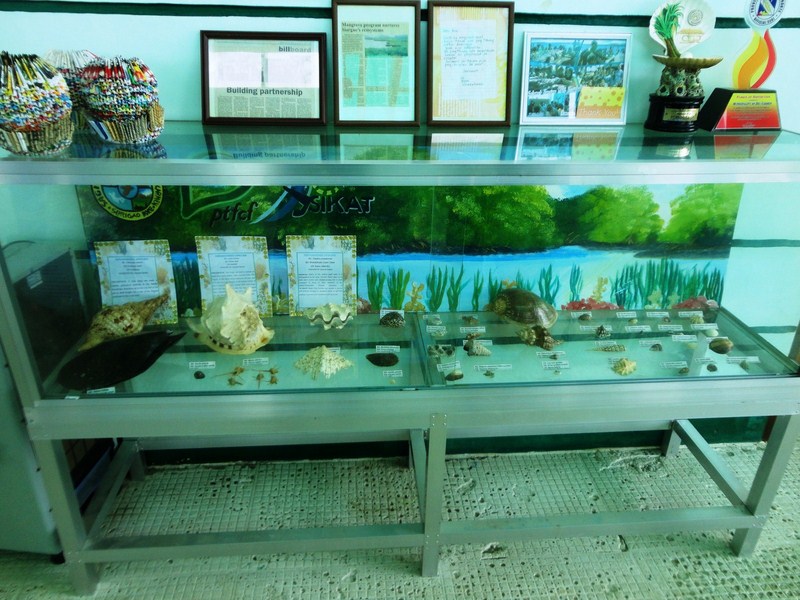
Display case with a collection of different sea shells

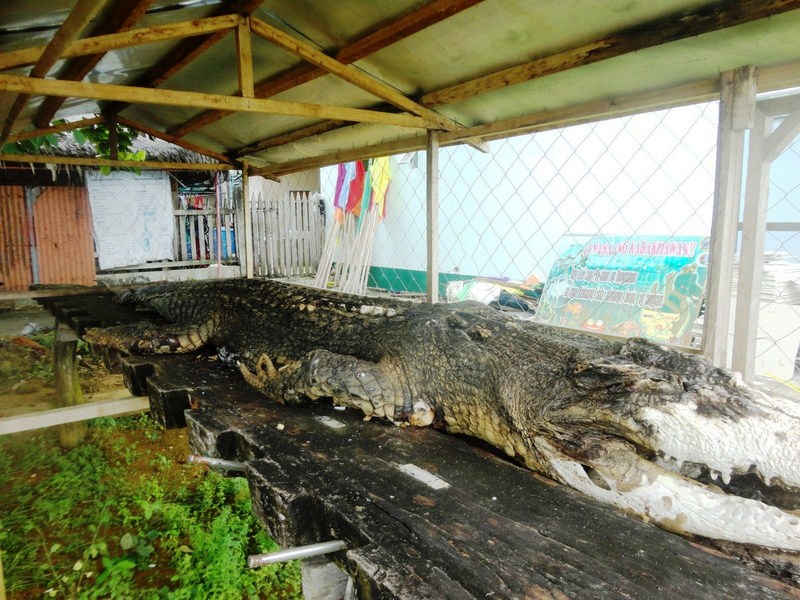
On display here are educational materials, a collection of sea shells and a complete skeleton of a saltwater crocodile as well as a number of skulls. Outside is a preserved saltwater crocodile. Measuring 14 feet and 9 inches long, and 2 feet and 8 inches wide, it was discovered floating dead, last October 27, 2016, by the mangroves in Brgy. Esperanza, 8 kms. from the town proper.

Preserved remains of a saltwater crocodile

Siargao Tourism Office: Paseo De Cabuntog, Brgy. Catangnan, Gen. Luna, Siargao Island. Mobile number: (0921) 718-2268 (Ms. Donna Grace T. Estrella – Siargao Tourism Coordinator)

Mangrove Protection and Information Center (MPIC): Poblacion, 8418 Del Carmen, Surigao Del Norte.  E-mail: shoreitup.org@gmail.com. Website: www.shoreitup.org.  Facebook: www.facebook.com/SiargaoMangroveCenter.

How to Get There: Skyjet Airlines has daily, 100-min. direct flights from Manila (NAIA Terminal 4) to Siargao (Sayak Airport). ETD Manila at 6 AM (M8-421), ETA Siargao at 7:40 AM. Return flights: ET Siargao at 8:10 AM (M8-422), ETD Manila at 9:50 AM.

Skyjet Airlines: Manila Domestic Airport, Parking A, Terminal 4, NAIA Complex, Brgy. 191, Pasay City, Metro Manila. Tel: (02) 863-1333 and (02) 823-3366. E-mail: sales@skyjetair.com. Website: www.skyjetair.com.

Magpupungko Tidal Flats & Lagoon (Pilar, Surigao del Norte)

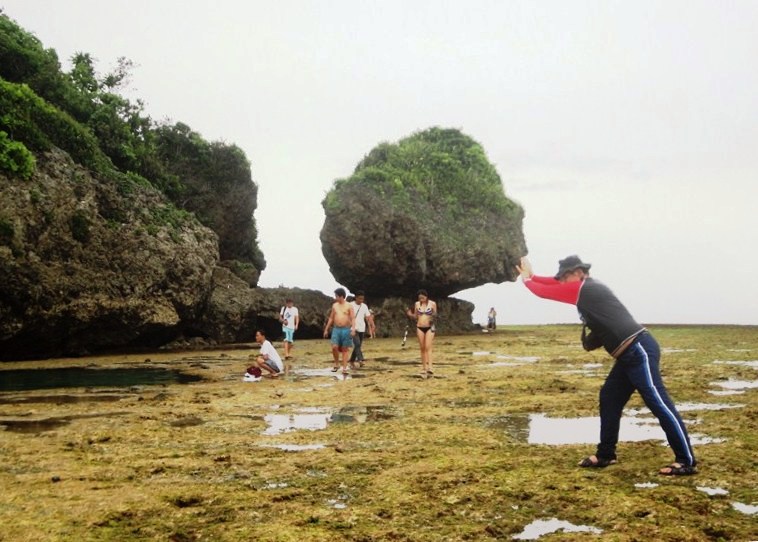
Magpupungko Rock

After our short visit at Port Pilar,we again boarded our respective vans for the short drive to Magpupungko Beach, a favorite destination of tourists.  This small 300 m. long stretch of cream colored sand beach has cottages and shower rooms and, as it faces east towards the edge of the Pacific Ocean, it also has a great view of the sunrise. However, this is not your usual beach.

Magpupungko Beach

It was low tide when we arrived, so we were able to walk, in ankle-deep waters and exposed rocks, to its northernmost end which is decorated by amazing rock formations, the largest of which is the iconic Magpupungko Rock that sits on top a flat rock.

The place was so named because of this rock’s squatting position. The word pungko is Visayan for “to squat,” “to bend” or “to sit”so, after adding some prefixes, the name became Magpupungko.


An offshore rock formation

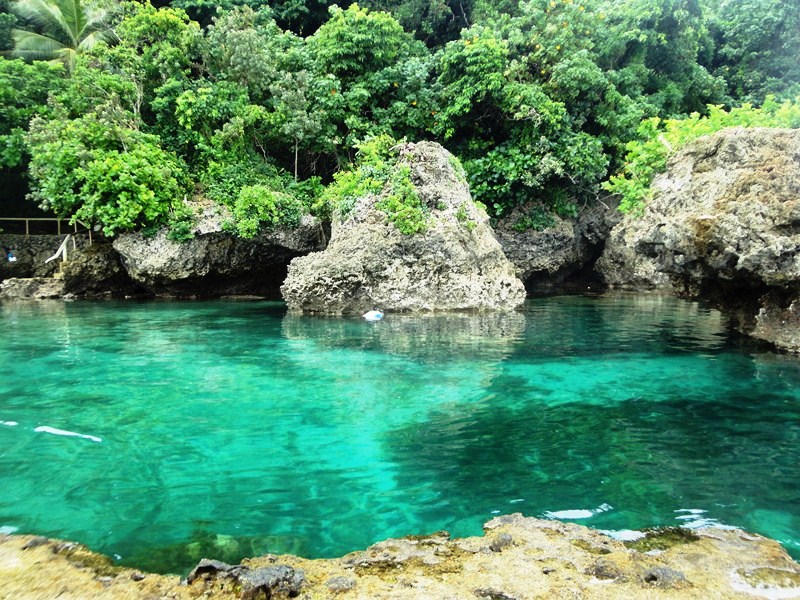
The area also hosts one of the Philippines’ stunning tide pools, natural pools along the shore that seem like infinity pools, created by enclosed underwater crevices where sea water gets trapped during low tide.

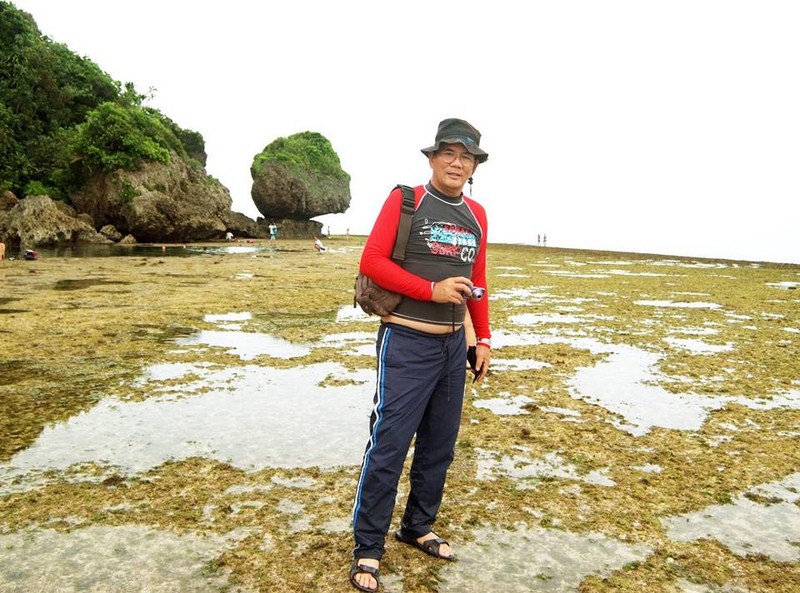
The author with Magpupungko Rock in the background (photo: Donald Tapan)

Swimmers in these natural, placid green pools are protected by the strong, crashing waves coming from the Pacific Ocean by wide underwater boulders that serve as a wall. Both rock formations and tidal pools were created by nature itself.

The refreshing pools were too good not to be enjoyed so I dove into one natural, jacuzzi-like pool with clear and gleaming turquoise sea water flowing into it. The other members of my group just opted to take pictures of the rock formations and the strong waves crashing against the rocks.

The water seemed shallow because I could see various rocks jutting out from it but, at the farther end of the rock pool, some parts were actually deep, even in low tide.

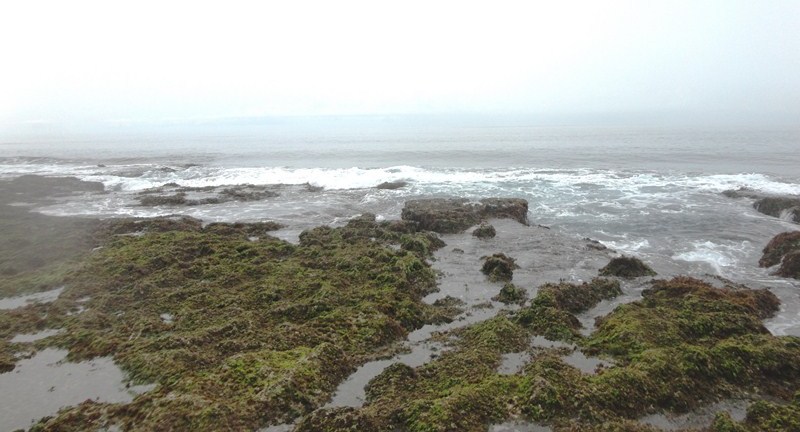
The waves of the Pacific crashing against the boundary of the reef

These alluring, crystal clear tidal pools, hardly discernible during high tide.are indeed unique and a sight to behold. The color of the water is comparable to that of Tangke Lagoon at Isla Gigantes in Iloilo.

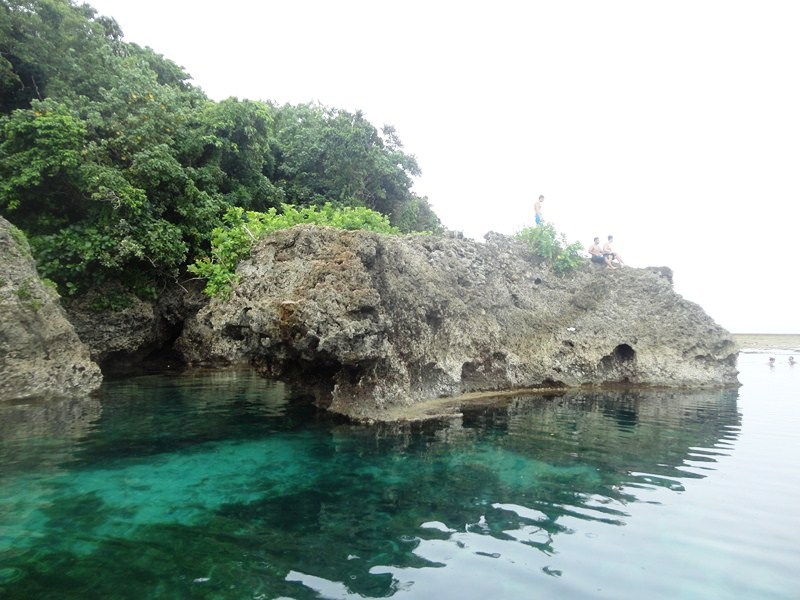
However, most tourists and locals go here for cliff diving, an extreme activity done from one of the islets. Many sections of the pools are deep enough and, thus, safe to dive from.

The edge of the tidal flat is also just a few strokes away and, as long as you can swim, there’s very little chance of drowning. They climb the rocks beside the pool (which is not easy to do as they’re sharp and kind of a long walk), and then jump off to the deep end of the water.

Tourist getting ready to dive atop a large rock formation

These tidal pools are also perfect for snorkelers, with stout elephant ear corals, providing shelter for many marine organisms that inhabit the pool, growing at the sides of rock outcroppings.

The author trying out one of the tidal pools (photo: Donald Tapan)

Beyond the Magpupungko rock formation are shallow, sandy tidal pools which are habitats of reef snakes and sea kraits. Though sea snakes are often shy and reluctant to bite, it is not recommended that you swim here.

The author trying to push Magpupungko Rock out of the way

Magpupungko Tidal Flats & Lagoon: Brgy. Consolacion, Pilar, Surigao del Norte. Beach entrance fee: PhP50/pax. Coordinates: 9.87551N 126.11995E. Besides a toilet, there are no facilities in Magpupungko, so bring food and other essentials if you wish to stay long.

Siargao Tourism Office: Paseo De Cabuntog, Brgy. Catangnan, Gen. Luna, Siargao Island. Mobile number: (0921) 718-2268 (Ms. Donna Grace T. Estrella – Siargao Tourism Coordinator)

How to Get There: Skyjet Airlines has daily, 100-min. direct flights from Manila (NAIA Terminal 4) to Siargao (Sayak Airport). ETD Manila at 6 AM (M8-421), ETA Siargao at 7:40 AM. Return flights: ET Siargao at 8:10 AM (M8-422), ETD Manila at 9:50 AM.

Skyjet Airlines: Manila Domestic Airport, Parking A, Terminal 4, NAIA Complex, Brgy. 191, Pasay City, Metro Manila. Tel: (02) 863-1333 and (02) 823-3366. E-mail: sales@skyjetair.com. Website: www.skyjetair.com.

Mactan Shrine (Lapu-Lapu City, Cebu)

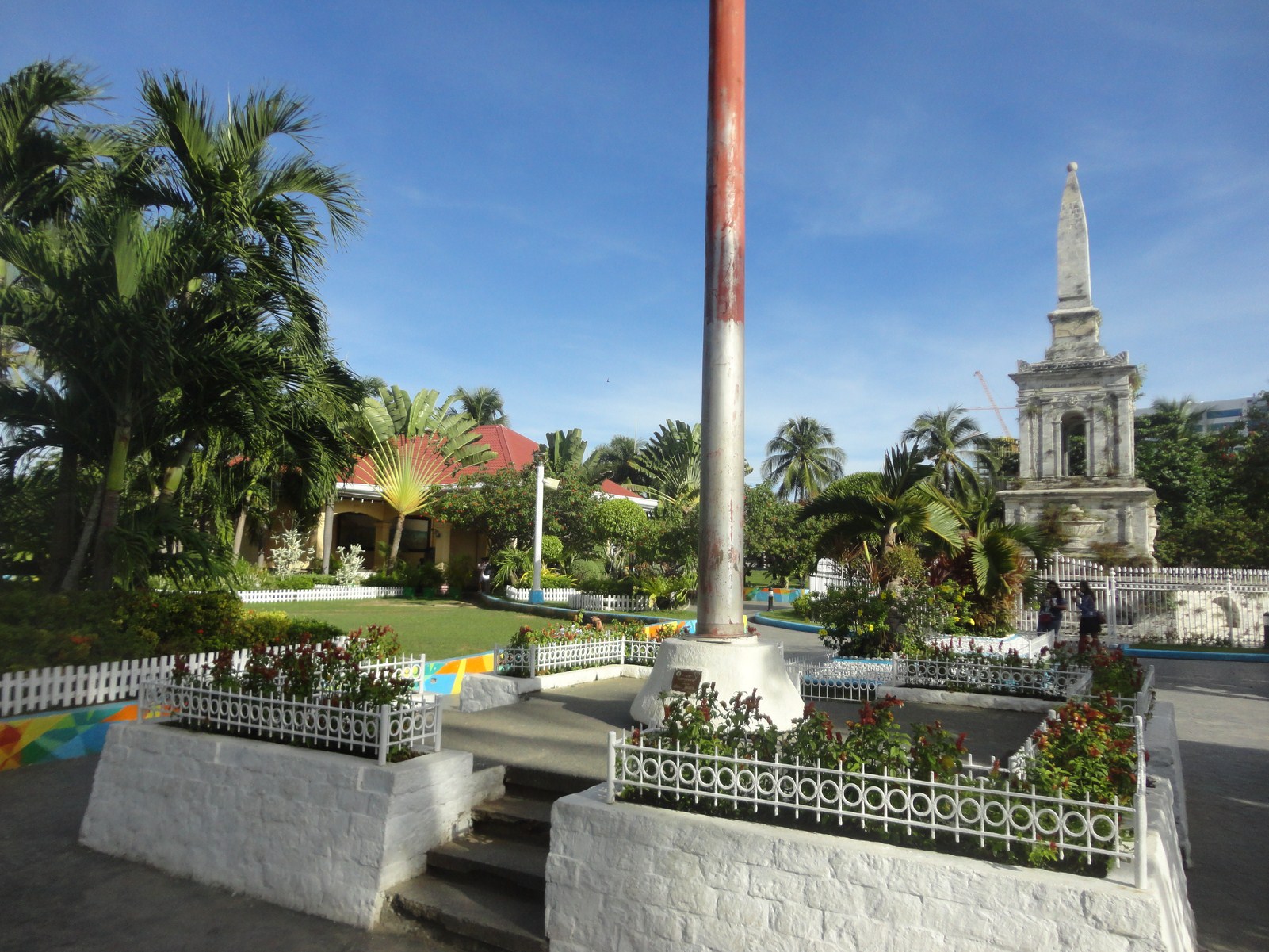
Mactan Shrine.  On the left is the small building housing two plaques while on the right is the Magellan Monument

Part 4 of the Bluewater Maribago Beach Resort & Spa-sponsored City Tour

This shrine is dedicated in honor of Lapu-Lapu (the Philippines’ first National Hero) and the Portuguese explorer Ferdinand Magellan and was erected on the supposed spot where the Battle of Mactan (April 27, 1521) took place. The shrine has three prominent monuments

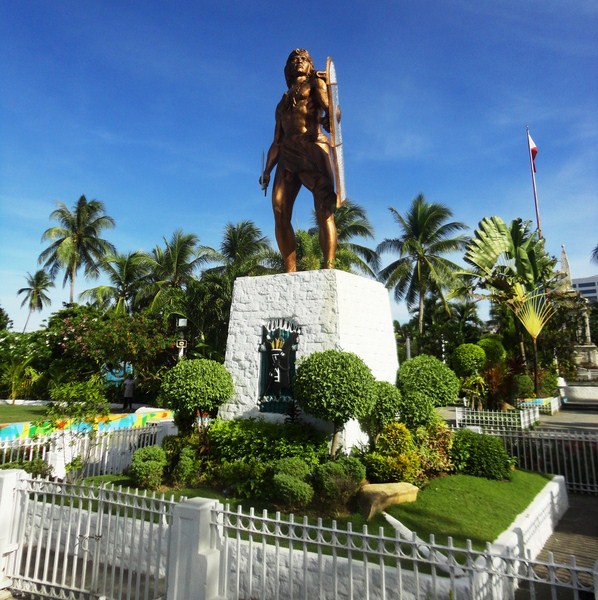
Lapu-Lapu Monument

The 20-ft. high Lapu-Lapu Monument, beside the shore, features a bronze statue, on a pedestal, of Datu Lapu-Lapu, sculpted with great realism, holding a kampilan (curved sword) on his right hand and a shield on the left.  The Magellan Marker, shaped like a large headstone, allegedly marks the spot where Magellan fell dead in the hands of Lapu-Lapu’s men.

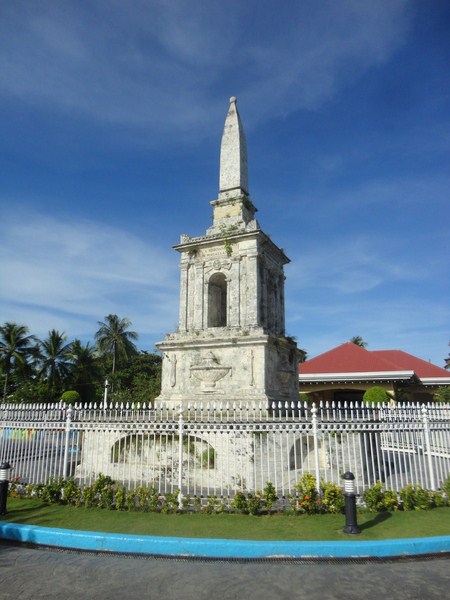
Magellan Monument

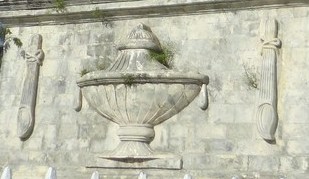
A little farther away is the 30-ft. high Magellan Monument, on a base of several levels and surrounded by a low fence. It consists of plain, coralstone obelisk, on whose apex rests a sphere, mounted on a tall plinth that rests on a tripartite structure – an octagonal base, on which rests a tall quadrilateral structure, divided into a lower part, decorated with high relieves of vases, and an upper part pierced by narrow arches.

Relief of a vase

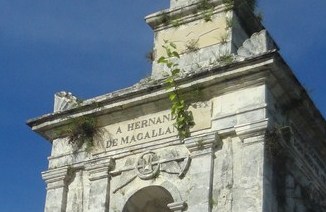
The monument is inscribed with texts. On one side is A Hernando de Magallanes, Ferdinand Magellan’s name written in the original Portuguese language.

Inscription with Magellan’s name

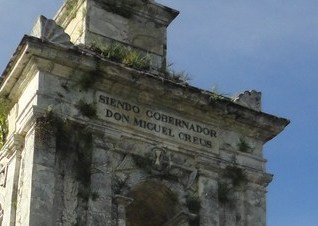
On a second side is the phrase Glorias Españolas (“Glory to Spain”),  on the third is the phrase Siendo Gobernaor Don Miguel Creus (the Spanish governor of the Philippines at the time) and on the fourth side is the phrase 1866 Reinando Ysabel II (the Spanish monarch at that time).

Inscription with Gov. Miguel Creus’s name

The monument was said to have been built in 1866 during the administration of Augustinian Fr. Simon Aguirre, who was cura (parish priest), from 1857 to 1871, of Opon (the old name of Lapu-Lapu City).

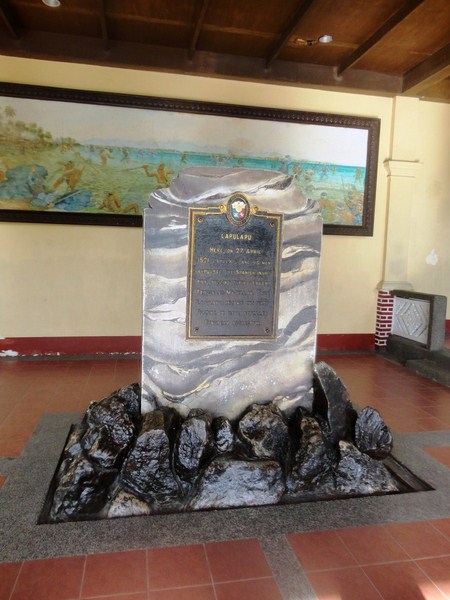
The plinth with two plaques

Between the Lapu-Lapu and Magellan monuments stands the Philippine flag.  East of the Magellan Monument is a small building housing a plinth flanked by plaques.

The Lapu-Lapu plaque

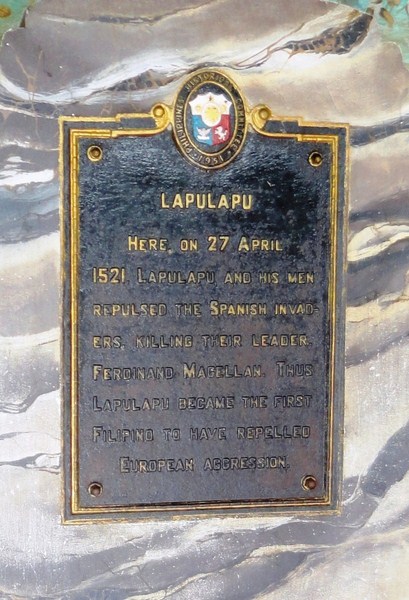
The plaque about Lapu-Lapu (installed by the Philippine Historical Committee in 1951) reads:

Lapulapu

Here on 27 April 1521, Lapulapu and his men repulsed the Spanish invaders, killing their leader Ferdinand Magellan thus Lapu Lapu became the first Filipino to have repelled European aggression.

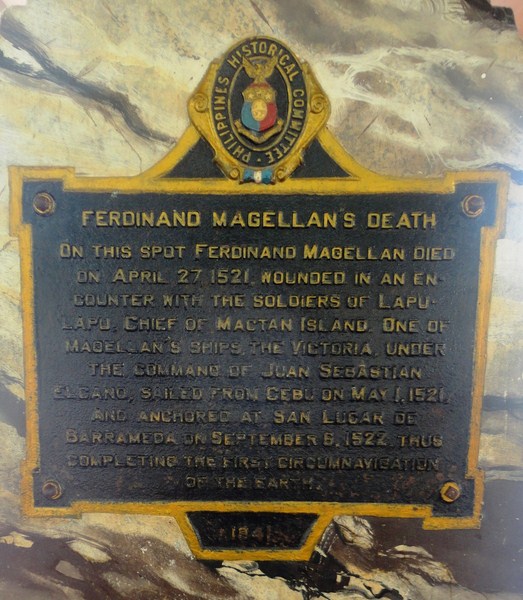
The plaque about Magellan’s death

The other plaque about Ferdinand Magellan (installed by the Philippine Historical Committee in 1941) reads:

Ferdinand Magellan’s Death

On this spot Ferdinand Magellan died on April 27, 1521 wounded in an encounter with the soldiers of Lapu Lapu, Chief of Mactan Islands. One of Magellan’s ships, The Victoria, under the command of Juan Sebastian Elcano, sailed from Cebu on May 1, 1521 and anchored at San Lucar de Barrameda on September 6, 1522 thus completing the first circumnavigation of the earth.

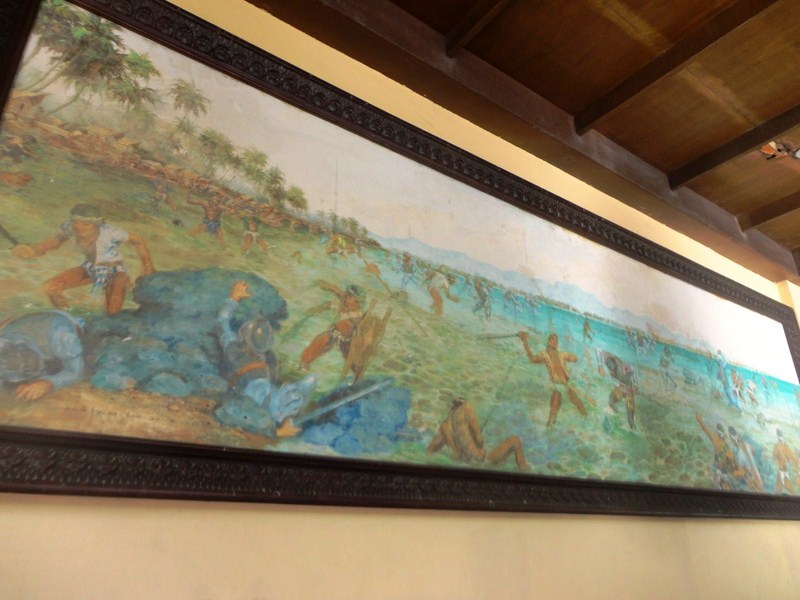
The huge mural painting

Behind the plinth is a huge mural painting depicting the battle. The Battle of Mactan is reenacted along the shores near the shrine during the 27 April Kadaugan sa Mactan Festival.

The Kadaugan sa Mactan re-enactment site

Mactan Shrine: Punta Engano, Lapu-Lapu City, Cebu.

Bluewater Maribago Beach Resort & Spa: Buyong, Maribago, Lapu-Lapu City, 6015, Cebu. Tel: (032) 492-0100. Fax: (032) 492-1808.  E-mail: maribago@bluewater.com.ph.   Website: www.bluewatermaribago.com.ph.  Metro Manila sales office: Rm. 704, Cityland Herrera Tower, 98 Herrera cor. Valero Sts., Salcedo Village, Makati City, Metro Manila. Tel: (02) 887-1348 and (02) 817-5751. Fax: (02) 893-5391.

Temple of Leah (Cebu City, Cebu)

Temple of Leah

Part 3 of the Bluewater Maribago Beach Resort & Spa-sponsored City Tour

The grandiose Temple of Leah, Cebu City’s newest attraction, has been called the “Taj Mahal of Cebu.”  Perched on the hilltop of Busay, it was built by Teodorico Soriano Adarna, owner of the Queensland  chain of motels in Davao, Manila and Cebu, as a testament to his undying love and ceaseless devotion for Leah Villa Albino-Adarna, his wife of 54 years (Leah was 16 and Teodorico was 19 when they married), who died of lung cancer in 2012 at age of 69.

They had four children— the 56 year old Allan, 54 year old Arlene, Arthur (deceased) and the 39 year old Alex, plus 16 grandchildren, including 29 year old Filipina actress and model Ellen Adarna (eldest and only daughter of Allan). Teodorico has since remarried and now lives in Davao.

The author

This 7-storey, still unfinished temple became an instant domestic tourist attraction as it interestingly resembles the ancient Parthenon of Greece.  Started in 2013, this Philippine version of the Taj Mahal of India is due to be completed in 2020. The west balcony, surrounded by resplendent sculptures along the balustrade, has a panoramic view of the cities of Metro Cebu (Cebu, Mandaue and Lapu-Lapu) and Cebu City’s highlands.

The gigantic lion statue overlooking the west balcony

A beautiful statue along the balustrade

Its fountain has statues of four seated horses at the base and three naked maidens (in my opinion, they are probably The Three Graces) standing on a basin on top that were inspired by the Adarnas’ trip to Europe.

The three statues of naked maidens on top of the fountain

The Classic Greek and Roman-inspired (rectangular design, raised podium for the shrine, a triangular pediment above the portico of fluted Doric columns and an altar of the cult goddess under the skylight) architecture of this huge edifice is meant to be admired from the outside, awing visitors with its imposing breadth. The engraved moldings on the vaulted ceiling were, on the other hand, inspired by the temples of India.

Inside are 24 chambers, built on opposite wings, including a museum, an art gallery and a library with all the favorite and personal belongings of Leah such as books, vases, Buddha heads and various figurines, ceramic statues and souvenirs gathered from the couple’s extensive travels.

Leah’s favorite personal belongings

The statues of gigantic seated lions, on each side of the grand staircase, guided us to the door step of another jaw-dropping view, at the middle of the temple, of a grand Y-shaped staircase, a pair of huge brass angels and the 9-ft. high, bronze statue (said to have cost PhP4,000,000) of a seated Leah Albino-Adarna on a marble pedestal, with crown and flower.

Trumpet blaring brass angel

Behind the statue is a semicircular arched stained glass window featuring various angels.  At the foot of the statue is this inscription:


BELOVED WIFE AND MOTHER

Leah V. Albino-Adarna was chosen Matron Queen of her Alma Mater, the University of Southern Philippines. This nine-foot bronze statue portrays her composure and regal bearing when she was crowned. May the beholder discern her innate beauty, poise and genteelness.

(signed)

Teodorico Soriano Adarna

Born December 13, 1938


Seated statue of Leah

Distant view of the temple

Temple of Leah: Roosevelt St., Brgy. Busay Cebu City. Tel: (032) 233-5032.  Mobile number: (0906) 324-5687.  Open daily, 6 AM – 11 PM. Admission: PhP50 per pax. Professional photography for events: PhP2,500. Parking fee: PhP100 if inside the premises, free if outside (limited slots only).

Bluewater Maribago Beach Resort & Spa: Buyong, Maribago, Lapu-Lapu City, 6015, Cebu. Tel: (032) 492-0100. Fax: (032) 492-1808.  E-mail: maribago@bluewater.com.ph.   Website: www.bluewatermaribago.com.ph.  Metro Manila sales office: Rm. 704, Cityland Herrera Tower, 98 Herrera cor. Valero Sts., Salcedo Village, Makati City, Metro Manila. Tel: (02) 887-1348 and (02) 817-5751. Fax: (02) 893-5391.

How to Get There: From JY Square, ride a jeepney going to Busay (PhP10, one-way) and ask to be dropped off at the mountain view highway intersection. From there, you can walk towards the Temple of Leah.  From JY Square, you can also hire a habal-habal (motorcycle) going to the Temple of Leah. Fare is about PhP50-100. For a more convenient ride, you can just hail a cab.

Terrazas de Flores Botanical Garden (Cebu City, Cebu)

Terrazas de Flores Botanical Garden

Part 2 of the Bluewater Maribago Beach Resort & Spa-sponsored City Tour

Terrazas de Flores Botanical Garden, opened last October 2016 (and relaunched February the next year), is the first botanical garden of its kind in Cebu and in the Philippines.

Petunias, one of 127 flower species in the garden

Marker with fascinating quote

It is home to 127 species of flowers (including the popular celosia flower) whose names, identified through markers etched with various fascinating quotes and poems which were personally selected by the owner Yuri Barrameda, were set up, and their scientific names identified, by members of the Botanical Society of the University of San Carlos (USC).

Entrance gate and driveway

Yuri bought the 2-hectare property in 2007. To be able to rekindle family ties by spending time with his three children (Andrea Carmela, Cheska  and Moses), he first created a rose farm, open only to friends and family. Later, having observed the lack of green spaces in Cebu, he decided to convert one hectare into a public garden by adding more flowers.

Canopied stairway

The author

Most of the local flowers, with butterflies and bees fluttering about from one petal to another, are meticulously arranged by the green-thumbed gardeners from Brgy. Malubog to form part of the hedges of 56 terraces following the natural contours of the hill’s slope. For the terracing, the gardeners used an ancient technique, which the upland farmers of Busay are familiar with, used in creating the Banaue Rice Terraces.

Flower terraces

The 1-m. thick riprap of interlocking stones, protecting the flowers used as ground cover, allows water to flow freely without eroding the topsoil.  This reduces the chances of a landslide during heavy rain. Others are planted on the ground while some snake up and down trellises or cover the arched roof of the canopied footpath.

Foot path

Initially, a father’s expression of love for his children, Terrazas de Flores, with its colorful flowers, chirping birds and cool mountain breeze, is now a charming but not too remote little hideaway up in the hills where visitors can relax, unwind and spend time with their special someone by sitting, beside the flowers in the garden, on outdoor benches, on comfortable sofas in one of the garden’s three cozy cabanas (again representing Andrea Carmela, Cheska and Moses) or at the viewing deck.

Two of the garden’s three cabanas

Or, they can go to Terrazas de Flores Café (owned by business partner Ms.Lenny Lyn Lapiña), in the middle of the property with a good picturesque view of the lush flower terraces and the mountains of Balamban town in the distance, and dine on cakes; pastries; sandwiches; cold cuts; cheese platters; rice meals (PhP100) which comes with beef, fish, pork, and chicken; plus hot and cold coffee, wine and other beverages, while listening to nice, popular love songs played softly, in the background, from speakers.

Terrazas de Flores Cafe

Waters flowing down the small man-made lake add to the serene, relaxing ambiance of the place. With another hectare to develop, there are plans to expand the garden to include a topiary, stargazing deck, hanging bridge, an art gallery and more cabins on the forest side of the hill.

Pond with mini waterfall

Terrazas de Flores Botanical Garden: Transcentral Highway, Brgy. Malubog, Busay, Cebu City. Mobile number: (0917) 653-4227.  Facebook:   facebook.com/terrazasdefloresofficial.  Open weekdays, 8 AM – 9 PM, and weekends, 8 AM to 12 MN. Admission: PhP100 for adults, PhP50 pesos for children 7 years old up to 12 and free for children 6 years old and below. They also give discounts to senior citizens and students upon presentation of identification.

The garden can also accommodate pre-nuptial photo shoots and birthday, anniversary and wedding parties, prices for which are available upon request. As exploring the garden requires a lot of walking, wear comfortable shoes. As the temperature at the garden is usually three degrees lower than mainland Cebu, the wind can sometimes get too chilly and it is advisable to bring a cardigan or light jacket. Extra charges may apply if visitors bring in food and beverages inside the cafe. It is explicably prohibited to pick flowers or step on the plants.

Bluewater Maribago Beach Resort & Spa: Buyong, Maribago, Lapu-Lapu City, 6015, Cebu. Tel: (032) 492-0100. Fax: (032) 492-1808.  E-mail: maribago@bluewater.com.ph.   Website: www.bluewatermaribago.com.ph.  Metro Manila sales office: Rm. 704, Cityland Herrera Tower, 98 Herrera cor. Valero Sts., Salcedo Village, Makati City, Metro Manila. Tel: (02) 887-1348 and (02) 817-5751. Fax: (02) 893-5391.

How to Get There: To get to Terrazas de Flores, you can take a cab from any part of Metro Cebu. It is a 20-min. drive from JY Square. There’s an available shuttle (PhP120 per pax for a round trip ride), at Dessert Factory, SSY Center, across Watsons/JY Square Mall, going to Temple of Leah, Tops Lookout and Lantaw.  From Ayala Cebu Terminal, you can also ride a V-hire or van going to Balamban.  Landmarks nearby are the Malubog Elementary School (its garden gate is just across) and La Tegola, an Italian restaurant in Busay which is 900 meters away from the garden. Parking spaces are available.